Blog / Mazda City of Orange Park

Understanding Mazda Connected Services: Smart Technology for Orange Park Drivers

Modern vehicles are no longer defined only by engines and transmissions. For many drivers, the ownership experience now includes how easily a vehicle integrates into daily life through technology. Mazda Connected Services is designed to support that experience by offering practical, intuitive tools that extend vehicle awareness beyond the driver’s seat.

Rather than overwhelming drivers with complexity, Mazda focuses on connected features that provide real-world usefulness, security, and peace of mind.

What Mazda Connected Services Actually Is

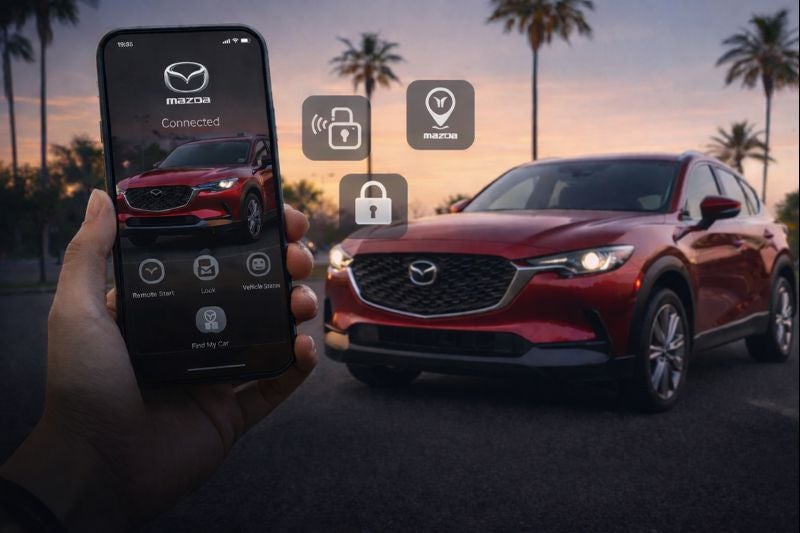
Mazda Connected Services is a suite of vehicle connectivity features accessed through a smartphone app. These services allow drivers to interact with their vehicle remotely, monitor its status, and manage certain functions without being physically present.

It is important to distinguish between:

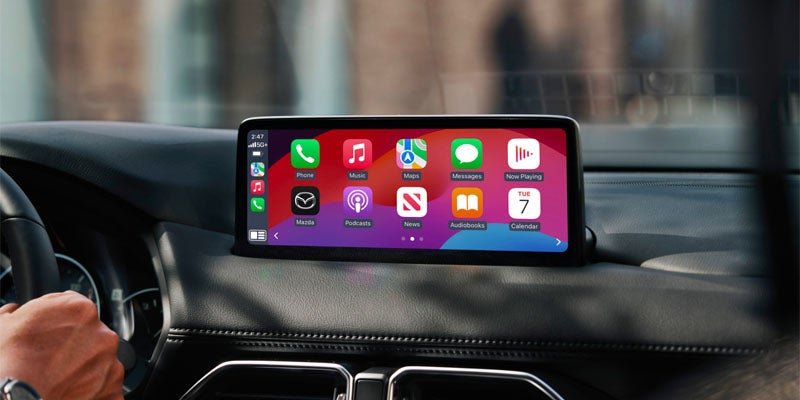
  • Infotainment systems, which operate inside the vehicle
  • Connected services, which extend vehicle access beyond the cabin

Connected Services operates through built-in vehicle communication hardware, not through the driver’s phone alone. This allows the vehicle to send and receive information independently.

Remote Access and Everyday Convenience

One of the most commonly researched aspects of Mazda Connected Services is remote access. These features are designed to reduce friction during daily routines rather than add novelty.

Common remote capabilities include:

  • Locking and unlocking doors remotely
  • Starting the engine from a distance
  • Checking fuel level and vehicle range
  • Viewing vehicle status alerts

For Orange Park drivers dealing with unpredictable weather or busy schedules, remote access adds flexibility without requiring additional hardware or aftermarket systems.

Vehicle Monitoring and Status Awareness

Connected Services also focuses on awareness rather than control. Drivers can check their vehicle’s condition without physically inspecting it, which is especially useful for households that share vehicles.

Monitoring features typically include:

  • Door and window status
  • Fuel level and estimated range
  • Maintenance or warning notifications
  • Vehicle location tracking

This type of visibility supports proactive ownership rather than reactive problem solving, allowing drivers to address issues before they become disruptive.

Security and Peace of Mind

Security is a major concern for drivers researching connected vehicle technology. Mazda Connected Services incorporates location tracking and alert systems designed to support vehicle security without constant monitoring.

Security-focused functions may include:

  • Vehicle location visibility
  • Alerts if doors are left unlocked
  • Notifications for unexpected vehicle movement

These features are designed to inform rather than alarm, aligning with Mazda’s philosophy of calm, supportive technology.

Data Privacy and System Design

A common question surrounding connected services involves data handling and privacy. Mazda designs its connected systems to prioritize secure communication and controlled data use.

Key principles include:

  • Encrypted data transmission
  • Limited data sharing tied to service functionality
  • User-controlled access through secure authentication

Rather than treating data as a product, Mazda uses connectivity to enhance ownership experience and operational awareness.

Subscription Structure and Ownership Planning

Mazda Connected Services typically includes an introductory access period, after which continued use may require a subscription. Understanding this structure helps drivers evaluate long-term value.

Drivers often assess:

  • Whether features match daily habits
  • How often remote access is actually used
  • The value of monitoring and security tools

Because Connected Services is optional after the initial period, owners maintain flexibility rather than being locked into long-term commitments.

Connected Services Versus Infotainment

While often discussed together, Connected Services and infotainment serve different purposes. Infotainment focuses on in-vehicle interaction, while Connected Services focuses on ownership outside the vehicle.

Mazda intentionally separates these roles to:

  • Reduce system complexity
  • Maintain reliability
  • Avoid distraction-heavy interfaces

This separation helps keep the driving experience focused while still offering modern convenience.

How Connected Services Fits Real Life

For Orange Park drivers, Mazda Connected Services works best as a background support system. It does not demand constant attention or interaction. Instead, it provides tools that are available when needed and invisible when not.

It fits drivers who:

  • Value preparedness over novelty
  • Prefer intuitive systems
  • Want awareness without micromanagement
  • Appreciate technology that supports rather than dominates

Final Perspective

Mazda Connected Services reflects Mazda’s broader approach to technology: purposeful, restrained, and driver-centered. By focusing on real ownership needs such as awareness, convenience, and security, it enhances daily life without complicating it.

For drivers exploring how modern vehicle technology fits into everyday routines, Mazda Connected Services offers a thoughtful, practical solution.

Posted in:

Related Posts

Mazda Connect infotainment system features and smart technology

Mazda Connect Infotainment Guide: Exploring Smart Technology Across the 2026 Mazda Lineup

If you have been looking for your next vehicle in Jacksonville and want to understand how Mazda's technology stacks up, this Mazda Connect Infotainment Guide is a great place to start. Mazda's 2026 lineup spans crossovers, sedans, hatchbacks, and sports cars - and across all of them, connected technology plays a central role in the driving experience. What Is Mazda Connect? Mazda Connect is the brand's integrated infotainment system, specifically engineered to keep drivers engaged with the road rather than distracted by touchscreens. Operating through a high-definition center display - ranging from an 8.8-in screen in core models to a 10.25-in or 12.3-in widescreen display in higher trims - the system is operated primarily via the ergonomic Multi-Function Commander control dial located naturally at your fingertips on the center console. While stationary, select 10.25-in and 12.3-in displays enable touchscreen functionality specifically for Apple CarPlay® and Android Auto™ smartphone integration. The architecture allows you to manage audio streaming, integrated navigation, hands-free phone functions, and vehicle diagnostic settings without reaching across the cabin or taking your eyes off the road. Mazda Connect Across the 2026 Crossover Lineup The 2026 Mazda crossover lineup prominently features Mazda Connect with hardware scaled to each vehicle's footprint. The agile CX-30 and the well-rounded CX-5 feature a standard 8.8-in display, with higher trims offering an upgraded 10.25-in screen, wireless Apple CarPlay® and Android Auto™, and available Alexa Built-in voice commands. The rugged CX-50 and CX-50 Hybrid offer identical high-resolution display options and available wireless charging pads. Moving up to the larger two-row CX-70 and three-row CX-90—including their plug-in hybrid variants like the CX-70 PHEV and the CX-90 PHEV —Mazda Connect centers around a standard or available 12.3-in full-color display paired with an available 12.3-in fully digital instrument cluster, a windshield-projected Active Driving Display, and a available Bose® 12-speaker premium audio system. Infotainment Technology in Mazda Sedans and Sports Cars Mazda infotainment specs extend seamlessly into the sedan, hatchback, and sports car lineups. The 2026 Mazda3 Sedan and Mazda3 Hatchback come equipped with an 8.8-i n or available 10.25-in Mazda Connect display, bringing dual USB-C audio inputs, Bluetooth® hands-free streaming, and available Mazda Online Navigation into a driver-focused cabin. Even the legendary MX-5 Miata roadster incorporates Mazda Connect via a standard 8.8-in center display featuring integrated headrest speakers as part of its available 9-speaker Bose® sound system Safety and Technology Working Together One factor setting Mazda apart is how tightly its safety systems integrate with its connected infotainment interface. Recognized as the Safest New-Car Brand by Consumer Reports, Mazda's 2026 lineup holds more IIHS Top Safety Pick+ awards than any other manufacturer as of July 2026—earning top marks across the CX-5, CX-30, CX-50, CX-50 Hybrid, CX-70, CX-70 PHEV, CX-90, CX-90 PHEV, Mazda3 Hatchback, and Mazda3 Sedan. Mazda Connect supports these safety credentials by displaying real-time i-Activsense ® alerts—such as Blind Spot Monitoring, 360° View Monitor camera feeds, and Lane Departure Warning—directly on the center screen or windshield projected head-up display. Explore Mazda Connect at Mazda City of Orange Park Beyond in-car hardware, Mazda Connect ties into the MyMazda smartphone app, providing complimentary Mazda Connected Services for three years. Through the app, owners can remotely start the engine, lock or unlock doors, check tire pressure and fuel levels, locate their vehicle, and schedule service directly on their phone. Drivers across Jacksonville, FL can experience the speed, clarity, and intuitive layout of the Mazda Connect system firsthand at Mazda City of Orange Park. Stop by the showroom to test drive your favorite 2026 Mazda and discover how seamless connected driving can be.

Mazda tire pressure and maintain proper PSI for safe driving

How to Check Your Mazda’s Tire Pressure

Knowing how to properly check your Mazda’s tire pressure is a simple thing you can do to make sure your vehicle is driving safely around Jacksonville, FL. P roperly inflated tires affect everything from handling and fuel efficiency to long-term tire wear. The good news is that the process takes just a few minutes and requires very little equipment. Mazda has earned recognition as Consumer Reports' Safest New-Car Brand, and that commitment to safety extends to the basics - including making sure your tires are road-ready every time you get behind the wheel. Why Tire Pressure is Important Tire pressure plays a direct role in how your Mazda performs day to day. Underinflated tires create more rolling resistance, which causes your gas milage to go down. Overinflated tires reduce the contact patch between the tread and the road, which can compromise grip and ride comfort. Mazda's entire 2026 lineup - from the CX-30 to the three-row CX-90 - has earned 2026 IIHS Top Safety Pick+ awards, which reflects how seriously the brand takes vehicle safety from top to bottom. What You'll Need Before You Start You don't need any special tools to check your tire pressure accurately. A basic digital or analog tire pressure gauge is sufficient and widely available. Many gas stations also have air pumps with built-in pressure gauges. Before you begin, make sure your tires are "cold," meaning the vehicle has been parked for at least three hours or driven fewer than one mile. Driving heats the air inside your tires and raises the pressure temporarily, which can give you an inaccurate reading. How to Check Your Mazda's Tire Pressure Step by Step Start by locating the recommended tire pressure for your specific model. You'll find this on the sticker inside the driver's door jamb - not on the tire sidewall, which shows the maximum pressure, not the recommended level. The door sticker is specific to your vehicle and trim. Once you have the target PSI, remove the valve cap from the tire stem, press your gauge firmly onto the valve stem, and read the pressure. If it's below the recommended level, add air in small increments and recheck. If it's too high, use the small pin on the back of most gauges to release air. Repeat this process for all four tires, and don't forget the spare if your Mazda has one. Using the Tire Pressure Monitoring System on Your Mazda Most current Mazd a s are equipped with a Tire Pressure Monitoring System, or TPMS, which alerts you when one or more tires drops significantly below the recommended pressure. This warning light - which looks like a cross-section of a tire with an exclamation point - will appear on your instrument cluster. It's important to know that the TPMS is a warning system, not a replacement for regular manual checks. The system only triggers when pressure drops notably low, so your tires could still be slightly underinflated without triggering the light. Checking manually once a month is still the best habit. Mazda Tire Pressure Tips for Jacksonville, FL Drivers When checking your tire pressure, also be aware of the outside temperature. Tire pressure drops roughly one PSI for every 10-degree Fahrenheit decrease in temperature, so a cool winter morning can affect your readings compared to a hot summer afternoon. Following consistent Mazda tire pressure tips - like checking monthly, always using a quality gauge, and referring to the door jamb sticker rather than the tire sidewall - will help your tires last longer and perform the way Mazda intended. Visit Mazda City of Orange Park online at mazdacity.com to schedule a tire inspection or ask our service team any questions about your vehicle's maintenance needs.

Mazda Hybrid and Plug-In Hybrid Models Compared

Mazda Hybrid and Plug-In Hybrid Models Compared

Choosing between Mazda's electrified SUVs comes down to one core question. Do you need to plug in, or does a standard hybrid already fit your routine? The CX-50 Hybrid, CX-70 PHEV, and CX-90 PHEV each take a different approach to efficiency. The right one depends on your daily driving distance, passenger needs, and cargo load. This guide walks through the differences without repeating a full technical breakdown of how hybrid drivetrains work in general. As a result, Jacksonville drivers can match the right electrified Mazda to their routine. Hybrid vs Plug-In Hybrid, Briefly A standard hybrid like the CX-50 Hybrid combines a gas engine with electric motors. Those motors assist automatically, and the vehicle never needs to be plugged in. A plug-in hybrid, on the other hand, like the CX-70 PHEV or CX-90 PHEV, adds a larger battery instead. That battery charges from an outlet and allows genuine electric-only driving before the gas engine takes over. This distinction shapes everything else in this comparison. Consequently, every section below builds on this basic split between plugging in and not. Plugging In or Staying with a Standard Hybrid This question comes down to your daily commute more than any single spec on a window sticker. The CX-50 Hybrid delivers strong combined fuel economy without ever needing a charging cable. Therefore, it suits drivers who want efficiency without changing their routine. The CX-70 PHEV and CX-90 PHEV offer roughly 26 miles of electric-only range on a full charge. For many Jacksonville commutes, that range covers a full round trip on electricity alone. However, that gain only shows up if you plug in on a regular basis. Drivers without consistent access to a home charger may find the CX-50 Hybrid's no-plug simplicity a better fit for daily life. Those who can charge overnight and drive mostly local routes may get real value from the PHEV models instead, since a full charge before bed means starting most mornings on electric power alone. In either case, Mazda's approach to hybrid efficiency stays consistent across the lineup, regardless of which model you choose. Matching the Model to Passenger and Cargo Needs Seating capacity draws a clear line between these three models. The CX-50 Hybrid and CX-70 PHEV both seat five. The CX-90 PHEV, by contrast, adds a third row for up to seven passengers. Cargo space follows a similar pattern as well, since more seating capacity usually means less room dedicated purely to gear. The two-row models offer more room behind the rear seats than the three-row CX-90 PHEV does once all seating is in use. That tradeoff between seating and cargo runs through every trim in the lineup. Here is how the three compare on space. The CX-50 Hybrid offers compact SUV proportions with strong efficiency, suited to daily errands and smaller households. The CX-70 PHEV keeps the same two-row layout with added cargo room, appealing to couples or small families who want extra space without a third row. The CX-90 PHEV adds three-row seating for up to seven, making it the clear choice for larger families or anyone who regularly carries extra passengers. Highway and City Driving Feel All three models keep Mazda's connected driving character. Even so, power output varies from model to model. Consequently, the choice between them usually comes down to how much extra punch you want on tap. Furthermore, that power gap shows up most clearly on the highway, not so much around town. The CX-50 Hybrid delivers smooth, confident acceleration for daily errands and highway merges alike. The CX-70 PHEV and CX-90 PHEV share a hybrid system producing over 320 horsepower combined. As a result, both models feel noticeably quicker than the CX-50 Hybrid. On I-95 or I-295, that extra power translates into easier passing and confident merging. Around town, all three feel composed. Still, the PHEV models carry more weight from their larger batteries. Even so, Mazda's chassis tuning keeps that weight from feeling heavy-handed in daily driving, even at parking-lot speeds. Towing a Trailer or Boat Towing capacity separates these models sharply. The CX-50 Hybrid is built with light-duty needs in mind and is not the choice for serious towing. The CX-70 PHEV and CX-90 PHEV, by contrast, can tow up to 3,500 pounds. That figure covers a small trailer, personal watercraft, or a modest boat, giving both PHEV models real utility beyond daily commuting. For Jacksonville drivers who split time between daily commuting and weekend trips to the water, this towing number frequently becomes the deciding factor. Given that, the choice between the CX-50 Hybrid and the larger PHEV models usually starts right here. Seeing the Lineup in Jacksonville Mazda City of Orange Park carries current inventory of the CX-50 Hybrid, CX-70 PHEV, and CX-90 PHEV. As a result, you get the chance to compare all three side by side before making a decision. Test driving each model back to back remains the clearest way to feel the differences covered here. Power, space, and daily character all come through most clearly behind the wheel. Our team can walk through current trims and financing options. We can also show how each model's efficiency and towing figures line up with your specific routine. Whichever electrified Mazda fits your life best, all three deliver the driving character Mazda is known for. Each one simply wraps that character around a different approach to efficiency.