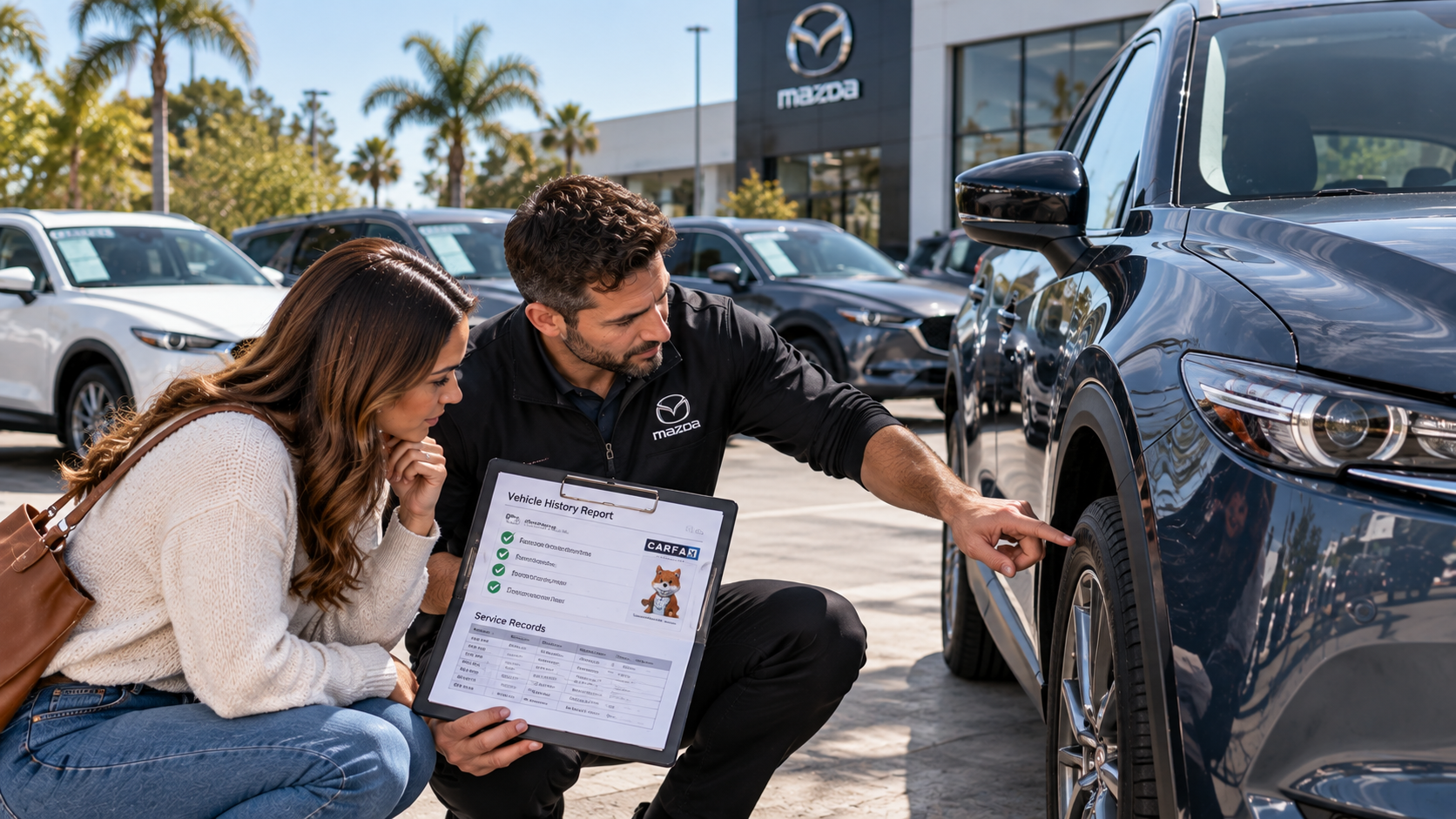
How long do Mazdas last when you are comparing a used or certified model? The odometer gives you one piece of the story. Service records, present mechanical state, and past repairs give you more context. Therefore, a higher mileage Mazda should be judged by evidence from the exact car in front of you. A Mazda3 with complete records may deserve a different review than another Mazda3 with missing history. Moreover, the same applies to a CX 5 or another used Mazda. Additionally, mileage should start the evaluation, not finish it. Can Mileage Alone Tell You How Long a Mazda Will Last? No. Mileage alone cannot establish how much service life remains in a specific Mazda. Two cars can show the same odometer reading yet have very different maintenance histories. Therefore, the stronger review combines mileage with records, present mechanical state, and prior repair information. Scheduled service matters because fluids, filters, tires, brakes, and other parts need attention at different intervals. Moreover, those intervals vary by model and model year. The owner manual for the exact Mazda should remain the main maintenance reference. Ask what work has already been completed before you focus on the odometer. A car with documented service gives you more evidence to review. By contrast, missing records create more unknowns that should be checked before purchase. Service Records Show How the Mazda Was Maintained Mazda service records can show when routine work and larger repairs were completed. Additionally, they can show the mileage recorded at each visit. That creates a timeline you can compare with the maintenance schedule for the exact model. When records are available, review several details: Check service dates and odometer readings. Therefore, you can see whether routine work followed a steady pattern. Look for oil and filter records, scheduled maintenance, brake work, tire service, and other completed repairs. Review repair orders and receipts for larger work. That shows which parts were serviced or replaced. Paper records are useful, but dealer records can add another source. Mazda also provides service history tools through MyMazda for eligible records. Therefore, a seller with organized documentation gives you a clearer maintenance trail to review. Still, records do not replace a physical inspection. A receipt shows that work happened on a certain date. Additionally, an inspection tells you how the Mazda is operating now. Mazda3 and CX 5 Evaluation Goes Beyond the Odometer A used Mazda3 or CX 5 should be checked as an individual car. The same odometer reading can sit beside very different tire wear or brake wear. Fluid leaks, warning lights, and prior repairs add more context. Therefore, inspect the exact car you plan to buy. Several areas deserve direct attention during that review: Inspect tire tread, tire wear patterns, and brake response. These items can reveal current service needs. Check for warning lights, fluid leaks, unusual sounds, rough shifting, or steering issues during the drive. Compare the service history with the model specific schedule. This shows whether major maintenance items were completed. For a Mazda3, review records for routine engine service, tires, brakes, and prior repairs. For a CX 5, the same categories matter. In addition, check any service tied to its exact drivetrain and model year. Moreover, a clean interior or polished exterior does not tell you the full mechanical story. Cosmetic care and mechanical care are separate questions. For this reason, use both records and a hands on inspection. What Should You Check Before Buying a Higher Mileage Mazda? Review the service history, present mechanical state, and recall status before you buy. Each source answers a different question. Therefore, using all three gives you a fuller view of the Mazda you are considering. The three checks serve separate roles: A vehicle history report can show documented ownership, accident, title, and repair information from reporting sources. An independent mechanical inspection reviews the car as it sits today. It can uncover issues not shown in a history report. A VIN recall lookup shows whether an unrepaired safety recall is listed for that specific Mazda. A history report should not replace a mechanical inspection. The report looks backward at documented events. By contrast, the inspection looks at present mechanical state. In addition, a recall lookup covers a separate safety question that neither tool fully answers. If a warning light, leak, noise, or drivability issue appears, ask for a closer inspection. The goal is to understand the exact car before you commit to it. Compare Used and Certified Mazdas With Service Records in Hand Once you know what to review, compare the actual cars available to you. Mazda City maintains both used Mazda inventory and Mazda Certified Pre Owned inventory. Moreover, certified models add Mazda program requirements. Ordinary used models should still be judged through records and current inspection findings. For this reason, compare mileage, service history, present mechanical state, equipment, and certification status together. A lower odometer reading does not erase missing records. Likewise, a higher reading does not answer the full question by itself. Mazda City also provides a Mazda service center in Orange Park. Additionally, that gives you a local path for maintenance questions, inspections, and future service planning. How long do Mazdas last is best answered one car at a time. Review the records, inspect the present mechanical state, and check recall status by VIN. Then compare the exact Mazda3, CX 5, used Mazda, or certified model that fits your plans.

Mazda CX-50 Hybrid vs Honda CR-V Hybrid Daily Use Guide
Mazda CX-50 Hybrid vs Honda CR-V Hybrid Daily Use Guide Mazda CX-50 Hybrid vs Honda CR-V Hybrid comparisons involve more than fuel economy. Both compact SUVs pair gasoline engines with electric motors. However, their power, AWD setup, cargo space, and cabin layouts differ. The right comparison starts with how you plan to drive and carry passengers. Additionally, trim choice matters on the Honda side because AWD and fuel ratings change across the lineup. Mazda CX-50 Hybrid and Honda CR-V Hybrid Use Different Hybrid Layouts The CX-50 Hybrid pairs a 2.5 liter four cylinder engine with three electric motors. Together, they produce 219 horsepower. An electronically controlled continuously variable transmission sends power through standard e-AWD. The CR-V Hybrid uses a two motor hybrid layout with 204 total horsepower. Honda offers front wheel drive on Sport Hybrid. Real Time AWD is available or standard on other hybrid trims. The main mechanical differences are easier to review when they are separated by category: The Mazda CX-50 Hybrid produces 219 horsepower from its 2.5 liter engine and three electric motor setup. The Honda CR-V Hybrid produces 204 total horsepower from its two motor hybrid system. The Mazda includes e-AWD on every trim, while Honda AWD availability changes by trim. The CX-50 Hybrid includes Power and Trail drive modes across the lineup. Those specifications create different paths before you even choose cabin features. Therefore, shoppers who want standard AWD have a simpler Mazda trim decision. Honda customers need to confirm drivetrain configuration on the exact CR-V Hybrid trim. You can review the 2026 Mazda CX-50 lineup at Mazda City before comparing available hybrid trims. How Does AWD Differ Between the CX-50 Hybrid and CR-V Hybrid? Every CX-50 Hybrid includes electronic AWD. The layout can direct power between the front and rear wheels as the vehicle operates. Mazda also includes Power and Trail drive modes across all three hybrid trims. Honda structures AWD differently. Sport Hybrid can use front wheel drive or available Real Time AWD. Sport-L Hybrid also offers AWD. TrailSport Hybrid and Sport Touring Hybrid come with AWD. Therefore, the Honda trim choice changes both drivetrain and EPA fuel ratings. The Mazda keeps the same basic AWD configuration across Preferred, Premium, and Premium Plus. During a test drive, compare low speed response and acceleration from a stop. Additionally, try steady cruising and normal turns. These checks give you a better sense of each hybrid layout than horsepower alone. Passenger Space and Cargo Space Need Separate Evaluation Cargo figures tell part of the story, but they do not show how your family will load the cabin. Mazda lists 29.2 cubic feet behind the second row. Folding the rear seats opens up 56.3 cubic feet. The CR-V Hybrid provides more published cargo room. Current specifications list 36.3 cubic feet behind the second row and greater maximum volume with the rear seats folded. When you compare both SUVs, use the cabin the way you normally would: Set the front seats first, then sit in the second row to check knee room and entry space. Load common bags or larger gear with the rear seats upright before judging the cargo area. Fold the second row and check whether long or bulky items sit securely on the cargo floor. Look at the cargo opening and floor shape because total volume does not explain every loading need. Still, maximum volume should not replace a physical cargo check. A wide cargo opening can matter with strollers or large boxes. Floor shape also matters when luggage fills most of the rear area. For this reason, published volume and passenger fit should stay separate in your comparison. One number cannot describe both needs. Fuel Economy and Technology Change by Driving Pattern and Trim The CX-50 Hybrid carries EPA estimates of 39 city, 37 highway, and 38 combined MPG. Those ratings remain consistent across the three hybrid trims. The CR-V Hybrid uses several ratings across its lineup. Front wheel drive Sport Hybrid reaches 43 city, 36 highway, and 40 combined MPG. AWD versions of Sport, Sport-L, and Sport Touring list 40 city, 34 highway, and 37 combined MPG. TrailSport Hybrid carries a separate AWD rating. That creates several useful fuel economy comparisons: The CX-50 Hybrid posts 39 city, 37 highway, and 38 combined MPG with standard e-AWD. The CR-V Sport Hybrid with front wheel drive reaches 43 city, 36 highway, and 40 combined MPG. Several AWD CR-V Hybrid trims list 40 city, 34 highway, and 37 combined MPG. The TrailSport Hybrid carries lower ratings than the other CR-V Hybrid configurations. Therefore, your driving mix matters when you read those ratings. The Mazda posts a higher highway figure than several CR-V Hybrid AWD configurations. Honda posts a higher city rating on several trims. Cabin technology also changes as you move through the lineups. The CX-50 Hybrid includes wireless Apple CarPlay and Android Auto integration. Alexa Built-in is also standard. Higher Mazda trims add features such as Bose audio and additional cabin equipment. The CR-V Hybrid includes wireless smartphone integration and a 9 inch touchscreen. Higher Honda trims add features such as Bose audio and Google built-in. What Should You Compare on a Hybrid SUV Test Drive? A useful test drive should cover the parts of the SUV you will use every week. Start with drivetrain response. Then move through seating, cargo, visibility, and cabin controls. Use the same checks for both vehicles: Accelerate from a stop and merge onto a faster road to compare hybrid response at different speeds. Check the rear seats after setting the front seats for the people who will drive most often. Open the cargo area and test the items you carry most, including luggage, sports gear, or a stroller. Use the touchscreen, climate controls, and smartphone connection while the vehicle is parked. Additionally, confirm the exact drivetrain and trim before comparing EPA figures. A CR-V Sport Hybrid with front wheel drive does not share the same ratings as every AWD version. Mazda City currently lists 2026 CX-50 Hybrid models, including Premium and Premium Plus inventory. You can review current new Mazda inventory before planning your visit. The Mazda CX-50 Hybrid and Honda CR-V Hybrid approach the compact hybrid SUV category differently. Compare the exact trims, then test passenger fit and cargo space in person. That gives you a clearer basis for choosing the SUV that fits your driving plans.