Blog

3 Features That Make the 2025 Mazda CX-50 Perfect for Adventure

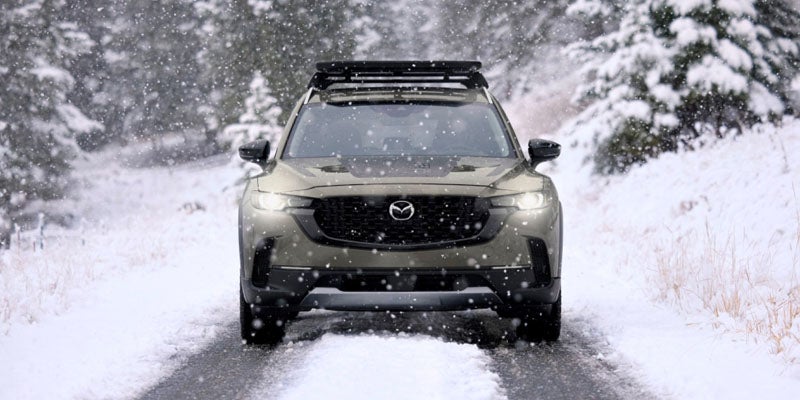
2025 Mazda CX-50 driving on a snowy mountain road

The 2025 Mazda CX-50 is built for adventure, offering an exhilarating drive with precise handling and dynamic performance that few SUVs can rival. With a refined yet rugged design, a premium interior filled with intuitive tech, and standard i-ACTIV AWD across the lineup, the Mazda CX-50 is ready for any journey.

3 Features That Make the 2025 Mazda CX-50 the Perfect Adventure Partner

1. An Iconic Exterior

The CX-50's uniquely stylized exterior has no shortage of premium features across all models, including automatic on/off LED main headlights with High Beam Control and LED daytime running lights. The base-model 2.5 S Select features proud AWD badging, dark-tinted rear privacy glass, a roof spoiler in the body color of your choice, power side-view mirrors with LED turn-signal icons, and rain-sensing windshield wipers.

Depending on the trim, design elements include combination taillights with signature lighting, turbo badging, a roof-mounted shark-fin antenna, large dual bright-finished exhausts, Meridian hood graphics, and side rocker garnishes. With seven exterior color options on the first two trims and eight on the Turbo Premium Plus model, you can customize your Mazda to reflect your unique style.

Exterior of a 2025 Mazda CX-50 parked in the snowy mountains

2. Plenty of Cabin Comforts

With leatherette upholstery, two-zone automatic climate control, the Mazda Advanced Keyless Entry system, a push-button ignition switch, and LED lighting, the latest Mazda CX-50 offers long-lasting comfort. The base model's technology includes an eight-speaker sound system, wireless Apple CarPlay and Android Auto integration, USB-C charging ports in both the front and rear, and steering-wheel-mounted controls for the audio system, cruise control, and connected devices.

The S Premium, Turbo Meridian Edition, and other high trims feature a 12-speaker Bose sound system with AudioPilot and Centerpoint technology, creating a true surround-sound experience with crisp sound and no unwanted outside noise. Higher trims also include a wireless charging pad, built-in Alexa, and SiriusXM radio, while all models feature a 10.25-inch HD infotainment screen and a seven-inch LCD instrument-cluster display.
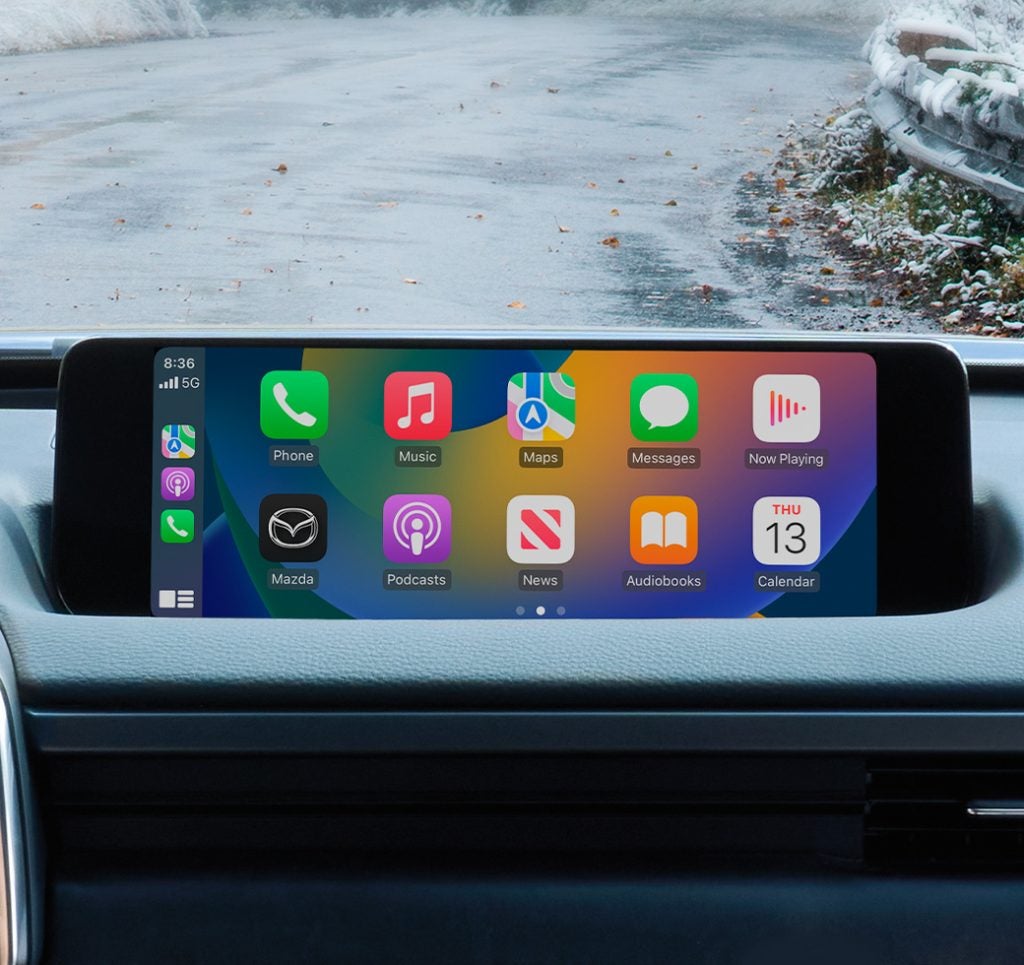
Apple Car Play on a 2025 Mazda CX-50

3. Class-Leading Mechanics

The 2025 CX-50's lower trims are equipped with a 2.5-liter SKYACTIV DOHC four-cylinder 16-valve engine featuring cylinder deactivation technology, while higher trims upgrade to the twin-scroll turbo SKYACTIV 2.5-liter engine with i-Stop capabilities. The base-model S Select and S Premium generate 187 horsepower, while trims like the Turbo Meridian Edition and Turbo Premium Plus produce 227 horsepower.

Hybrid CX-50s come equipped with a 2.5-liter four-cylinder hybrid engine and a permanent-magnet electric motor, both delivering a combined 219 horsepower. Like the gas-engine ​models, the hybrid ​trims boast AWD across the lineup.

Whether you opt for the efficient hybrid or the powerful gas variant, the CX-50 offers the versatility to tackle every road with both confidence and grace. Begin your next adventure with a visit to Mazda City of Orange Park in Jacksonville, FL, to experience capability and excitement in one handsome package.
Recommended Posts

Mazda Hybrid and Plug-In Hybrid Models Compared

Mazda Hybrid and Plug-In Hybrid Models Compared

Choosing between Mazda's electrified SUVs comes down to one core question. Do you need to plug in, or does a standard hybrid already fit your routine? The CX-50 Hybrid, CX-70 PHEV, and CX-90 PHEV each take a different approach to efficiency. The right one depends on your daily driving distance, passenger needs, and cargo load. This guide walks through the differences without repeating a full technical breakdown of how hybrid drivetrains work in general. As a result, Jacksonville drivers can match the right electrified Mazda to their routine. Hybrid vs Plug-In Hybrid, Briefly A standard hybrid like the CX-50 Hybrid combines a gas engine with electric motors. Those motors assist automatically, and the vehicle never needs to be plugged in. A plug-in hybrid, on the other hand, like the CX-70 PHEV or CX-90 PHEV, adds a larger battery instead. That battery charges from an outlet and allows genuine electric-only driving before the gas engine takes over. This distinction shapes everything else in this comparison. Consequently, every section below builds on this basic split between plugging in and not. Plugging In or Staying with a Standard Hybrid This question comes down to your daily commute more than any single spec on a window sticker. The CX-50 Hybrid delivers strong combined fuel economy without ever needing a charging cable. Therefore, it suits drivers who want efficiency without changing their routine. The CX-70 PHEV and CX-90 PHEV offer roughly 26 miles of electric-only range on a full charge. For many Jacksonville commutes, that range covers a full round trip on electricity alone. However, that gain only shows up if you plug in on a regular basis. Drivers without consistent access to a home charger may find the CX-50 Hybrid's no-plug simplicity a better fit for daily life. Those who can charge overnight and drive mostly local routes may get real value from the PHEV models instead, since a full charge before bed means starting most mornings on electric power alone. In either case, Mazda's approach to hybrid efficiency stays consistent across the lineup, regardless of which model you choose. Matching the Model to Passenger and Cargo Needs Seating capacity draws a clear line between these three models. The CX-50 Hybrid and CX-70 PHEV both seat five. The CX-90 PHEV, by contrast, adds a third row for up to seven passengers. Cargo space follows a similar pattern as well, since more seating capacity usually means less room dedicated purely to gear. The two-row models offer more room behind the rear seats than the three-row CX-90 PHEV does once all seating is in use. That tradeoff between seating and cargo runs through every trim in the lineup. Here is how the three compare on space. The CX-50 Hybrid offers compact SUV proportions with strong efficiency, suited to daily errands and smaller households. The CX-70 PHEV keeps the same two-row layout with added cargo room, appealing to couples or small families who want extra space without a third row. The CX-90 PHEV adds three-row seating for up to seven, making it the clear choice for larger families or anyone who regularly carries extra passengers. Highway and City Driving Feel All three models keep Mazda's connected driving character. Even so, power output varies from model to model. Consequently, the choice between them usually comes down to how much extra punch you want on tap. Furthermore, that power gap shows up most clearly on the highway, not so much around town. The CX-50 Hybrid delivers smooth, confident acceleration for daily errands and highway merges alike. The CX-70 PHEV and CX-90 PHEV share a hybrid system producing over 320 horsepower combined. As a result, both models feel noticeably quicker than the CX-50 Hybrid. On I-95 or I-295, that extra power translates into easier passing and confident merging. Around town, all three feel composed. Still, the PHEV models carry more weight from their larger batteries. Even so, Mazda's chassis tuning keeps that weight from feeling heavy-handed in daily driving, even at parking-lot speeds. Towing a Trailer or Boat Towing capacity separates these models sharply. The CX-50 Hybrid is built with light-duty needs in mind and is not the choice for serious towing. The CX-70 PHEV and CX-90 PHEV, by contrast, can tow up to 3,500 pounds. That figure covers a small trailer, personal watercraft, or a modest boat, giving both PHEV models real utility beyond daily commuting. For Jacksonville drivers who split time between daily commuting and weekend trips to the water, this towing number frequently becomes the deciding factor. Given that, the choice between the CX-50 Hybrid and the larger PHEV models usually starts right here. Seeing the Lineup in Jacksonville Mazda City of Orange Park carries current inventory of the CX-50 Hybrid, CX-70 PHEV, and CX-90 PHEV. As a result, you get the chance to compare all three side by side before making a decision. Test driving each model back to back remains the clearest way to feel the differences covered here. Power, space, and daily character all come through most clearly behind the wheel. Our team can walk through current trims and financing options. We can also show how each model's efficiency and towing figures line up with your specific routine. Whichever electrified Mazda fits your life best, all three deliver the driving character Mazda is known for. Each one simply wraps that character around a different approach to efficiency.

Mazda CX-5 vs Toyota RAV4 Comparison

Mazda CX-5 vs Toyota RAV4 Comparison for Jacksonville

If you are cross-shopping the Mazda CX-5 vs Toyota RAV4, you are comparing two popular compact SUVs. Both serve Jacksonville drivers well, from daily commutes on I-295 to weekend trips toward the coast. However, they take different paths to get there. This guide walks through space, driving feel, fuel economy, technology, and AWD. As a result, you can match the right SUV to your daily routine around Orange Park and beyond. Passenger and Cargo Space The RAV4 holds an edge in outright cargo volume. It offers more room behind the rear seats than the CX-5. Therefore, families hauling gear for beach trips to Ponte Vedra may lean toward that extra capacity. The same goes for a weekend Costco run. Even so, the CX-5 closed the gap for 2026. Mazda stretched the CX-5's wheelbase by several inches. That change added noticeably more rear legroom, kneeroom, and headroom than the outgoing model offered. As a result, the space comparison is closer than it used to be. The RAV4 still wins on raw cargo numbers, though the gap has narrowed. The differences that matter most for daily use break down like this. The RAV4 offers more maximum cargo volume behind the folded rear seats, which favors larger hauls like furniture or camping gear. The 2026 CX-5's longer wheelbase adds noticeably more rear legroom and kneeroom than the previous generation offered. Rear seat access improved on the CX-5 as well, which matters for parents loading car seats or older passengers climbing in and out at a Jacksonville soccer field. Mazda CX-5 Toyota RAV4 Cargo Space (Behind Rear Seats) 33.7 cu ft 37.8 cu ft Max Cargo Space (Seats Folded) 66.5 cu ft 70.4 cu ft Rear Legroom 39.9 in 37.8 in Towing Capacity 1,500 lbs 1,750 lbs How Each SUV Feels to Drive Day to Day The CX-5 earns its reputation right here. Its steering stays tighter, and body roll stays better controlled. Its six-speed automatic shifts with a crispness that the RAV4's continuously variable transmission cannot fully match. On paper, the RAV4 wins the horsepower and efficiency numbers. Even so, drivers who care about how the SUV feels on I-295 on-ramps tend to prefer the CX-5's connected, driver-focused character. Winding roads toward Middleburg tell the same story, where the CX-5's tighter steering response stays noticeable through every curve. The RAV4 is far from dull, and its 2026 hybrid system delivers smooth, confident power around town. Still, the CX-5 holds the edge for anyone who enjoys the act of driving itself. Fuel Economy and the Hybrid Question This is the RAV4's strongest category, and the gap is real. Every 2026 RAV4 comes standard as a hybrid. That means combined fuel economy sits well above what the CX-5's gas engine returns. Over a full year of Jacksonville commuting, that difference adds up in real fuel savings. However, the CX-5 counters with a lower starting price and standard AWD at no additional cost, two advantages that stand out immediately on a window sticker. Given that, the total value gap narrows even though the CX-5 trails at the pump. A CX-5 hybrid is confirmed for the future, though it will not arrive until the 2027 model year. Given that timeline, shoppers who want a Mazda hybrid today will need to wait. Those focused on driving feel and upfront savings may still find the current CX-5 lineup worth the tradeoff. Technology Worth Using Every Day Both SUVs bring strong technology to the table, though they approach it differently. The CX-5 now offers Mazda's largest center display yet. A completely redesigned interior for 2026 puts that touchscreen front and center. The RAV4 also upgraded its technology, adding a larger available touchscreen and a standard built-in dashcam across every trim. Additionally, wireless Apple CarPlay and Android Auto come standard on both SUVs. As a result, daily phone connectivity feels similar behind the wheel of either one. The bigger difference shows up in interior character. The CX-5 leans toward a driver-focused layout with tactile controls, giving physical dials and buttons to key functions instead of burying them in menus. By contrast, the RAV4 prioritizes straightforward controls that work well without asking much of the driver. Here is how the two lineups compare on the features drivers use most. The CX-5 offers Mazda's largest center display yet, standard on higher trims within its redesigned 2026 interior. The RAV4 includes a standard built-in dashcam on every trim, along with a larger available touchscreen for 2026. Both SUVs include wireless Apple CarPlay and Android Auto as standard equipment, so daily phone connectivity feels similar in either vehicle. Standard AWD and What It Is Worth Every CX-5 trim includes i-Activ AWD at no extra cost. The RAV4, by contrast, starts with front-wheel drive and charges extra for all-wheel drive. For Jacksonville's sudden summer downpours, that standard AWD matters more than it might on drier roads. Once you add the RAV4's AWD cost into the comparison, the price gap between the two SUVs narrows further. That shift favors the CX-5. The RAV4 does produce more horsepower in its hybrid form, so drivers prioritizing outright power may still lean toward Toyota's lineup. Still, for shoppers who want confident traction built into every trim without an upcharge, the CX-5 makes a strong case worth serious consideration. The AWD comparison comes down to a few clear points. Every CX-5 trim includes i-Activ AWD at no additional cost, while RAV4 AWD requires an upgrade from the base front-wheel-drive configuration. Once the RAV4's AWD upcharge is added to its price, the total cost gap between the two SUVs narrows in the CX-5's favor. The RAV4's hybrid powertrain still delivers more horsepower overall, which matters most to drivers who prioritize outright power over standard traction. Mazda CX-5 Toyota RAV4 Base MSRP $29,990 $31,900 Standard Drivetrain i-Activ AWD Front-Wheel Drive AWD-Equipped Price $29,990 $33,300 Combined Horsepower 187 hp 226–236 hp Seeing the CX-5 in Jacksonville Mazda City of Orange Park carries current inventory of the new Mazda CX-5 across multiple trims. That includes both naturally aspirated and available turbocharged configurations. Test driving the CX-5 alongside a RAV4 on the same familiar roads remains the clearest way to feel the differences covered here. Handling, cabin character, and daily comfort all come through on a back-to-back drive. Our team can walk through current CX-5 trims and financing options. We can also show how standard AWD stacks up against RAV4 pricing once Toyota's AWD upcharge is factored in. Whichever direction fits your driving style better, both SUVs represent strong choices for Jacksonville, Orange Park, and the surrounding area. Stopping by for a side-by-side look usually makes the decision clearer than reading specs alone ever could.

Mazda CX-30

Mazda CX-30 vs CX-5 Comparison for Jacksonville Drivers

Mazda CX-30 vs CX-5 Comparison for Jacksonville Drivers If you have narrowed your next SUV to the Mazda CX-30 and the Mazda CX-5, you are close to the right answer. Both share the same Kodo design language. Both share the same commitment to driver connection. However, they serve different daily routines around Jacksonville, Orange Park, and Middleburg. This guide walks through the Mazda CX-30 vs Mazda CX-5 decision by looking at real space, handling, and trim choices. As a result, you can match the SUV to the way you drive. The Real Size Difference Between the CX-30 and CX-5 The CX-30 is classified as a subcompact crossover. The CX-5 sits one class up as a compact SUV. That single classification shift explains most of what you will notice on a test drive. Additionally, the CX-5 measures several inches longer and wider than the CX-30. It also rides on a longer wheelbase. Because of that extra distance between the front and rear axles, small bumps smooth out before they reach the cabin. By contrast, the CX-30 keeps a tighter footprint. Shoppers driving through Blanding Boulevard traffic or parking near San Marco notice that footprint right away. Even so, neither vehicle gives up Mazda's signature driving feel. The size difference simply shifts where each model shines. Space for Family or Gear Passenger and cargo room scale directly with that size difference. The CX-5 offers more rear legroom than the CX-30. Given that gap, extra room matters most for households carrying adult passengers or kids in booster seats. Still, front-row space stays close between the two models. Because of that, the gap shows up mainly in the back seat and the trunk. Cargo capacity follows the same pattern. The CX-5 holds more behind the rear seats than the CX-30. Furthermore, that gap widens once both rear seats fold flat. A family loading strollers or luggage for a Saint Augustine weekend will feel that extra room, while a single driver running errands around Orange Park may never need it. With that in mind, matching cargo space to your routine keeps the decision grounded in how you use the SUV week to week, instead of chasing the largest number on a spec sheet. Which One Handles Better in Tight Parking and City Streets? The CX-30 earns its reputation among Jacksonville drivers right here. Its shorter length and tighter turning radius make it easier to thread through crowded parking decks and tight neighborhood streets. As a result, drivers who navigate downtown Jacksonville or squeeze into shopping center parking will likely prefer how the CX-30 fits into snug spaces. That said, the CX-5 handles well too, and its available surround-view camera helps offset its larger footprint. Even so, a smaller footprint still wins in the tightest spots. Given that, daily parking convenience can settle the comparison on its own. How Each SUV Feels to Drive Day to Day Both SUVs share Mazda's Jinba Ittai philosophy. That philosophy centers on car and driver feeling like one connected system, built through steering feel, seat position, and pedal response working together. Still, where they differ is weight and road presence. The CX-30's lighter build feels quick and responsive around town. Additionally, available turbocharged power adds real punch when merging onto I-295. By contrast, the CX-5 carries more weight, and that weight translates into a planted feeling at highway speed. Steering response stays sharp in both models. Therefore, this comparison comes down to preference more than a clear technical edge. Drivers who prioritize nimble city driving tend to lean toward the CX-30. On the other hand, drivers who spend more time on longer commutes tend to prefer the CX-5's steadier highway manners. Weighing the Price Difference Against the Extra Size The CX-30 carries a lower starting price than the CX-5. That price gap holds across most comparable trim levels. However, what that difference buys is more than a size step up. Moving to the CX-5 brings additional standard features at each trim tier. Given that, shoppers cross-shopping specific trims should compare feature parity directly. A mid-tier CX-5 trim can sometimes match a higher CX-30 trim's equipment while still delivering the larger footprint. Instead of focusing on the higher price tag alone, weigh whether the extra room fits your driving pattern. Where Can You See These Locally, New or Certified? Mazda City of Orange Park carries current inventory of the new Mazda CX-30 and the new Mazda CX-5. Certified pre-owned options are also available for drivers who want Mazda quality at a lower entry point, with factory-backed inspection standards carried over from the new-vehicle lineup. Test driving both models back to back remains the clearest way to feel the size and handling differences covered here. Driving both on the same familiar roads makes the comparison even clearer. Our team can walk through available trims, current incentives, and financing paths for either SUV, including the newest colors and packages. We can also help match the right model to your daily routine around Jacksonville, Orange Park, Gainesville, or Saint Augustine. With that in mind, whichever direction fits your life better, both the CX-30 and the CX-5 deliver the driving character Mazda is known for.