

Mazda’s design philosophy is not rooted in decoration or trend-following. It begins with a simple question: how should a car feel to drive? Every design decision, from exterior proportions to interior control placement, is made to support a natural connection between driver and vehicle. This approach is shaped by the Japanese concept of Jinba Ittai, the idea of harmony between horse and rider. In modern Mazda vehicles, that harmony translates into confidence, focus, and a sense of control that drivers notice immediately on real roads.
Rather than separating styling from engineering, Mazda treats design as a functional system. The result is a driving experience that feels intentional and composed, especially during everyday use on local roads, commutes, and longer highway drives.
Design Begins With the Driver, Not the Dashboard
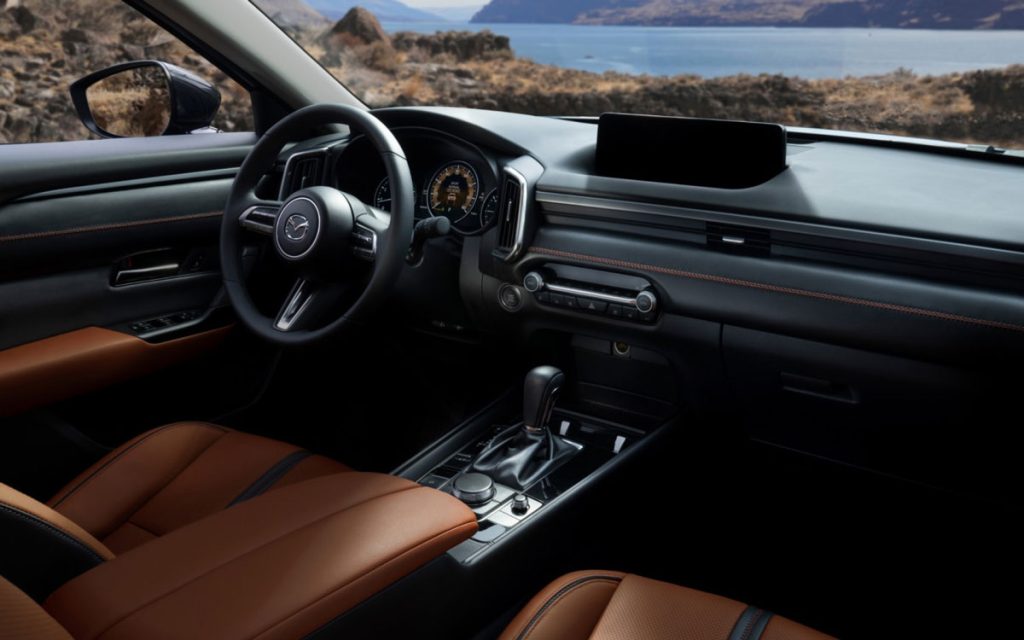
Mazda interiors are engineered around the human body, not around screens or visual impact. Seating position, pedal alignment, steering wheel placement, and sightlines are all tuned to support natural posture and quick response.
Key interior design principles include:
- A driving position that aligns hips, shoulders, and feet to reduce strain
- Pedals centered with the driver’s body rather than offset
- A steering wheel angle that supports relaxed but precise input
- Instrument placement that falls within the driver’s natural eye movement
This layout reduces the need for constant micro-adjustments while driving. Over time, fewer adjustments mean less fatigue and greater confidence, particularly during longer drives or in stop-and-go traffic.
Minimalism That Improves Focus
Mazda’s interiors are intentionally restrained. This is not about removing features, but about reducing unnecessary visual noise that competes for attention.
Mazda emphasizes:
- Clean horizontal dash layouts that stabilize the visual field
- Limited material transitions to reduce distraction
- Physical controls where tactile feedback is faster than touch inputs
- Screen placement designed to minimize eye refocus time
By simplifying the environment, Mazda reduces cognitive load. Drivers spend less time searching for information and more time focused on the road ahead. This is especially noticeable during complex driving situations such as merging, navigating unfamiliar areas, or driving in heavy traffic.
Exterior Design That Supports Driving Confidence
Mazda’s exterior design philosophy, often referred to as Kodo or “Soul of Motion,” is not purely visual. Body proportions are shaped to communicate balance and movement in a way that helps drivers intuitively understand the vehicle’s size and placement.
Functional exterior outcomes include:
- Proportions that emphasize stability rather than bulk
- Long hood and balanced overhangs that aid spatial awareness
- Smooth surfaces that guide airflow and reduce visual clutter
- Clear edges that make vehicle boundaries easier to judge
These elements help drivers feel more confident when parking, navigating tight streets, or driving through crowded areas. A vehicle that visually communicates its dimensions reduces hesitation and mental effort.
Jinba Ittai in Everyday Driving
Jinba Ittai is not an abstract philosophy reserved for performance driving. It shows up in everyday moments behind the wheel.
Mazda designs systems so that:
- Steering responds predictably to small inputs
- Suspension tuning supports body stability without feeling stiff
- Vehicle reactions mirror driver intent rather than lag behind it
- Feedback through the wheel and pedals feels consistent
This consistency builds trust. Drivers quickly learn how the vehicle will respond, which reduces stress and increases enjoyment even at normal speeds.
Interior Craftsmanship Without Excess
Mazda interiors are often described as refined, but that refinement comes from discipline rather than decoration. Materials are chosen for how they feel and age, not just how they photograph.
Interior craftsmanship focuses on:
- Cohesive material selection instead of mixed textures
- Tight panel alignment and clean transitions
- Balanced use of contrast rather than visual overload
- Design continuity across trims and models
This approach creates a calm cabin environment that feels intentional and well considered, without relying on luxury terminology or excessive features.
How Design Affects Long-Term Comfort
Design decisions that prioritize posture and simplicity have long-term benefits. Drivers often report less fatigue during extended driving, better control during sudden maneuvers, and a greater sense of ease during daily use.
Over time, Mazda’s design philosophy contributes to:
- Reduced physical strain on long drives
- Faster adaptation to vehicle size and controls
- Greater confidence in varied driving conditions
- A calmer overall driving experience
These outcomes are not tied to a single feature. They result from a system-level approach where design, ergonomics, and driving dynamics work together.
Why Mazda’s Approach Feels Different
Many brands prioritize technology visibility or aggressive styling to signal advancement. Mazda takes a quieter route by asking how each design choice affects the driver’s physical and mental state.
Mazda prioritizes:
- Human-centered design over feature stacking
- Simplicity that supports awareness
- Feedback that builds confidence
- Balance between form and function
This difference is why Mazda vehicles often feel more connected and intuitive, even without calling attention to themselves.
Design That Matches Real Roads
For drivers navigating Orange Park roads, suburban traffic, and regional highways, Mazda’s design principles translate into tangible benefits. Clear sightlines, predictable handling, and a calm interior environment support everyday driving, not just ideal conditions.
Mazda’s design philosophy is not about standing out visually. It is about creating vehicles that feel natural to drive, day after day. By aligning design with human movement and perception, Mazda delivers a driving experience that feels connected, confident, and thoughtfully engineered.
Connect with us


Recent Blog Entries
- 2026 Mazda MX-5 Miata vs Mazda3 Hatchback: Driving Engagement Compared
- Mazda Drive Modes Explained: Efficiency, Comfort, and Control
- Mazda OEM Battery Replacement vs Aftermarket: Longevity Explained
- Mazda Multi-Point Inspection: What Gets Checked and Why It Matters
- CX 5 vs CX 50 Hybrid: Efficiency, Space, Driving Feel