

The 2026 Mazda MX-5 Miata vs Mazda3 Hatchback comparison is not a contest between a sports car and a sensible compact. Both vehicles carry Mazda’s core engineering philosophy. Both reward a driver who pays attention. However, they deliver that reward through entirely different mechanical approaches. Understanding what each chassis actually does changes how clearly a driver can evaluate which one fits the way they drive.

How the Two Chassis Architectures Create Different Engagement
Drivetrain layout shapes how a car communicates with its driver more than almost any other single factor. The MX-5 Miata uses a rear-wheel drive layout. The Mazda3 Hatchback uses front-wheel drive, with i-Activ AWD available on upper trims.
In a front-wheel drive vehicle, the front tires handle both steering and power delivery at the same time. Under hard acceleration, weight transfers rearward and reduces load on the front axle. That shift creates a mild tug through the steering wheel as the front tires work against the competing demands of turning and driving. The Mazda3’s engineers address this through precise chassis tuning and the available AWD system, which distributes torque across all four corners and reduces that front-axle conflict considerably.
Read the rest of this entry »Mazda drive modes do more than adjust how a car feels. Each mode recalibrates how the vehicle distributes power, shifts gears, and responds to throttle input at a system level. Drivers who understand what changes mechanically with each selection make better decisions about when to switch. Furthermore, they get more from the engineering Mazda built into every model in the lineup.
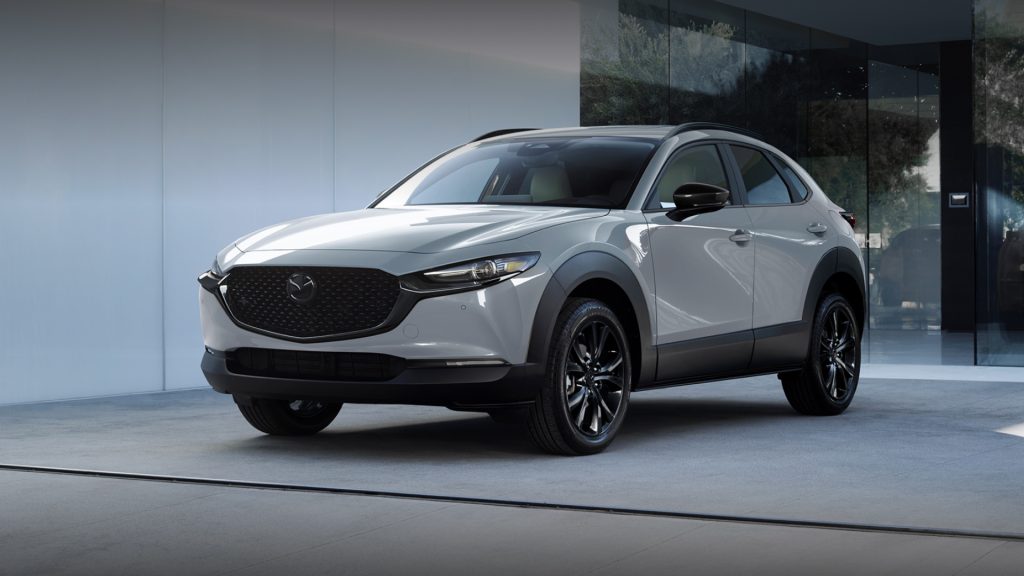
What Mi-Drive Is and How It Works as a System
Mi-Drive stands for Mazda intelligent Drive Select. It is the platform that governs drive mode selection across Mazda’s current lineup, including the CX-5, CX-50, CX-90, and CX-30. Most drivers think of drive modes as single-variable adjustments. Mi-Drive does not work that way.
When a driver selects a mode, Mi-Drive adjusts three vehicle systems at the same time. First, it reprograms the throttle mapping, which changes how the engine responds to pedal input. Second, it adjusts the transmission shift logic, which changes the RPM range the vehicle uses before upshifting. Third, on models equipped with i-Activ AWD, it redistributes torque bias between the front and rear axles to match the selected mode’s traction priorities.
Read the rest of this entry »A Mazda OEM battery replacement decision comes down to specification matching, not brand loyalty. Drivers who understand what the OEM label covers and what aftermarket options must meet will get more service life from every battery they install. The gap between a three-year battery and a six-year battery rarely comes down to price alone. Furthermore, it almost never comes down to the name on the label.

What Makes a Mazda Battery Replacement Decision Different
Mazda does not manufacture its own batteries. A third-party manufacturer produces the factory battery to Mazda’s documented specifications. That distinction matters because the OEM premium pays for specification compliance and warranty coverage. It does not pay for exclusive manufacturing technology.
What Mazda controls is the specification itself. Each model carries a documented battery requirement covering group size, cold cranking amps, reserve capacity, and chemistry type. The CX-5 and Mazda3 equipped with i-stop carry different chemistry requirements than models without that system. A battery that meets every number on the spec sheet will perform comparably to the factory unit. Brand source does not change that outcome.
Read the rest of this entry »A Mazda multi-point inspection is a structured, technician-led review of your vehicle’s core mechanical and safety systems. It runs at scheduled service intervals and produces a documented record of your car’s condition. Most drivers receive the report card and move on without fully understanding what was reviewed or why each checkpoint exists. That gap matters, because the inspection is one of the most useful tools available to a Mazda owner who wants to stay ahead of repairs.

Knowing what happens during this process changes how you use the results. Furthermore, it changes how confidently you can plan your next service visit.
What a Mazda Multi-Point Inspection Is
The inspection is a preventative review. A certified technician works through a defined checklist covering fluids, tires, brakes, belts, battery, filters, and undercarriage components. Each point gets physically measured or visually confirmed. Nothing gets estimated.
Mazda’s inspection framework aligns with the maintenance intervals in your owner’s manual. This means the checklist reflects which components are most likely to show wear at your vehicle’s specific mileage. The CX-5, Mazda3, and CX-50 each carry distinct fluid capacities, brake pad specifications, and belt routing. A technician working from Mazda’s documented standards applies those specifications directly to each inspection point. As a result, the findings you receive are vehicle-specific, not generic.
Read the rest of this entry »CX 5 vs CX 50 Hybrid comparisons usually begin with fuel economy, though cargo space, powertrain feel, cabin layout, and daily driving rhythm shape the larger decision. These two Mazda SUVs overlap heavily in size and purpose, which creates confusion for shoppers narrowing their options. Both support all wheel drive confidence, passenger comfort, and Mazda’s connected steering philosophy, yet they approach those goals through different powertrain and packaging strategies.

The Mazda CX 5 continues using a traditional gas powered setup focused on smooth throttle response, balanced ride comfort, and familiar acceleration delivery. The Mazda CX 50 Hybrid introduces electric motor assistance and hybrid energy management to reduce fuel use during commuting and lower speed driving. While the dimensions appear close on paper, the ownership feel changes once these SUVs are driven back to back.
Hybrid Efficiency Versus Traditional Gas Power
Is the CX 50 Hybrid more efficient than the CX 5? The CX 50 Hybrid uses a hybrid powertrain that combines a gasoline engine with electric motor support. During slower driving, stoplights, and lower speed traffic movement, the electric motor assists propulsion and reduces how heavily the gasoline engine needs to work.
That changes fuel use patterns most noticeably during:
Read the rest of this entry »Understanding Mazda i Activsense Safety Technology
Mazda i Activsense features are built to support awareness during the small driving moments that happen every day, from highway merging to crowded parking lots. The technology inside these driver assistance features is not meant to overpower the person behind the wheel or create constant interruptions. Mazda approaches safety through support and connection, shaping technology around natural movement and driver awareness instead of aggressive intervention. That philosophy reflects Mazda’s human centered design approach, where technology exists to work with the driver in a calm and intuitive way.
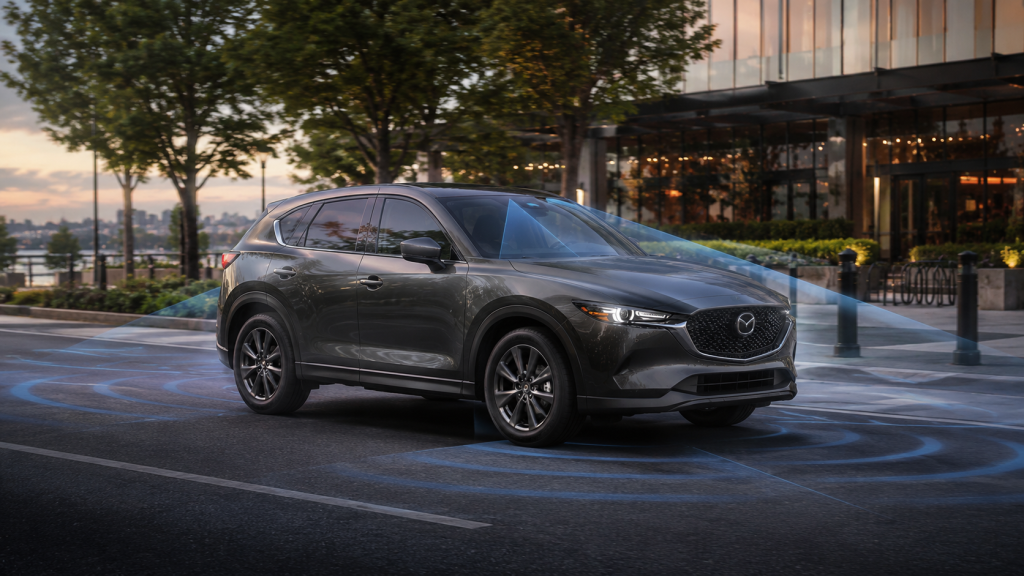
Modern Mazda vehicles such as the Mazda CX 5 and Mazda CX 90 use cameras, radar sensors, steering inputs, and braking communication to monitor traffic movement around the vehicle continuously. While these features sound highly technical on paper, most drivers notice them through subtle moments. A warning light appears beside the mirror during a lane change. The steering wheel gently responds near a lane edge. The vehicle adjusts following distance during traffic flow. These interactions are intentionally smooth so the technology feels supportive instead of distracting.
How Mazda i Activsense Uses Cameras and Radar Together
What does Mazda i Activsense do? Mazda i Activsense is a collection of driver awareness features that monitor surrounding traffic, lane positioning, vehicle spacing, and potential collision risks through coordinated sensor communication.
Different sensors perform different jobs. Cameras mounted near the windshield monitor lane markings, road positioning, and object recognition. Radar sensors monitor traffic speed and surrounding vehicle movement. The vehicle’s onboard processing system combines these inputs continuously while driving.
A Mazda CX 90 traveling through highway traffic may use:
Read the rest of this entry »Mazda OEM Filters vs Aftermarket Options Explained
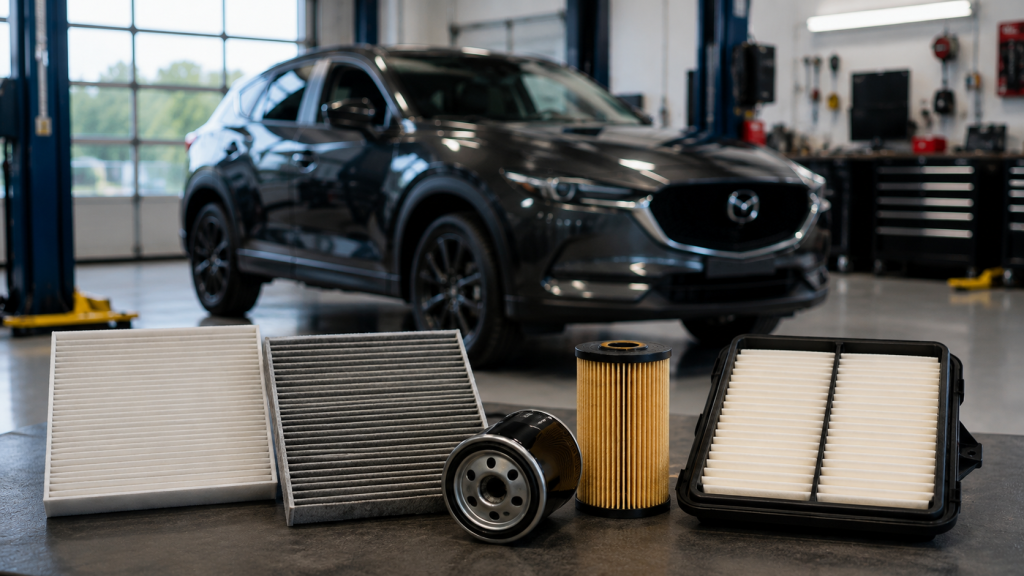
Mazda OEM filters vs aftermarket options becomes an important maintenance question once drivers begin comparing airflow, filtration quality, replacement cost, and long term engine protection. A filter may look simple from the outside, yet it plays a major role in how air, oil, and cabin circulation move through the vehicle. That is why Mazda engineers calibrate filter materials, airflow resistance, and sealing precision around the exact operating characteristics of each model. Whether someone drives a Mazda CX 5 through city traffic or spends long stretches on the highway in a Mazda CX 90, filter quality shapes how smoothly the vehicle breathes, circulates air, and protects internal components over thousands of miles.
Why Mazda OEM Filters Are Engineered Differently
A Mazda OEM filter is built around exact airflow measurements developed during vehicle engineering. That means airflow resistance, filter density, pleat spacing, and sealing pressure are matched to the vehicle’s intake and circulation pathways. Aftermarket options may visually resemble factory parts, though material quality and airflow calibration vary heavily between manufacturers.
Engine air filters influence how air enters the combustion chamber. Modern Mazda engines rely on carefully balanced airflow readings from sensors that monitor oxygen intake and fuel delivery. If airflow restriction changes beyond expected parameters, combustion balance can shift. This may create rougher idle quality, delayed throttle response, or inconsistent airflow readings.
The Mazda CX 50 and Mazda CX 90 both rely on tightly controlled intake management. Air entering the engine passes through multiple monitored stages before combustion begins. Small airflow inconsistencies can create larger operating differences once fuel mapping adjusts around altered intake readings.
Drivers comparing Mazda OEM air filter choices against cheaper aftermarket alternatives should evaluate:
Read the rest of this entry »Mazda diagnostic fee questions usually begin when a warning light appears, a strange sound develops, or a driver receives a repair estimate that includes testing and inspection time. Many drivers understand paying for replacement parts or labor after a repair has been approved, though diagnostic pricing creates more confusion because the vehicle has not been repaired yet. The uncertainty usually centers around one question: what exactly is being paid for during diagnostics?
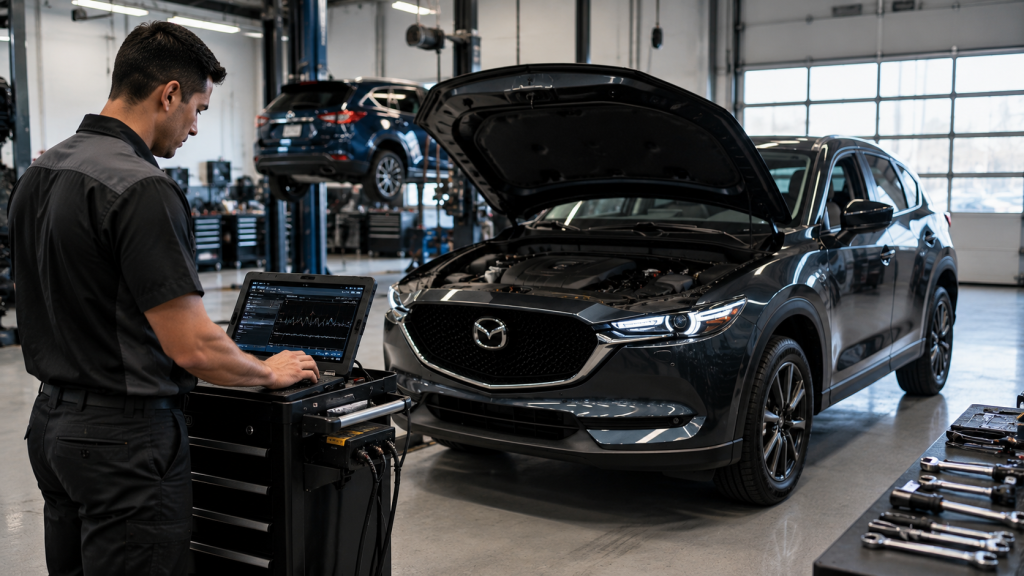
Vehicle diagnostics involve structured testing procedures used to identify root causes before repairs begin. Modern Mazda vehicles rely on integrated electronics, communication modules, sensors, driver assistance technology, and onboard monitoring networks that interact constantly during vehicle operation. Diagnosing concerns inside those systems requires technician expertise, testing equipment, verification procedures, and time spent tracing faults accurately before repairs are approved.
What a Mazda Diagnostic Fee Covers
What is included in a Mazda diagnostic fee? Diagnostic labor covers the time technicians spend identifying the source of a concern before repairs begin. The process involves much more than connecting a scan tool and reading stored fault codes.
A warning light may point toward a broad system category without identifying the exact component responsible for the issue. A check engine light could involve sensor communication faults, fuel delivery irregularities, ignition concerns, vacuum leaks, airflow measurement inconsistencies, or electrical communication interruptions between modules.
Technicians usually begin by:
Read the rest of this entry »Every Mazda is designed to move with balance, where control, responsiveness, and confidence work together in a way that feels natural behind the wheel. Braking plays a central role in that experience, yet it is often evaluated only when replacement becomes necessary. Many drivers begin comparing OEM and aftermarket brake components based on cost alone, but the real difference comes from how each option interacts with the vehicle as a complete system. Understanding how brake components are engineered, how they wear over time, and how they affect long term ownership helps clarify which choice aligns with how your Mazda is meant to perform.
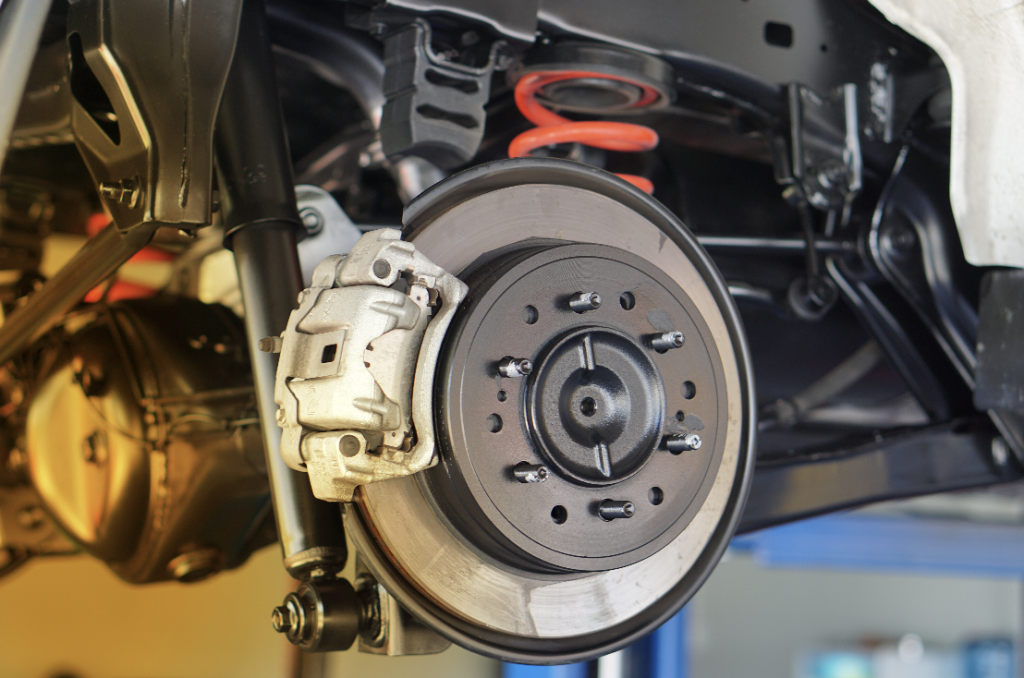
How Brake Systems Work As A Complete System In Mazda Vehicles
Many drivers ask what the difference is between OEM and aftermarket brakes, but that question begins with understanding how the brake system works as a whole. A brake system functions by converting motion into heat through friction, using coordinated interaction between brake pads, rotors, and hydraulic pressure.
In a vehicle like the Mazda CX 5, pressing the brake pedal activates hydraulic force that pushes brake pads against rotating rotors. This contact slows the vehicle by creating controlled friction, which must remain consistent across different speeds and driving conditions.
This system is not made up of independent parts. Each component is calibrated to work with the others.
Read the rest of this entry »Every Mazda is designed to feel connected, where motion, balance, and intention come together in a way that feels natural behind the wheel. When comparing the Mazda CX 50 Hybrid and the Mazda CX 30, the decision is not just about size or fuel economy. It is about how different systems shape the way the vehicle responds to your daily routine. Many drivers are trying to understand whether a hybrid system changes the experience in a meaningful way and how that compares to a traditional gas powered SUV. The answer comes from how each vehicle is engineered to support different types of driving and different expectations over time.

How Hybrid And Gas Powertrains Actually Work In Mazda SUVs
Many drivers ask what the real difference is between the Mazda CX 50 Hybrid and the Mazda CX 30, especially when it comes to how each vehicle produces power. A hybrid powertrain combines a gasoline engine with an electric motor, allowing the system to distribute energy based on driving conditions.
In the Mazda CX 50 Hybrid, the system shifts between electric power and gasoline power depending on speed, load, and driving behavior. At lower speeds or during light acceleration, the electric motor can assist or operate independently, reducing fuel consumption. As demand increases, the gasoline engine engages to provide sustained power.
In the Mazda CX 30, the system relies entirely on a gasoline engine. Power is generated through combustion, which delivers a consistent and direct response across a wide range of driving conditions.
- Hybrid systems use electric assistance to reduce fuel use during low demand driving
- Gas systems rely on continuous engine output for predictable performance
- Energy distribution in a hybrid changes dynamically based on real time conditions
This difference matters because it changes how the vehicle behaves throughout a drive. The CX 50 Hybrid adapts its power delivery moment by moment, while the CX 30 maintains a more consistent and linear response.
Mazda CX 50 Hybrid Vs CX 30 Size And Space Differences
Another common question is whether the Mazda CX 50 Hybrid is larger than the Mazda CX 30 and how that affects daily use. The CX 50 Hybrid is built on a larger platform, which provides more interior space and cargo capacity compared to the more compact CX 30.
In the Mazda CX 30, the design focuses on agility and efficiency. The smaller footprint makes it easier to navigate tight spaces, park in urban environments, and maintain a sense of control in everyday driving.
The Mazda CX 50 Hybrid introduces a wider stance and longer body, which changes how space is used inside the vehicle.
- Larger dimensions allow for more rear passenger space and cargo flexibility
- A wider body creates a more stable feel on the road
- Smaller dimensions support easier maneuverability in confined spaces
The difference is not just about size. It is about how that size translates into daily movement, whether that involves navigating city streets or carrying larger items.
How Fuel Efficiency Changes Between Hybrid And Gas Models
Drivers often want to know which Mazda SUV is better for fuel economy and whether the difference is noticeable in everyday driving. Fuel efficiency in a hybrid system is influenced by how often the vehicle can rely on electric power rather than gasoline.
In the Mazda CX 50 Hybrid, efficiency improves in conditions where the electric motor can assist frequently, such as stop and go traffic or lower speed driving. The system reduces fuel consumption by limiting how often the gasoline engine is used.
In the Mazda CX 30, fuel efficiency depends entirely on how efficiently the gasoline engine operates. While it is engineered for balance and reliability, it does not have the ability to offset fuel use with electric power.
- Hybrid systems are more efficient in city driving and frequent stops
- Gas systems provide consistent efficiency across different driving conditions
- Real world efficiency depends on driving habits and environment
This means the difference in fuel economy becomes more noticeable in certain situations rather than all driving conditions.
How Driving Experience Differs Between CX 50 Hybrid And CX 30
Beyond specifications, many drivers are trying to understand how each vehicle actually feels to drive. The driving experience is shaped by how the powertrain, size, and weight interact with the road.
In the Mazda CX 30, the lighter and more compact design creates a responsive and direct feel. Steering input translates quickly into movement, and the vehicle maintains a sense of agility that suits urban and everyday driving.
The Mazda CX 50 Hybrid introduces a different dynamic. The added weight of the hybrid system and the larger platform create a more grounded and stable feel, especially at higher speeds or on longer drives.
- Compact size supports quick response and maneuverability
- Larger platform provides stability and a more planted driving feel
- Hybrid systems can create smoother transitions during low speed driving
These differences shape how each vehicle fits into different types of driving environments.
How To Choose Based On Your Driving Needs And Routine
Choosing between the Mazda CX 50 Hybrid and the Mazda CX 30 comes down to how you move through your daily life. The decision is not about which vehicle is better overall, but which one aligns with your driving patterns and priorities.
If your routine involves frequent city driving, stop and go traffic, and a focus on fuel efficiency, the Mazda CX 50 Hybrid offers advantages through its ability to reduce fuel use in those conditions.
If your driving is more focused on simplicity, maneuverability, and a consistent driving feel, the Mazda CX 30 provides a straightforward and responsive experience.
- Consider how often you drive in city conditions versus open roads
- Think about how much space you need for passengers and cargo
- Evaluate whether fuel efficiency or simplicity matters more in your routine
When these factors are clear, the choice becomes less about comparing features and more about selecting the vehicle that feels aligned with how you drive every day.
Connect with us


Recent Blog Entries
- 2026 Mazda MX-5 Miata vs Mazda3 Hatchback: Driving Engagement Compared
- Mazda Drive Modes Explained: Efficiency, Comfort, and Control
- Mazda OEM Battery Replacement vs Aftermarket: Longevity Explained
- Mazda Multi-Point Inspection: What Gets Checked and Why It Matters
- CX 5 vs CX 50 Hybrid: Efficiency, Space, Driving Feel