

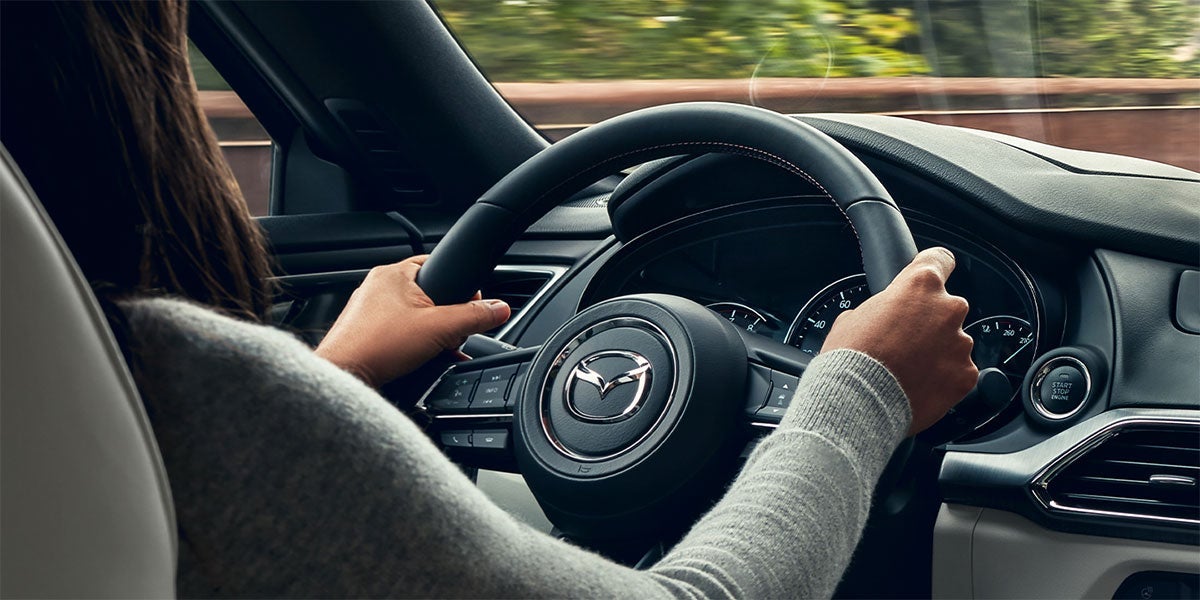
Gas prices are always too high, but they don’t have to spoil your enjoyment of your Mazda. There are many ways to save a buck without losing time behind the wheel. As your Mazda dealer, we’d like to give you some tips to increase your Mazda fuel efficiency beyond its already efficient level.
From Your Mazda Dealer: Tips To Enhance Your Mazda Fuel Efficiency
Don’t Be a Lead Foot
It can be tempting to drive fast on the highway to get where you need to be sooner, but this can lead to problems. If you hit the gas and then shortly afterward hit the brakes, the rapid acceleration and deceleration greatly increase fuel usage. The same situation applies to drivers at traffic lights who hit the gas when the lights turn green and fast start and stop driving in the city.
Depending on driving conditions and the frequency of excessive acceleration and deceleration, you can easily increase gas usage by 6% to 33%. In addition, this type of driving puts additional strain on your engine, axles, brakes, and other systems, causing them to wear out faster, requiring early replacement.
Get Regular Oil Changes
Oil is essential for keeping your engine clean and working efficiently. It lubricates countless components, protecting them against friction damage with a friction-resistant coating. What you might not know is regular oil changes reduce fuel usage by 1% to 2%. This is because older oil becomes less efficient at lubrication, making engine components grind against each other rather than move smoothly.
Grinding wears down components faster, and it causes resistance when you speed up. This forces the engine to work harder to overcome the resistance, burning more gas in the process. Once we change your oil, you’ll have to take fewer trips to the pump.
Check Tire Inflation
Your tires lose air if there’s a leak, but they will also lose air naturally if the temperature drops. Colder conditions cause your tires to lose pressure. The air in the tires tries to equalize with the lower external pressure. This results in a loss of 1 to 2 PSI per tire per 10 degree fall in temperature.
The sidewalls of an underinflated tire sag toward the road surface. This exposes the softer sidewall rubber to surface friction, eventually causing a leak. Underinflated tires create resistance, and your engine burns more fuel due to this drag. Every PSI lower than the recommended pressure decreases fuel efficiency by 0.3%.
These are just some of the ways you can save gas. Regular tune-ups and several other services will also help keep your Mazda as fuel-efficient as it’s designed to be. If you’d like to know more, contact us today at Mazda City of Orange Park in Jacksonville, FL.
Connect with us


