

For daily drivers in Jacksonville and Orange Park, the ideal compact car needs to do more than deliver good fuel economy. It has to feel comfortable in traffic, stable at highway speeds, easy to live with in tight parking situations, and rewarding enough that driving does not feel like a chore. The 2026 Mazda3 stands out in this space because it is engineered around balance and driver engagement rather than chasing numbers or visual flash.
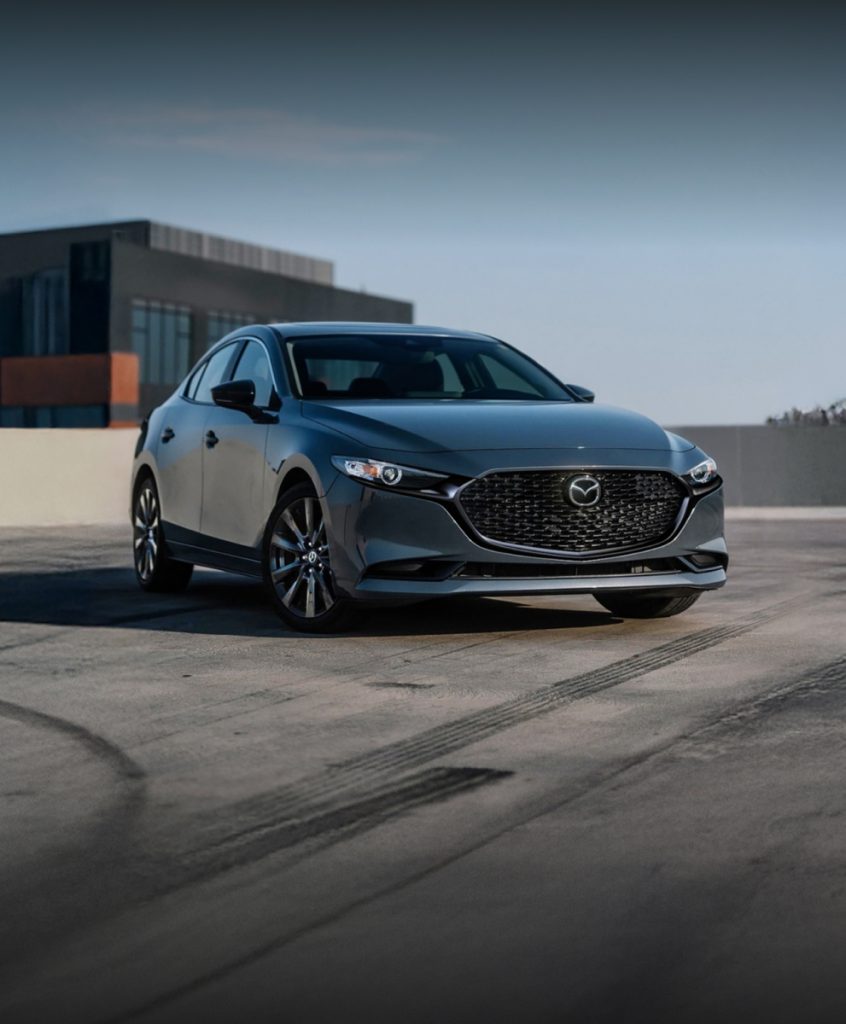
Mazda approaches the compact segment differently than many competitors. Instead of prioritizing maximum cabin volume or headline features, the Mazda3 is designed to feel composed, quiet, and connected in real-world driving conditions. That difference shows up every day, not just on a spec sheet.
Platform and Powertrain Intent
The 2026 Mazda3 continues to use Mazda’s well-established compact vehicle platform, tuned for rigidity and predictable response. A stiff structure allows the suspension to do its job accurately, which directly affects ride comfort and steering feel.
Power comes from Mazda’s naturally aspirated Skyactiv gasoline engines, engineered for smooth torque delivery and efficiency without relying on aggressive turbocharging. Throttle response is linear, which matters more in daily driving than peak output numbers. Acceleration feels predictable when merging onto highways or navigating stop-and-go traffic.
Key powertrain characteristics that matter daily:
- Smooth, consistent torque delivery at low and mid-range speeds
- Reduced drivetrain lag in urban driving
- Engine tuning designed for longevity and efficiency
- Calm highway behavior without constant gear hunting
Steering, Handling, and Traffic Confidence
One of the Mazda3’s defining traits is steering feel. Mazda calibrates the steering system to provide weight and feedback that mirror vehicle movement. This makes lane changes, curves, and quick maneuvers feel controlled rather than vague.
In city traffic, the Mazda3 feels compact and easy to place. On highways, it remains stable and composed, avoiding the light or floaty sensation that some compact cars develop at speed.
Handling benefits daily drivers notice:
- Predictable steering response in traffic
- Confident lane changes at highway speeds
- Controlled body motion over uneven pavement
- A sense of connection without harshness
Ride Comfort on Real Roads
Jacksonville-area roads include a mix of smooth highways, concrete expansion joints, and worn surface streets. Mazda tunes the Mazda3’s suspension to absorb imperfections without feeling soft or disconnected.
Rather than isolating the driver completely, the suspension balances comfort with feedback. This reduces fatigue over long commutes and prevents the car from feeling unsettled on rougher pavement.
Interior Ergonomics and Cabin Quality
The Mazda3 interior is intentionally minimalist, but that simplicity serves a purpose. The driving position is engineered around natural posture, with pedals, steering wheel, and seat alignment designed to reduce strain over time.
Interior design priorities include:
- Clear sightlines with a low dash and well-positioned instruments
- Physical controls for frequently used functions
- Screen placement that minimizes eye movement
- Materials chosen for consistency rather than flash
The result is a cabin that feels calm and refined, especially during long stretches of traffic or highway driving. Noise insulation is also a strong point, with road and wind noise kept lower than many competitors in the compact segment.
All-Wheel Drive Availability
One feature that differentiates the Mazda3 is available all-wheel drive, which remains uncommon among compact cars. While not necessary for every driver, AWD adds confidence in heavy rain and improves traction during sudden weather changes common in Florida.
Mazda’s AWD system operates automatically, distributing power where needed without requiring driver input. It enhances stability without changing the driving character of the vehicle.
Fuel Efficiency and Real-World Use
Fuel efficiency remains competitive in the compact segment, but Mazda prioritizes real-world drivability over chasing extreme MPG figures. The Mazda3 delivers consistent efficiency in mixed driving, especially for commuters who combine highway and city travel.
Because the engine is not overly stressed, efficiency remains predictable even with passengers, cargo, or sustained highway speeds.
Safety Systems for Urban Driving
The 2026 Mazda3 includes Mazda’s i-Activsense driver assistance technologies, designed to support awareness rather than overwhelm the driver. Features such as Smart Brake Support, Blind Spot Monitoring, and Lane Departure Warning are calibrated to provide timely alerts without aggressive intervention.
In dense traffic and busy intersections, these systems add confidence while keeping the driver fully engaged.
Long-Term Ownership Considerations
Daily drivers often keep their vehicles for several years, making durability and satisfaction important. Mazda’s focus on proven powertrains, restrained technology integration, and structural integrity contributes to strong long-term ownership confidence.
Drivers who value:
- A quiet, comfortable commute
- Predictable handling and control
- Interior quality that holds up over time
- A car that remains enjoyable beyond the first year
often find the Mazda3 particularly satisfying to live with.
Why the Mazda3 Stands Out for Daily Driving
Many compact cars excel in one area while compromising another. The 2026 Mazda3 stands out because it balances the elements that matter most to everyday drivers. It is easy to maneuver in the city, stable on the highway, comfortable over long distances, and engaging enough to make daily driving feel intentional rather than routine.
For Jacksonville-area drivers looking for a compact car that prioritizes comfort, control, and long-term satisfaction, the Mazda3 delivers a well-rounded ownership experience that goes beyond basic transportation. It is not designed to impress on paper. It is designed to feel right every time you drive it.
Mazda approaches safety with the same philosophy it applies to design and driving feel: support the driver, do not replace them. i-Activsense is Mazda’s suite of active safety and driver assistance technologies built to enhance awareness, reduce fatigue, and intervene only when a situation becomes critical. Rather than relying on aggressive automation, Mazda calibrates these systems to feel natural and predictable in real-world driving.
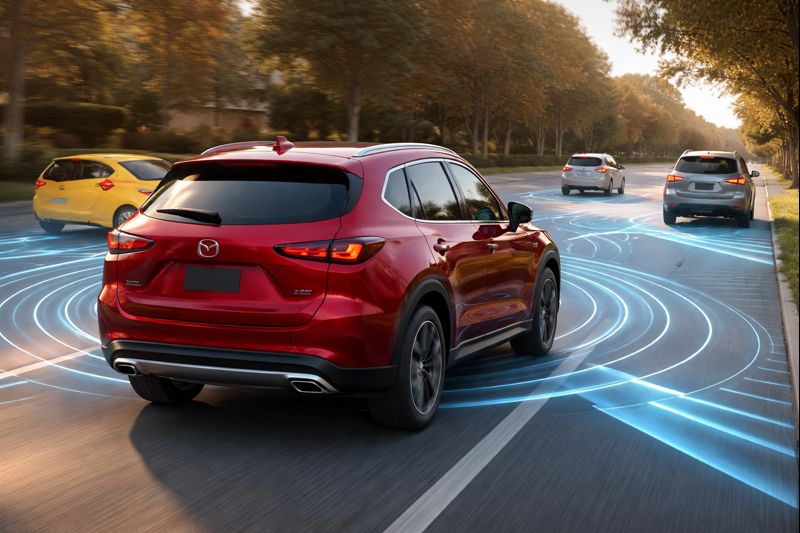
For drivers navigating Orange Park roads, suburban traffic patterns, and regional highways, i-Activsense is designed to work quietly in the background, providing information first and assistance second. Understanding how these systems function helps drivers use them correctly and confidently.
Active Safety Versus Passive Safety
Mazda separates safety into two complementary layers.
Passive safety focuses on protection during a collision. This includes body structure design, airbags, seatbelts, and energy management systems.
Active safety focuses on preventing collisions before they happen. i-Activsense belongs in this category. These technologies monitor surroundings, track vehicle behavior, and support driver decision-making in real time.
Mazda places strong emphasis on active safety because preventing an incident is always preferable to managing the aftermath.
Read the rest of this entry »For many Jacksonville families shopping three-row SUVs, the decision is not just about size or seating count. It is about flexibility. Family needs change quickly, and committing to a vehicle for the long term does not always align with how households actually use their SUV over time. This is where leasing enters the conversation, particularly with a vehicle like the Mazda CX-90 that is engineered to balance space, refinement, and driving confidence.
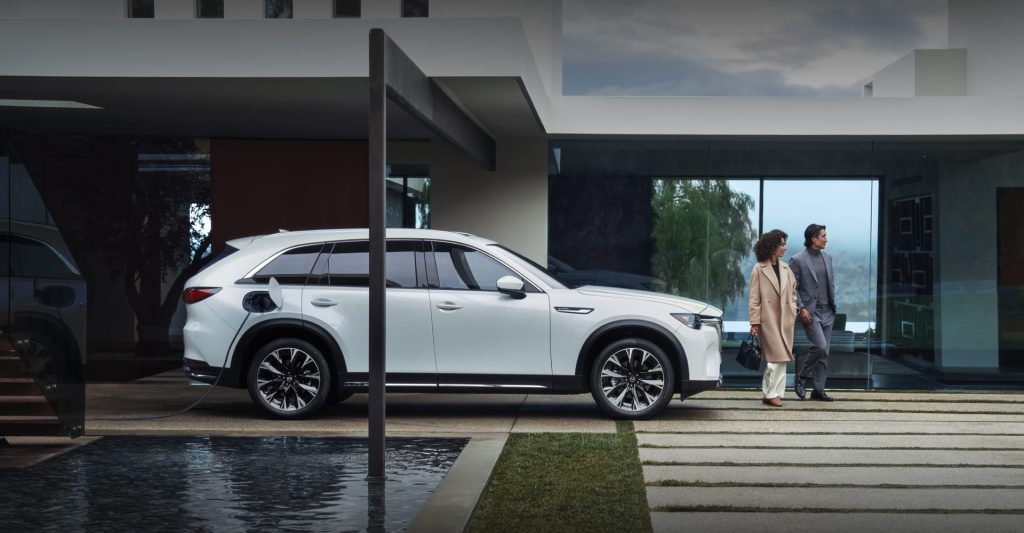
Rather than framing leasing as a financial shortcut, Mazda positions CX-90 lease options as a practical way to align vehicle ownership with real family life cycles. Understanding why leasing appeals to three-row SUV shoppers starts with understanding how families actually use these vehicles.
Why Leasing Fits the Three-Row SUV Decision
Three-row SUVs often serve families during specific stages. Young children grow quickly, schedules change, and priorities shift. Leasing allows families to choose a vehicle that fits their current needs without locking themselves into a long ownership horizon that may no longer make sense a few years down the road.
Leasing a three-row SUV often appeals to families who:
- Expect their vehicle needs to change within a few years
- Prefer predictable ownership periods
- Want access to newer safety and driver assistance technology
- Do not want long-term responsibility for depreciation
- Drive within consistent mileage ranges
In this context, leasing becomes a planning tool rather than a pricing tactic.
Read the rest of this entry »Mazda’s design philosophy is not rooted in decoration or trend-following. It begins with a simple question: how should a car feel to drive? Every design decision, from exterior proportions to interior control placement, is made to support a natural connection between driver and vehicle. This approach is shaped by the Japanese concept of Jinba Ittai, the idea of harmony between horse and rider. In modern Mazda vehicles, that harmony translates into confidence, focus, and a sense of control that drivers notice immediately on real roads.
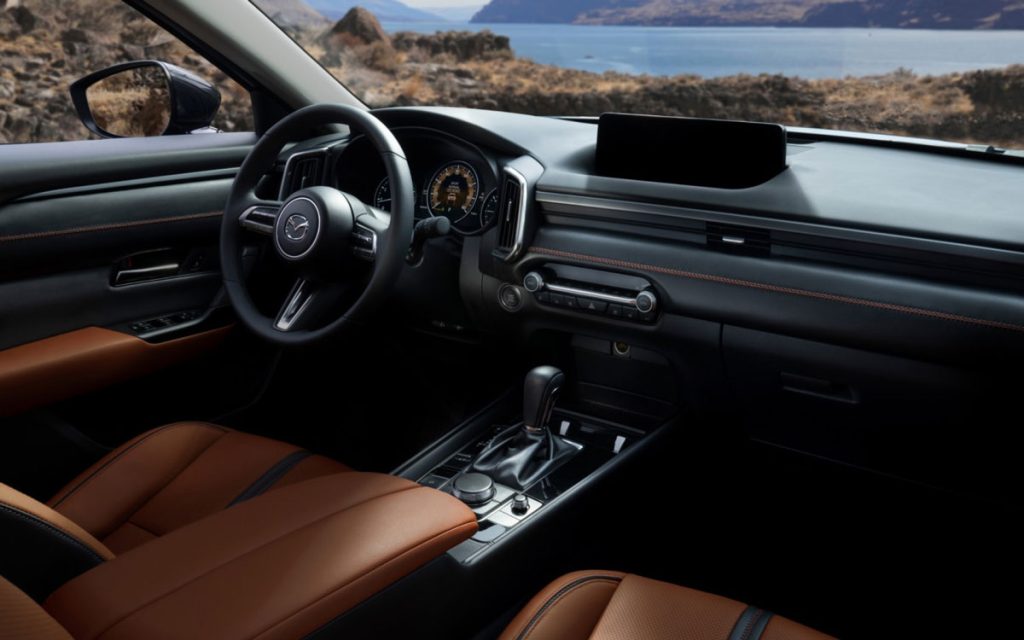
Rather than separating styling from engineering, Mazda treats design as a functional system. The result is a driving experience that feels intentional and composed, especially during everyday use on local roads, commutes, and longer highway drives.
Design Begins With the Driver, Not the Dashboard
Mazda interiors are engineered around the human body, not around screens or visual impact. Seating position, pedal alignment, steering wheel placement, and sightlines are all tuned to support natural posture and quick response.
Key interior design principles include:
- A driving position that aligns hips, shoulders, and feet to reduce strain
- Pedals centered with the driver’s body rather than offset
- A steering wheel angle that supports relaxed but precise input
- Instrument placement that falls within the driver’s natural eye movement
This layout reduces the need for constant micro-adjustments while driving. Over time, fewer adjustments mean less fatigue and greater confidence, particularly during longer drives or in stop-and-go traffic.
Read the rest of this entry »For families in Orange Park and the surrounding Clay County area, choosing a three-row SUV is rarely about size alone. Daily driving often includes school drop-offs, highway commuting into Jacksonville, weekend travel, and longer family trips that demand comfort, stability, and flexibility over time. The 2026 Mazda CX-90 is designed for families who want those practical advantages without giving up refinement or driver confidence.
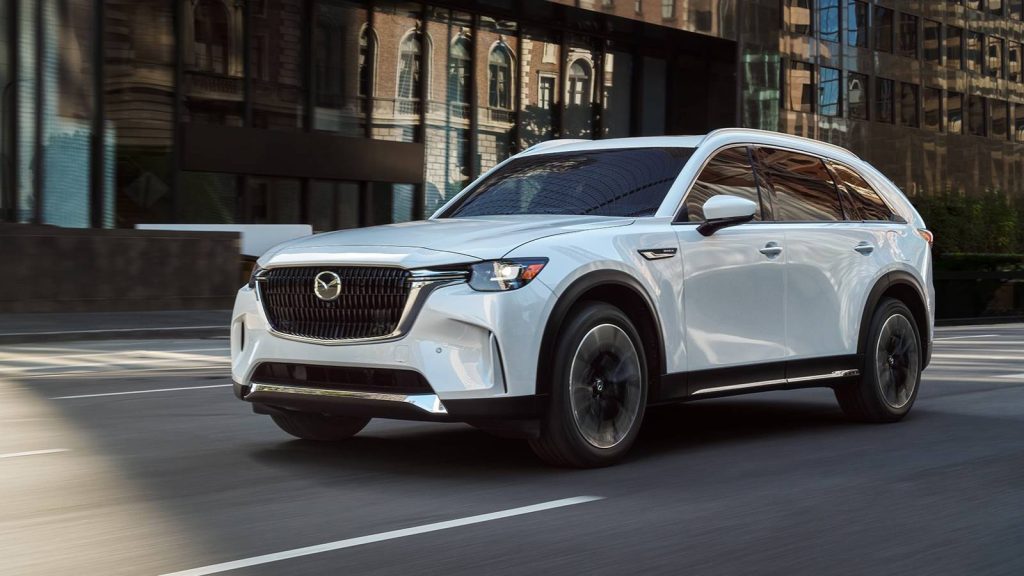
Rather than approaching the segment as a purely utilitarian people mover, Mazda engineered the CX-90 to support long-term family ownership while preserving composure, balance, and craftsmanship.
Platform Architecture and Why It Matters for Local Driving
The CX-90 is built on Mazda’s large-vehicle platform with a rear-biased longitudinal layout. This design choice has a meaningful impact on how the vehicle behaves in everyday use, particularly for Orange Park drivers who regularly transition between suburban roads, bridge crossings, and interstate travel.
This architecture contributes to:
Read the rest of this entry »Modern vehicles are no longer defined only by engines and transmissions. For many drivers, the ownership experience now includes how easily a vehicle integrates into daily life through technology. Mazda Connected Services is designed to support that experience by offering practical, intuitive tools that extend vehicle awareness beyond the driver’s seat.
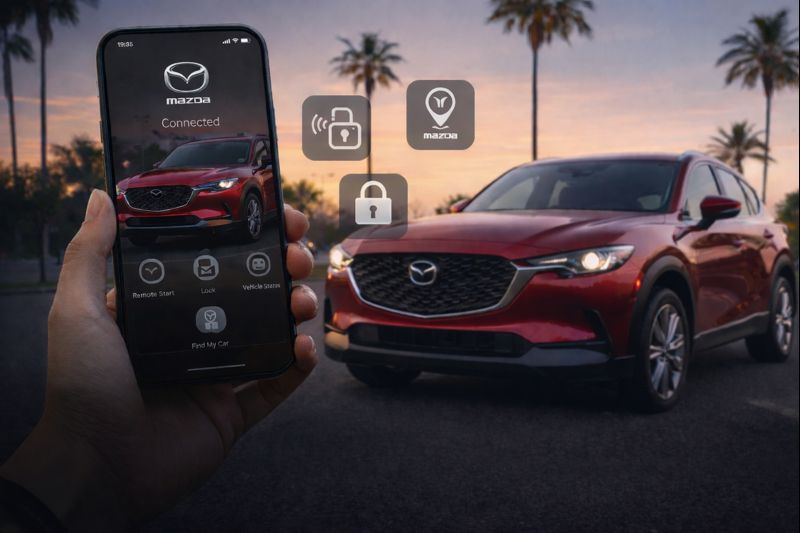
Rather than overwhelming drivers with complexity, Mazda focuses on connected features that provide real-world usefulness, security, and peace of mind.
What Mazda Connected Services Actually Is
Mazda Connected Services is a suite of vehicle connectivity features accessed through a smartphone app. These services allow drivers to interact with their vehicle remotely, monitor its status, and manage certain functions without being physically present.
It is important to distinguish between:
Read the rest of this entry »Compact cars are often treated as basic transportation tools, optimized for efficiency and cost but rarely designed to engage the driver. The 2026 Mazda3 takes a different approach. For Jacksonville drivers who want a compact vehicle that feels composed, refined, and intentionally engineered, the Mazda3 stands apart from many competitors in the segment.
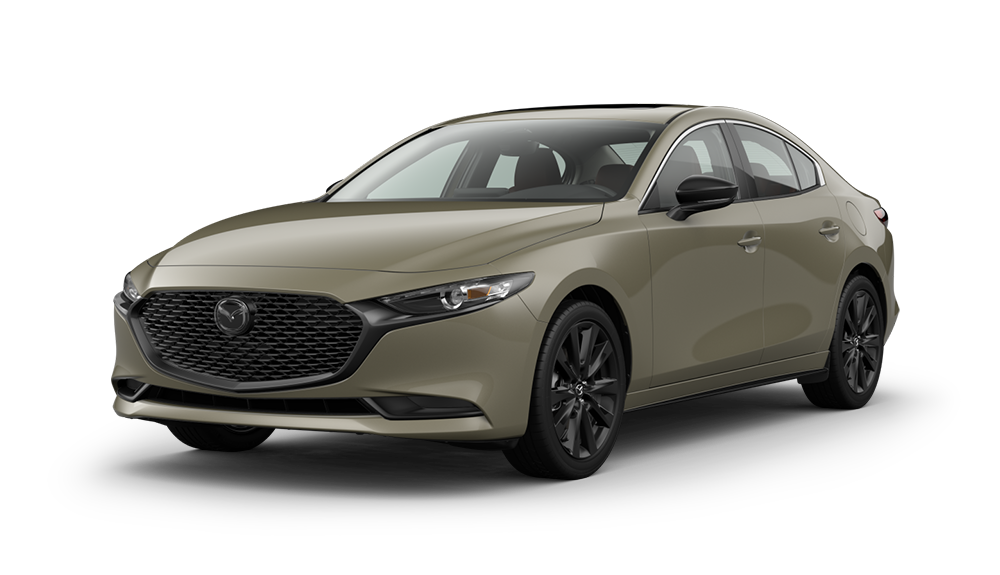
Understanding why requires looking beyond size and fuel economy to examine how the Mazda3 is built, how it behaves on the road, and how its systems support daily driving in real-world conditions.
Platform Design and Driving Character
The Mazda3 is engineered around a philosophy that prioritizes balance and driver connection. Steering calibration, suspension tuning, and chassis rigidity are designed to create predictable responses rather than isolated softness. This results in a compact car that feels stable at highway speeds and controlled during lane changes and urban maneuvering.
For Jacksonville commuters, this matters because:
Read the rest of this entry »For many Jacksonville drivers, leasing a Mazda CX-5 is not about chasing the lowest monthly number. It is about understanding how payment structure, mileage expectations, and vehicle configuration come together in a way that fits real driving habits. The CX-5 sits at the center of Mazda’s SUV lineup because it balances size, efficiency, and driving confidence, which makes it a frequent subject of lease research rather than impulse decisions.
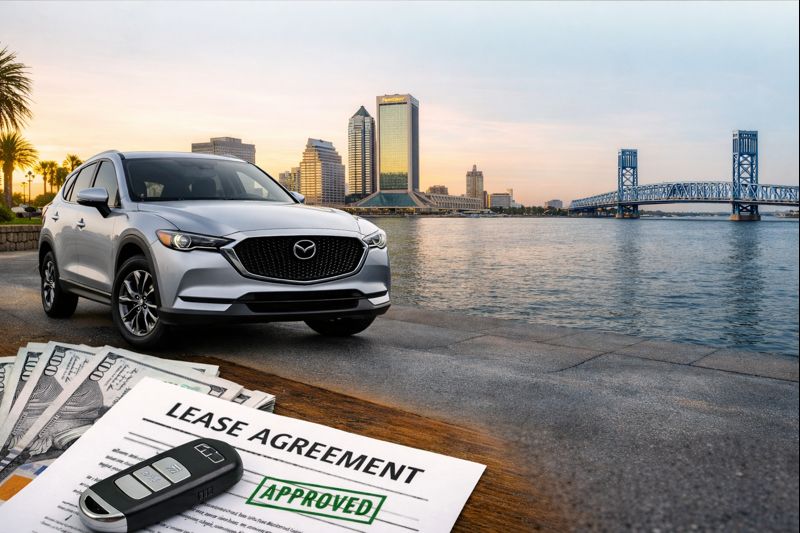
Comparing lease options starts with understanding how the CX-5 behaves as a vehicle over time, not just how it looks on paper.
How Mazda CX-5 Lease Payments Are Structured
A CX-5 lease is built around depreciation rather than ownership. The payment reflects how much of the vehicle’s value is used during the lease term rather than the full purchase price.
Key components that shape CX-5 lease payments include:
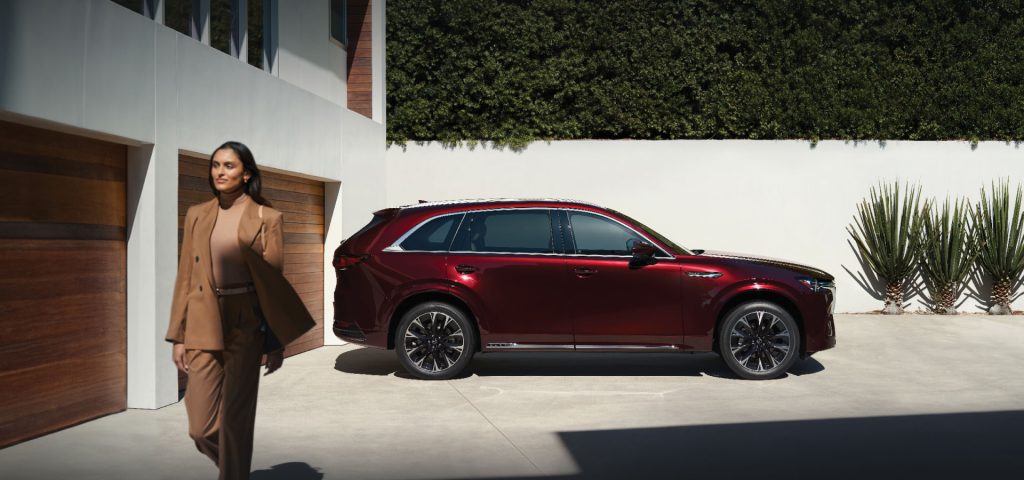
Read the rest of this entry »Three-row SUVs are often defined by size alone, but the 2025 Mazda CX-90 is engineered around a different priority: delivering genuine family capability with the refinement, balance, and responsiveness that Mazda is known for. Rather than building the largest possible cabin and compensating later with technology, Mazda starts with a purpose-built platform that integrates powertrain, chassis, and interior design from the outset.
For Jacksonville families balancing daily school runs, highway travel, and longer weekend trips, the CX-90 offers a three-row experience that feels intentional, controlled, and premium without excess bulk.
Platform Architecture Built for Balance
The CX-90 sits on Mazda’s large-vehicle architecture designed to support longitudinal powertrains and rear-biased dynamics. This layout influences everything from ride quality to interior proportions.
Key architectural advantages include:
- A longer wheelbase that improves third-row legroom and ride stability
- Longitudinal engine placement that supports balanced weight distribution
- A rigid structure that allows precise suspension tuning
- Reduced front overhang that improves steering response
This foundation helps the CX-90 feel composed on the highway while remaining manageable in everyday driving.
True Three-Row Seating Designed for Families
The CX-90 is engineered as a true three-row vehicle, not a two-row SUV with an occasional third row. Seating geometry and access are designed to support real passengers across all rows.
Three-row design considerations include:
- Proper seat height in the third row to avoid a knees-up posture
- Legroom supported by the extended wheelbase
- Wide rear door openings that improve access
- Dedicated rear climate vents for passenger comfort
For families who regularly use all three rows, these details make a noticeable difference on longer drives.
Interior Craftsmanship and Cabin Atmosphere
Mazda’s approach to interior design emphasizes calm, clarity, and craftsmanship. The CX-90 cabin reflects this with materials and layouts chosen to reduce fatigue and visual noise.
Interior highlights include:
- Clean horizontal dashboard design that enhances the sense of space
- Materials selected for texture and durability
- Seating designed to support posture over long distances
- Thoughtful storage solutions for family use
The result is a cabin that feels refined and welcoming rather than busy.
Cargo Flexibility for Real Life
Cargo space in the CX-90 is designed around flexibility rather than headline numbers. Mazda focuses on making the space usable with passengers still onboard.
Cargo functionality includes:
- Practical storage behind the third row for daily needs
- Flat load floor when rear seats are folded
- Wide rear opening for easier loading
- Configurations that adapt quickly between people and cargo
This allows families to transition easily from daily errands to longer trips without constant rearranging.
Powertrain Engineering and Everyday Performance
The CX-90 introduces powertrain options designed to deliver smooth, confident performance while maintaining efficiency. Rather than tuning for aggressive acceleration, Mazda prioritizes usable torque and refinement.
Powertrain characteristics include:
- Strong low-end response for easy merging and passing
- Smooth power delivery that enhances passenger comfort
- Calibration designed for relaxed highway cruising
- Efficient operation suited to family driving patterns
This makes the CX-90 feel capable without feeling heavy or strained.
Driving Dynamics That Reduce Fatigue
Large SUVs often feel disconnected, especially during longer drives. Mazda engineers the CX-90 to maintain a sense of control and responsiveness even at its size.
Driving dynamics benefits include:
- Steering tuned for clarity rather than over-assistance
- Suspension calibration that balances comfort with body control
- Predictable handling during lane changes and curves
- Stable braking behavior under load
For Jacksonville drivers spending time on highways, this translates to reduced fatigue and greater confidence.
Safety Systems Designed Around Awareness
The CX-90 incorporates Mazda’s driver assistance systems with a focus on awareness and natural response. Systems are calibrated to support the driver rather than overwhelm them.
Safety-focused design priorities include:
- Clear alerts that prompt driver attention
- Smooth intervention rather than abrupt correction
- Integration with chassis behavior for stability
- Consistent behavior in varied traffic conditions
This aligns with Mazda’s human-centric approach to safety engineering.
Fuel Efficiency and Practical Ownership
Despite its size, the CX-90 is engineered with efficiency in mind. Powertrain choices and vehicle weight management support reasonable fuel use for a three-row SUV.
Efficiency considerations include:
- Power delivery tuned for everyday driving rather than peak output
- Reduced mechanical strain during cruising
- Design choices that balance performance and consumption
For families, this helps keep long-term ownership practical.
Who the CX-90 Is Built For
The CX-90 is well suited for families who want:
- A true three-row SUV with real passenger comfort
- Premium interior feel without excessive size
- Confident highway performance
- Thoughtful design focused on daily use
- A refined alternative to traditional large SUVs
It works especially well for families upgrading from two-row crossovers.
What Jacksonville Families Should Evaluate
When choosing a three-row SUV, families should evaluate:
- Third-row comfort for real passengers
- Ride quality on long trips
- Ease of access for children and adults
- Cargo flexibility with seats in use
- Driving confidence at highway speeds
The CX-90 performs strongly in these real-world categories.
Final Perspective on the 2025 Mazda CX-90
The 2025 Mazda CX-90 demonstrates that a family-focused three-row SUV does not need to sacrifice refinement or driving confidence. Through balanced architecture, thoughtful interior design, and composed performance, Mazda delivers a vehicle that feels premium in daily use rather than simply large.
For Jacksonville families seeking a three-row SUV that blends comfort, control, and craftsmanship, the CX-90 offers a compelling option rooted in Mazda’s philosophy of human-centric engineering.
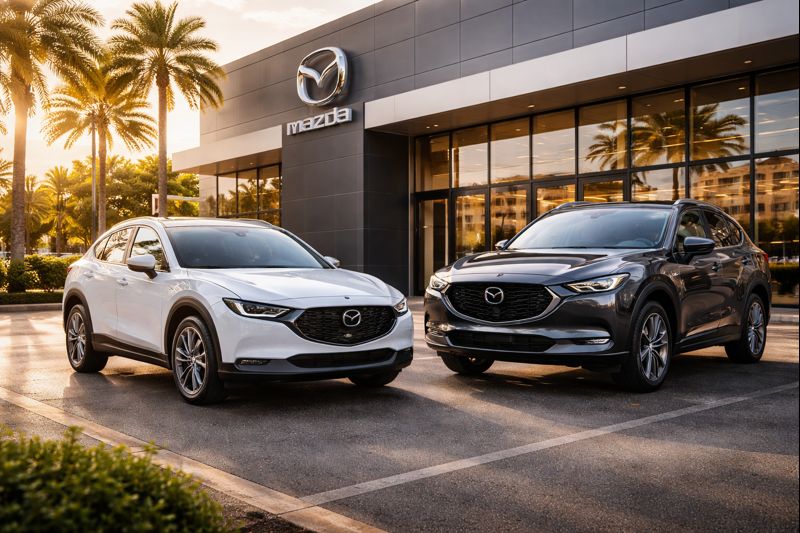
Mazda Lease Options Explained for Orange Park Drivers Considering CX-5 and CX-30 Models
Leasing a Mazda is often less about chasing a lower monthly payment and more about aligning ownership with how a vehicle is actually used. For Orange Park drivers comparing the Mazda CX-5 and Mazda CX-30, leasing provides a structured way to balance vehicle size, technology access, and long-term value without committing to extended ownership. Understanding how Mazda leases are structured and how each model behaves over time helps clarify which option fits daily life more naturally.
This guide explains how Mazda leasing works, how the CX-5 and CX-30 differ from a lease perspective, and what drivers should evaluate before choosing a path.
How Mazda Leasing Works
A lease is a usage-based ownership agreement. Rather than paying for the full value of the vehicle, the lessee pays for the portion of value expected to be used during the lease term.
Key components of a Mazda lease include:
- Capitalized cost, which reflects the agreed vehicle price
- Residual value, the projected value at lease end
- Lease term length, commonly 24 to 36 months
- Mileage allowance based on expected annual driving
- Financing factor that accounts for the cost of borrowing
Monthly payments are driven primarily by depreciation rather than the full vehicle cost.
Why Residual Value Matters
Residual value plays a central role in determining lease efficiency. Vehicles that retain value well over time typically lease more favorably.
From a residual perspective:
- CX-30 benefits from strong demand in the compact crossover segment
- Smaller size and efficiency support broad resale appeal
- CX-5 retains value through its reputation for versatility and reliability
- Slightly higher depreciation reflects its larger size and expanded capability
Both models hold value well, but their different roles influence lease structure.
Size and Engineering Differences That Affect Leasing
Engineering choices influence wear, efficiency, and long-term value, all of which factor into leasing assumptions.
Key differences include:
- CX-30 lighter weight supports efficiency and reduced component strain
- CX-5 larger chassis supports increased passenger and cargo capacity
- CX-5 suspension and braking systems are sized for added mass
- CX-30 favors agility and urban maneuverability
For drivers primarily commuting or navigating tighter spaces, the CX-30 often feels well matched to leasing. Drivers with family or cargo needs may find the CX-5’s added size worth the tradeoff.
Mileage Planning for Orange Park Driving
Mileage allowances are a critical lease decision. Choosing the correct allowance upfront helps avoid end-of-lease charges.
Typical mileage options include:
- 10,000 miles per year
- 12,000 miles per year
- 15,000 miles per year
CX-30 lessees often select moderate mileage allowances due to commuter-focused use. CX-5 lessees may require higher mileage if the vehicle supports family travel or longer trips.
Leasing as a Way to Stay Current With Technology
Mazda vehicles integrate evolving technology across safety, infotainment, and driver assistance systems. Leasing allows drivers to experience these updates without long-term commitment.
Technology-related leasing benefits include:
- Access to newer safety and connectivity features
- Ownership aligned with warranty coverage
- Flexibility to upgrade as systems evolve
- Reduced concern over long-term technology aging
This approach suits drivers who value current features and predictable ownership cycles.
Lease Versus Finance for CX-5 and CX-30 Drivers
Leasing and financing serve different priorities.
Leasing may be well suited for drivers who:
- Prefer predictable monthly expenses
- Drive within defined mileage limits
- Enjoy changing vehicles every few years
- Want consistent warranty coverage
Financing may appeal to drivers who:
- Plan to keep the vehicle long term
- Drive higher annual mileage
- Want to eliminate payments eventually
- Value long-term ownership flexibility
The CX-30 often aligns naturally with leasing due to its efficient footprint. The CX-5 may appeal to drivers who intend to keep the vehicle longer to fully utilize its versatility.
Driving Experience and Lease Considerations
Mazda’s emphasis on balance and smoothness supports leasing assumptions by promoting consistent vehicle condition over time.
Engineering traits that support lease performance include:
- Predictable handling that reduces uneven tire wear
- Smooth power delivery that limits drivetrain stress
- Suspension tuning designed for stability and comfort
- Braking systems calibrated for controlled deceleration
These qualities help preserve vehicle condition throughout the lease term.
Choosing Between CX-5 and CX-30 for Leasing
When deciding which model to lease, drivers should evaluate:
- Daily commute length and traffic patterns
- Passenger and cargo requirements
- Parking and maneuverability preferences
- Expected annual mileage
- Desire for compact efficiency versus added versatility
Matching the vehicle to real-world use is more important than choosing the larger option by default.
Why Mazda Leasing Appeals to Value-Focused Drivers
Mazda leasing reflects the brand’s value-driven approach to ownership. Lease structures emphasize reliability, balanced depreciation, and usability rather than short-term incentives.
This appeals to drivers who want:
- Clear cost expectations
- Thoughtful ownership planning
- Vehicles designed for long-term confidence
Leasing becomes a practical ownership strategy rather than a temporary solution.
Final Perspective on Mazda Lease Options
Leasing a Mazda CX-5 or CX-30 allows Orange Park drivers to align vehicle size, technology, and usage with predictable ownership. The CX-30 offers an efficient, agile leasing option ideal for daily commuting and urban driving. The CX-5 provides added space and flexibility that may justify its larger footprint for drivers with broader needs.
By understanding how leasing works and how each model fits different lifestyles, drivers can choose a Mazda lease path that supports both confidence and practicality throughout the ownership cycle.
Connect with us


Recent Blog Entries
- 2026 Mazda3: A Standout Choice for Jacksonville’s Daily Drivers
- Understanding Mazda’s i-Activsense Features – Safety Designed for Orange Park Roads
- How Mazda CX-90 Lease Options Appeal to Jacksonville Families Comparing Three-Row SUVs
- How Mazda’s Design Principles Create a More Connected Drive in Orange Park
- 2026 Mazda CX-90: A Premium Three-Row Option for Orange Park Families