

Modern vehicles are filled with technology, but more features do not always lead to a better driving experience. For many drivers in Orange Park, the goal is not to have the largest screen or the most menus. It is to have systems that are easy to use, reduce distraction, and support the driver without adding complexity.
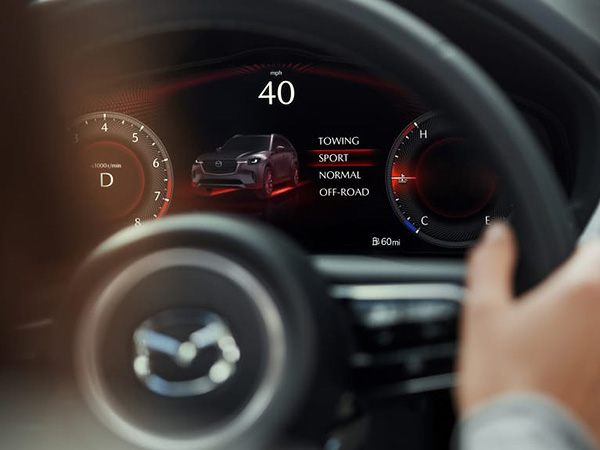
Many shoppers ask whether Mazda technology is easy to use compared to other brands. Mazda approaches technology differently by focusing on how drivers interact with systems while the vehicle is in motion. Instead of designing around visual impact, Mazda engineers its technology to work with natural driver behavior, allowing for safer and more intuitive control during everyday driving.
Infotainment Design That Reduces Driver Distraction
Many drivers researching Mazda want to understand how the infotainment system works and why it avoids full touchscreen use while driving. The Mazda CX-30 infotainment system is controlled primarily through a rotary controller located near the center console.
This system is designed to minimize the need for drivers to reach forward or take their eyes off the road. The screen is positioned higher on the dashboard, closer to the driver’s line of sight, allowing information to be viewed quickly without shifting focus away from driving conditions.
The rotary controller operates through directional input and tactile feedback. Drivers can navigate menus, adjust settings, and select options using small, controlled movements rather than tapping a screen. This approach reduces the likelihood of missed inputs and keeps hand movement consistent.
In real world driving, this results in fewer distractions during tasks such as adjusting audio, navigation, or vehicle settings. For Orange Park drivers managing traffic, intersections, and changing road conditions, this design helps maintain awareness while interacting with technology.
Smartphone Integration That Works in Real Driving Conditions
Shoppers often ask whether Mazda supports Apple CarPlay and Android Auto and how these systems function during daily use. Smartphone integration in the Mazda CX-5 and Mazda3 allows drivers to access navigation, messaging, and media through a familiar interface.
Apple CarPlay and Android Auto mirror key smartphone functions onto the vehicle display, but Mazda integrates these systems in a way that maintains its driver-focused control philosophy. Instead of relying on touch input, drivers can navigate apps using the rotary controller or voice commands.
Voice control plays an important role in reducing interaction time. Drivers can request directions, send messages, or change audio without navigating multiple menus. This allows key functions to be completed while keeping attention on the road.
For everyday commuting in Orange Park, where quick adjustments are often needed, this integration provides access to familiar tools without introducing additional complexity.
How Mazda i-Activsense Safety Systems Work Together
Many shoppers want to understand what Mazda i-Activsense safety features actually do during real driving situations. Mazda i-Activsense is a suite of driver assistance systems that use cameras, radar, and sensors to monitor the environment around the vehicle.
Adaptive cruise control in the Mazda CX-30 maintains a set distance from vehicles ahead by adjusting speed automatically. This is especially useful in stop and go traffic, where constant speed adjustments would otherwise be required from the driver.
Lane keeping assist monitors road markings and provides gentle steering input to help maintain lane position. Rather than taking control away from the driver, the system works as a support tool that reinforces driver input.
Blind spot monitoring uses radar sensors to detect vehicles in adjacent lanes and alerts the driver when changing lanes may be unsafe. Automatic emergency braking detects potential collisions and applies braking if necessary.
These systems function together rather than independently. The sensors continuously gather information, allowing the vehicle to respond to multiple conditions at once. For Orange Park drivers navigating busy roads, this coordination improves awareness and adds a layer of support without replacing driver control.
Interface Design That Reduces Cognitive Load
Drivers often ask why some vehicles feel overwhelming to use despite having advanced technology. The difference comes down to cognitive load, which refers to how much mental effort is required to operate a system.
Mazda designs its interfaces to reduce unnecessary complexity. The Mazda CX-5 interior technology layout uses clear menu structures, consistent controls, and limited on-screen clutter. Each function is organized in a way that allows drivers to predict where information is located.
Physical controls are retained for commonly used functions such as climate and volume. This allows drivers to make adjustments without navigating digital menus. The combination of physical and digital controls creates a more intuitive experience.
For drivers in Orange Park, this means less time spent searching for controls and more time focused on driving. Over longer periods, reduced cognitive load contributes to lower fatigue and a more relaxed driving experience.
How Mazda Technology Compares in Everyday Use
Many buyers comparing vehicles want to know whether Mazda technology is as advanced as competitors that emphasize larger screens and more visual features. The difference lies in how technology is used rather than how it looks.
Mazda prioritizes usability and driver focus, while many competitors prioritize visual impact and feature quantity. Larger touchscreens may offer more immediate visual interaction, but they often require greater attention and more precise input.
In contrast, Mazda systems are designed around consistent interaction and minimal distraction. This results in technology that feels more predictable and easier to use over time.
When comparing vehicles, drivers should evaluate:
- How easily systems can be used without looking away from the road
- Whether controls feel consistent and intuitive
- How quickly common tasks can be completed
- Whether the system supports or distracts from driving
Mazda technology stands out by simplifying these interactions. Instead of requiring drivers to adapt to the vehicle, the systems are designed to align with natural driving behavior.
Mazda’s approach to technology is centered on clarity and control. By focusing on how systems function during real driving conditions, Mazda creates an experience that supports the driver rather than competing for attention. For Orange Park drivers, that means technology that feels purposeful, intuitive, and easier to live with every day.
Connect with us


