Blog / Mazda City of Orange Park

Blog

All Mazda City of Orange Park Jacksonville Mazda Dealer Jacksonville Mazda Service Mazda City of Orange Park Service Things To Do In Jacksonville Jacksonville Amenities Jacksonville Entertainment Jacksonville Used Cars Jacksonville Eateries Tom Bush Family of Dealerships Jacksonville Restaurants Jacksonville Parks Orange Park Florida Mazda Dealer Jacksonville Landmarks Mazda City of Orange Park Collision Center Mazda SUVs Collision Center in Jacksonville Jacksonville Art Jacksonville Fitness Orange Park Florida Mazda Service Holidays in Jacksonville Orange Park Mazda Service Shopping in Jacksonville Weekend Getaways Auto Insurance Family Fun in Jacksonville Jacksonville Thrifting Road Trips Small Town Fun Things To Do Near Jacksonville
Mazda Connect infotainment system features and smart technology

Mazda Connect Infotainment Guide: Exploring Smart Technology Across the 2026 Mazda Lineup

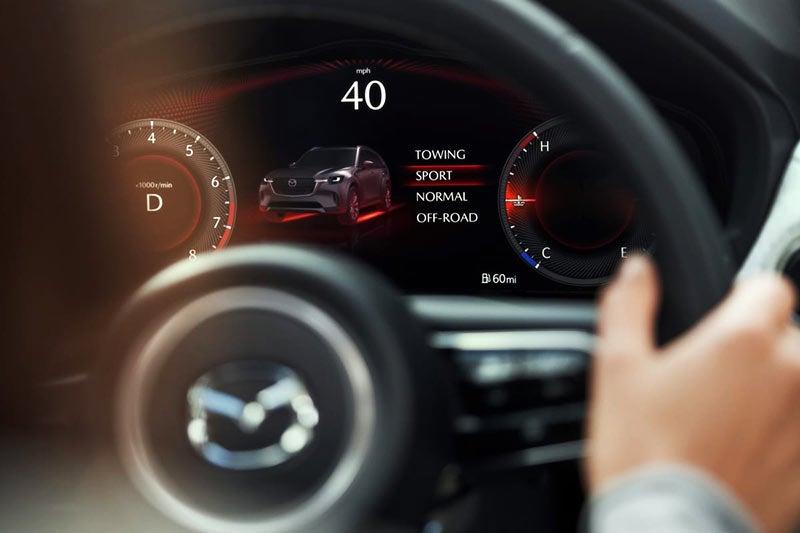
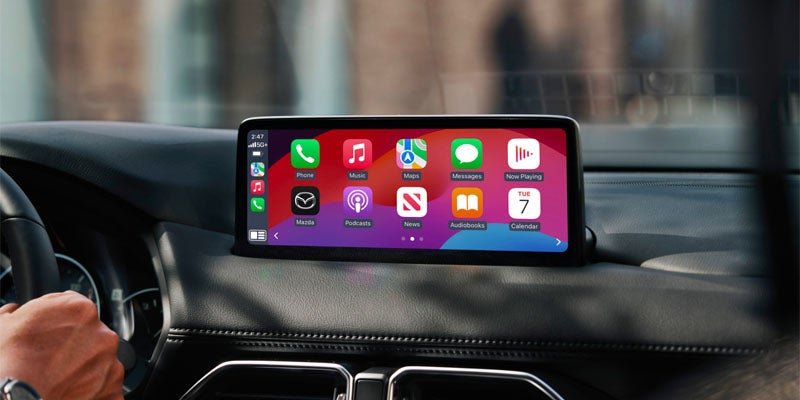
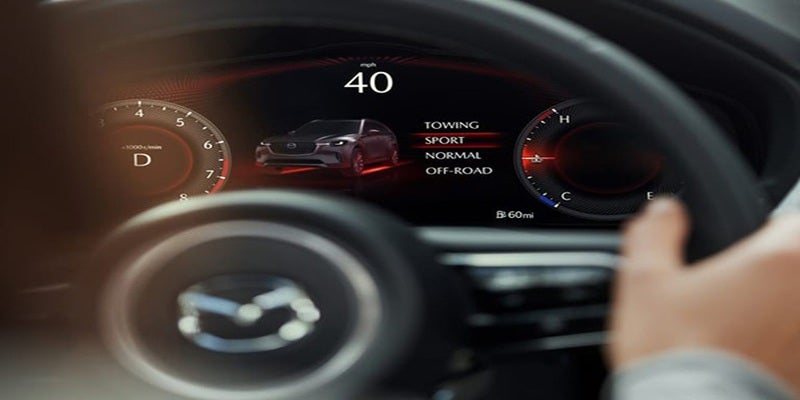
If you have been looking for your next vehicle in Jacksonville and want to understand how Mazda's technology stacks up, this Mazda Connect Infotainment Guide is a great place to start. Mazda's 2026 lineup spans crossovers, sedans, hatchbacks, and sports cars - and across all of them, connected technology plays a central role in the driving experience. What Is Mazda Connect? Mazda Connect is the brand's integrated infotainment system, specifically engineered to keep drivers engaged with the road rather than distracted by touchscreens. Operating through a high-definition center display - ranging from an 8.8-in screen in core models to a 10.25-in or 12.3-in widescreen display in higher trims - the system is operated primarily via the ergonomic Multi-Function Commander control dial located naturally at your fingertips on the center console. While stationary, select 10.25-in and 12.3-in displays enable touchscreen functionality specifically for Apple CarPlay® and Android Auto™ smartphone integration. The architecture allows you to manage audio streaming, integrated navigation, hands-free phone functions, and vehicle diagnostic settings without reaching across the cabin or taking your eyes off the road. Mazda Connect Across the 2026 Crossover Lineup The 2026 Mazda crossover lineup prominently features Mazda Connect with hardware scaled to each vehicle's footprint. The agile CX-30 and the well-rounded CX-5 feature a standard 8.8-in display, with higher trims offering an upgraded 10.25-in screen, wireless Apple CarPlay® and Android Auto™, and available Alexa Built-in voice commands. The rugged CX-50 and CX-50 Hybrid offer identical high-resolution display options and available wireless charging pads. Moving up to the larger two-row CX-70 and three-row CX-90—including their plug-in hybrid variants like the CX-70 PHEV and the CX-90 PHEV —Mazda Connect centers around a standard or available 12.3-in full-color display paired with an available 12.3-in fully digital instrument cluster, a windshield-projected Active Driving Display, and a available Bose® 12-speaker premium audio system. Infotainment Technology in Mazda Sedans and Sports Cars Mazda infotainment specs extend seamlessly into the sedan, hatchback, and sports car lineups. The 2026 Mazda3 Sedan and Mazda3 Hatchback come equipped with an 8.8-i n or available 10.25-in Mazda Connect display, bringing dual USB-C audio inputs, Bluetooth® hands-free streaming, and available Mazda Online Navigation into a driver-focused cabin. Even the legendary MX-5 Miata roadster incorporates Mazda Connect via a standard 8.8-in center display featuring integrated headrest speakers as part of its available 9-speaker Bose® sound system Safety and Technology Working Together One factor setting Mazda apart is how tightly its safety systems integrate with its connected infotainment interface. Recognized as the Safest New-Car Brand by Consumer Reports, Mazda's 2026 lineup holds more IIHS Top Safety Pick+ awards than any other manufacturer as of July 2026—earning top marks across the CX-5, CX-30, CX-50, CX-50 Hybrid, CX-70, CX-70 PHEV, CX-90, CX-90 PHEV, Mazda3 Hatchback, and Mazda3 Sedan. Mazda Connect supports these safety credentials by displaying real-time i-Activsense ® alerts—such as Blind Spot Monitoring, 360° View Monitor camera feeds, and Lane Departure Warning—directly on the center screen or windshield projected head-up display. Explore Mazda Connect at Mazda City of Orange Park Beyond in-car hardware, Mazda Connect ties into the MyMazda smartphone app, providing complimentary Mazda Connected Services for three years. Through the app, owners can remotely start the engine, lock or unlock doors, check tire pressure and fuel levels, locate their vehicle, and schedule service directly on their phone. Drivers across Jacksonville, FL can experience the speed, clarity, and intuitive layout of the Mazda Connect system firsthand at Mazda City of Orange Park. Stop by the showroom to test drive your favorite 2026 Mazda and discover how seamless connected driving can be.
Mazda check engine light warning signs and possible causes

What Your Mazda Check Engine Light Is Trying to Tell You

If the check engine light in your Mazda just came on in Jacksonville, FL, it’s not a reason to panic. That small light on your dashboard is part of Mazda's onboard diagnostic system, and it can be trigger ed for a wide range of reasons, from a loose gas cap to something that needs attention soon. Understanding what it means can help you make a smarter, calmer decision. What Triggers the Check Engine Light? The check engine light - technically called the Malfunction Indicator Lamp - activates when your vehicle's onboard computer detects a problem it can 't correct on its own. Common causes include a faulty oxygen sensor, a misfiring engine, a failing catalytic converter, or even an improperly tightened fuel cap. Mazda builds its vehicles with advanced safety and diagnostic technologies that are designed to alert you early, before a small issue becomes a larger one. In fact, Mazda was named the Safest New-Car Brand by Consumer Reports and earned more 2026 IIHS Top Safety Pick+ awards than any other brand. Steady vs. Flashing: Know the Difference When the check engine light comes on, it doesn’t automatically mean the problem is urgent. A steady light typically means there is a detected fault that should be looked at, but you likely have some time to schedule a diagnostic appointment. A flashing check engine light is a different story - it usually signals an active misfire that could damage your catalytic converter if you keep driving. If your light is flashing, the safest move is to reduce your speed, avoid hard acceleration, and head to a service center as soon as possible. Mazda's lineup uses sophisticated engine management systems where catching issues early protects long-term reliability. Should You Keep Driving? A steady light does not automatically mean you need to pull over immediately, but driving for days or weeks without getting a diagnostic scan done is not a good idea either. Ignoring the light can allow a manageable repair to escalate. Drivers in Jacksonville, FL should also think about seasonal factors. Heat and humidity can affect fuel system components and sensor performance, making prompt attention even more worthwhile. Getting a Diagnostic at a Mazda Service Center The most reliable way to understand what triggered your check engine light is a professional diagnostic scan. A trained Mazda technician can read the specific fault code stored in your vehicle's computer, explain what it means in plain terms, and recommend the right course of action. Trying to clear the code without fixing the underlying issue will only turn the light back on. Skipping the scan altogether means driving without knowing whether your vehicle is running as it should. Visit Mazda City of Orange Park When your check engine light comes on, it means your Mazda is asking for a little attention. Making the right decisions early - like scheduling a diagnostic promptly rather than waiting - can save you time, money, and stress down the road. If your light has come on and you are ready for answers, the service team at Mazda City of Orange Park is here to help drivers throughout Jacksonville, FL keep their Mazda running at its best. Visit us online at mazdacity.com to schedule a service appointment today.

2026 Mazda CX-50 trim levels and features

2026 Mazda CX-50 Trim Levels: Which One Is Right for You?

The 2026 Mazda CX-50 trim levels give shoppers a lot to work with - seven configurations ranging from a capable everyday crossover to a turbocharged adventure machine. So, if you're commuting through Jacksonville, FL or planning a weekend trail run, understanding what each trim brings to the table makes choosing a whole lot easier. Here's a clear breakdown of what's available and what sets each level apart. 2.5 S Select - The Starting Point Done Right The entry point to the CX-50 lineup is anything but basic. The 2.5 S Select is powered by the SKYACTIV-G 2.5 L four-cylinder engine producing 187 h p and 185 ft-lb of torque, and it comes with i -ACTIV AWD as standard equipment. It has a max towing capacity of 2,000 lbs. Connectivity is covered from day one, too. Wireless Apple CarPlay ® integration and Mazda Radar Cruise Control with Stop & Go both come standard, giving drivers a genuinely modern experience without having to step up to a higher trim. 2.5 S Preferred and Meridian Edition - Comfort and Character The 2.5 S Preferred adds practical upgrades that make a real difference in daily use. An 8-way power adjustable driver's seat, a rear power liftgate, and front and rear parking sensors are all included, making this trim a smart step up for anyone who values convenience. The 2.5 S Meridian Edition puts a sharper focus on style and comfort. It is equipped with 18-in aluminum alloy wheels, adds aluminum roof rails in a matching black finish, and brings heated front seats with three-level adjustment. It's the trim that blends outdoor character with everyday refinement. 2.5 S Premium - More Capability, More Comfort Stepping into the 2.5 S Premium brings two notable upgrades: 20-in aluminum alloy wheels and machine cut detailing, and ventilated front seats. The addition of a windshield wiper de-icer also makes this trim a practical pick for drivers who face varied weather conditions throughout the year. 2.5 Turbo and Turbo Meridian Edition - Serious Performance This is where the 2026 Mazda CX-50 gets a significant power boost. The SKYACTIV-G 2.5 engine with a twin-scroll turbocharger pushes output to 256 h p and 320 lb -ft of torque when using recommended premium fuel. Towing capacity also jumps to 3,500 lbs when Towing Mode is engaged - a mode exclusive to CX-50 turbo models. The 2.5 Turbo Meridian Edition builds on that performance with added comfort features including a heated steering wheel and the Mazda online navigation system. It also has 18-in aluminum alloy wheels with a Black Metallic finish and black lug nuts for a distinctive look. 2.5 Turbo Premium Plus - The Flagship CX-50 The top-of-the-line trim brings the most comprehensive safety and driver assistance technology in the lineup. Smart Brake Support with Turn-Across Traffic and Front Crossing detection, a 360-degree view monitor with See-through View, and Cruising and Traffic Support are all included. These features build on the i -ACTIVSENSE suite that has helped the CX-50 earn a 2026 IIHS TOP SAFETY PICK+ award and a 5-Star Overall Safety Rating from NHTSA. Don't Overlook the 2026 Mazda CX-50 Hybrid Trim Levels If efficiency is a priority, check out the 2026 Mazda CX-50 Hybrid trim levels. The hybrid powertrain delivers up to 219 h p total and an EPA-estimated 38 combined city/highway MPG, along with a total driving range of up to 551 miles. It features an on-demand e-AWD system and is available in three trims: Hybrid Preferred, Hybrid Premium, and Hybrid Premium Plus. A unique Red leather interior option is also available, setting it apart visually from the standard CX-50. Explore the 2026 Mazda CX-50 at Mazda City of Orange Park T he 2026 Mazda CX-50 trim levels offer something different at every step - from the AWD-standard Select to the turbocharged, tech-packed Turbo Premium Plus. Drivers near Jacksonville, FL looking to find the right fit can explore current inventory and build options at Mazda City of Orange Park, online at mazdacity.com. Stop in, go for a drive, and find the CX-50 that fits your life.

Mazda tire pressure and maintain proper PSI for safe driving

How to Check Your Mazda’s Tire Pressure

Knowing how to properly check your Mazda’s tire pressure is a simple thing you can do to make sure your vehicle is driving safely around Jacksonville, FL. P roperly inflated tires affect everything from handling and fuel efficiency to long-term tire wear. The good news is that the process takes just a few minutes and requires very little equipment. Mazda has earned recognition as Consumer Reports' Safest New-Car Brand, and that commitment to safety extends to the basics - including making sure your tires are road-ready every time you get behind the wheel. Why Tire Pressure is Important Tire pressure plays a direct role in how your Mazda performs day to day. Underinflated tires create more rolling resistance, which causes your gas milage to go down. Overinflated tires reduce the contact patch between the tread and the road, which can compromise grip and ride comfort. Mazda's entire 2026 lineup - from the CX-30 to the three-row CX-90 - has earned 2026 IIHS Top Safety Pick+ awards, which reflects how seriously the brand takes vehicle safety from top to bottom. What You'll Need Before You Start You don't need any special tools to check your tire pressure accurately. A basic digital or analog tire pressure gauge is sufficient and widely available. Many gas stations also have air pumps with built-in pressure gauges. Before you begin, make sure your tires are "cold," meaning the vehicle has been parked for at least three hours or driven fewer than one mile. Driving heats the air inside your tires and raises the pressure temporarily, which can give you an inaccurate reading. How to Check Your Mazda's Tire Pressure Step by Step Start by locating the recommended tire pressure for your specific model. You'll find this on the sticker inside the driver's door jamb - not on the tire sidewall, which shows the maximum pressure, not the recommended level. The door sticker is specific to your vehicle and trim. Once you have the target PSI, remove the valve cap from the tire stem, press your gauge firmly onto the valve stem, and read the pressure. If it's below the recommended level, add air in small increments and recheck. If it's too high, use the small pin on the back of most gauges to release air. Repeat this process for all four tires, and don't forget the spare if your Mazda has one. Using the Tire Pressure Monitoring System on Your Mazda Most current Mazd a s are equipped with a Tire Pressure Monitoring System, or TPMS, which alerts you when one or more tires drops significantly below the recommended pressure. This warning light - which looks like a cross-section of a tire with an exclamation point - will appear on your instrument cluster. It's important to know that the TPMS is a warning system, not a replacement for regular manual checks. The system only triggers when pressure drops notably low, so your tires could still be slightly underinflated without triggering the light. Checking manually once a month is still the best habit. Mazda Tire Pressure Tips for Jacksonville, FL Drivers When checking your tire pressure, also be aware of the outside temperature. Tire pressure drops roughly one PSI for every 10-degree Fahrenheit decrease in temperature, so a cool winter morning can affect your readings compared to a hot summer afternoon. Following consistent Mazda tire pressure tips - like checking monthly, always using a quality gauge, and referring to the door jamb sticker rather than the tire sidewall - will help your tires last longer and perform the way Mazda intended. Visit Mazda City of Orange Park online at mazdacity.com to schedule a tire inspection or ask our service team any questions about your vehicle's maintenance needs.

Mazda3 Trim Levels Sedan Hatchback and Features Guide

Trim Levels of the 2024 Mazda3 Hatchback

Mazda3 trim levels give you several clear paths once you have chosen the Mazda3. Next, decide between Sedan and Hatchback, then narrow the trim. For 2026, both body styles share much of the same core lineup. However, the Hatchback adds a manual transmission trim that the Sedan does not offer. Additionally, that body style choice changes cargo layout, trim count, and starting price. For this reason, it makes sense to choose the shape first. Then you can compare the equipment and drivetrain choices that matter most to you. Which Mazda3 Body Style Should You Choose? The Mazda3 Sedan and Mazda3 Hatchback share the same five passenger layout and 2.5 liter engine family. However, the rear cargo area creates the clearest difference. The Hatchback provides 20.1 cubic feet of cargo space and a large rear opening. The Sedan uses a traditional trunk and starts at a lower MSRP. Before you compare Mazda3 trim levels, decide how you expect to carry people and gear. For this reason, a driver who wants a separate trunk may prefer the Sedan. By contrast, someone who loads taller items may prefer the Hatchback. The Hatchback also becomes necessary if you want the current manual transmission trim. Use these points to narrow the body style first: The Sedan starts at a lower MSRP and keeps a traditional four door trunk layout. The Hatchback provides 20.1 cubic feet of rear cargo space and a wider loading opening. The Hatchback adds the 2.5 S Premium trim with a six speed manual transmission. Mazda City provides dedicated pages for the 2026 Mazda3 Sedan and 2026 Mazda3 Hatchback. Additionally, those pages make it easier to review the current body styles before moving into individual trims. Mazda3 2.5 S Through Preferred Build the Core Lineup The first three Mazda3 trim levels focus on cabin equipment. They keep the same 186 horsepower 2.5 liter four cylinder engine. The 2.5 S forms the starting point. Additionally, Select Sport adds several cabin and exterior upgrades. Moreover, Preferred adds another step in comfort and seating equipment. What changes as you move through these trims? The answer is mostly the equipment you touch and use every day. The engine remains the same. Therefore, the decision centers on seating material, climate controls, wheels, moonroof access, and front seat features. The core progression looks like this: The 2.5 S includes the 186 horsepower engine, smartphone integration, blind spot monitoring, and rear cross traffic alert. Select Sport adds leatherette trimmed seating, dual zone climate control, and 18 inch alloy wheels with a dark finish. Preferred adds heated front seats, a power sliding glass moonroof, and a power driver seat with memory. For shoppers comparing core trims, this is an important part of the Mazda3 decision. Therefore, you can add comfort equipment without moving directly into AWD or turbo power. That gives you room to match the cabin to your priorities before changing the mechanical setup. Which Mazda3 Trims Change the Powertrain? The Carbon Edition and Turbo Premium Plus are the trims that make the largest mechanical changes. Additionally, Carbon Edition brings standard i Activ AWD. Moreover, Turbo Premium Plus includes standard i Activ AWD, then adds the turbocharged 2.5 liter engine. The turbo engine can produce up to 250 horsepower and 320 pound feet of torque with recommended premium fuel. Therefore, Turbo Premium Plus is more than an equipment package. It changes how much power is available and pairs that output with AWD. By contrast, Carbon Edition takes a different path. It keeps the 186 horsepower engine but adds AWD, Polymetal Gray Metallic paint, and red leather trimmed seating. That makes it the key choice for someone who wants AWD without moving to the turbo engine. When comparing Mazda3 trim levels, ask whether you want a cabin upgrade or a drivetrain change. That question can narrow the list quickly. Preferred focuses on comfort equipment. Carbon Edition adds AWD. Turbo Premium Plus combines AWD with the highest engine output in the lineup. Mazda3 Hatchback Premium Is the Manual Choice Additionally, the 2.5 S Premium creates a separate path within the Mazda3 Hatchback lineup. It uses a six speed manual transmission and front wheel drive. The Sedan does not offer this trim for 2026. That difference matters if shifting your own gears is part of the reason you want a Mazda3. Moreover, the Hatchback Premium adds Bose audio with 12 speakers and leather trimmed seats. Therefore, choosing the manual does not mean staying at the entry level. For this reason, the manual transmission choice changes the order in which you should shop. Start with the Hatchback, then look for 2.5 S Premium inventory. If you want AWD instead, Carbon Edition or Turbo Premium Plus becomes the more relevant branch. You can review the 2026 Mazda3 Hatchback page for current trim details before checking local stock. That keeps the manual transmission choice separate from the Sedan lineup. Match the Trim to Current Mazda3 Inventory Once you know the body style and trim, the last step is checking what is currently available. Inventory can change. Therefore, a current listing shows the exact drivetrain, transmission, color, and cabin equipment on a specific car. Before you choose a vehicle, verify these details on the listing or window sticker: Confirm whether the car is a Sedan or Hatchback before comparing cargo layout and trim availability. Check the exact trim because Carbon Edition and Turbo Premium Plus bring different drivetrain and engine choices. Verify transmission, seating material, major cabin features, and exterior color on the exact vehicle you plan to see. Mazda City shoppers can browse current new Mazda inventory for 2026 Mazda3 availability. Additionally, you can review used inventory if an earlier Mazda3 model year fits your plan. Mazda3 trim levels are easier to sort once the decision is broken into a few clear steps. Therefore, choose Sedan or Hatchback first. Additionally, compare the core trims, AWD choices, turbo power, and the Hatchback manual. From there, current inventory shows which version is ready for a closer look at Mazda City of Orange Park.

Mazda Hybrid and Plug-In Hybrid Models Compared

Mazda Hybrid and Plug-In Hybrid Models Compared

Choosing between Mazda's electrified SUVs comes down to one core question. Do you need to plug in, or does a standard hybrid already fit your routine? The CX-50 Hybrid, CX-70 PHEV, and CX-90 PHEV each take a different approach to efficiency. The right one depends on your daily driving distance, passenger needs, and cargo load. This guide walks through the differences without repeating a full technical breakdown of how hybrid drivetrains work in general. As a result, Jacksonville drivers can match the right electrified Mazda to their routine. Hybrid vs Plug-In Hybrid, Briefly A standard hybrid like the CX-50 Hybrid combines a gas engine with electric motors. Those motors assist automatically, and the vehicle never needs to be plugged in. A plug-in hybrid, on the other hand, like the CX-70 PHEV or CX-90 PHEV, adds a larger battery instead. That battery charges from an outlet and allows genuine electric-only driving before the gas engine takes over. This distinction shapes everything else in this comparison. Consequently, every section below builds on this basic split between plugging in and not. Plugging In or Staying with a Standard Hybrid This question comes down to your daily commute more than any single spec on a window sticker. The CX-50 Hybrid delivers strong combined fuel economy without ever needing a charging cable. Therefore, it suits drivers who want efficiency without changing their routine. The CX-70 PHEV and CX-90 PHEV offer roughly 26 miles of electric-only range on a full charge. For many Jacksonville commutes, that range covers a full round trip on electricity alone. However, that gain only shows up if you plug in on a regular basis. Drivers without consistent access to a home charger may find the CX-50 Hybrid's no-plug simplicity a better fit for daily life. Those who can charge overnight and drive mostly local routes may get real value from the PHEV models instead, since a full charge before bed means starting most mornings on electric power alone. In either case, Mazda's approach to hybrid efficiency stays consistent across the lineup, regardless of which model you choose. Matching the Model to Passenger and Cargo Needs Seating capacity draws a clear line between these three models. The CX-50 Hybrid and CX-70 PHEV both seat five. The CX-90 PHEV, by contrast, adds a third row for up to seven passengers. Cargo space follows a similar pattern as well, since more seating capacity usually means less room dedicated purely to gear. The two-row models offer more room behind the rear seats than the three-row CX-90 PHEV does once all seating is in use. That tradeoff between seating and cargo runs through every trim in the lineup. Here is how the three compare on space. The CX-50 Hybrid offers compact SUV proportions with strong efficiency, suited to daily errands and smaller households. The CX-70 PHEV keeps the same two-row layout with added cargo room, appealing to couples or small families who want extra space without a third row. The CX-90 PHEV adds three-row seating for up to seven, making it the clear choice for larger families or anyone who regularly carries extra passengers. Highway and City Driving Feel All three models keep Mazda's connected driving character. Even so, power output varies from model to model. Consequently, the choice between them usually comes down to how much extra punch you want on tap. Furthermore, that power gap shows up most clearly on the highway, not so much around town. The CX-50 Hybrid delivers smooth, confident acceleration for daily errands and highway merges alike. The CX-70 PHEV and CX-90 PHEV share a hybrid system producing over 320 horsepower combined. As a result, both models feel noticeably quicker than the CX-50 Hybrid. On I-95 or I-295, that extra power translates into easier passing and confident merging. Around town, all three feel composed. Still, the PHEV models carry more weight from their larger batteries. Even so, Mazda's chassis tuning keeps that weight from feeling heavy-handed in daily driving, even at parking-lot speeds. Towing a Trailer or Boat Towing capacity separates these models sharply. The CX-50 Hybrid is built with light-duty needs in mind and is not the choice for serious towing. The CX-70 PHEV and CX-90 PHEV, by contrast, can tow up to 3,500 pounds. That figure covers a small trailer, personal watercraft, or a modest boat, giving both PHEV models real utility beyond daily commuting. For Jacksonville drivers who split time between daily commuting and weekend trips to the water, this towing number frequently becomes the deciding factor. Given that, the choice between the CX-50 Hybrid and the larger PHEV models usually starts right here. Seeing the Lineup in Jacksonville Mazda City of Orange Park carries current inventory of the CX-50 Hybrid, CX-70 PHEV, and CX-90 PHEV. As a result, you get the chance to compare all three side by side before making a decision. Test driving each model back to back remains the clearest way to feel the differences covered here. Power, space, and daily character all come through most clearly behind the wheel. Our team can walk through current trims and financing options. We can also show how each model's efficiency and towing figures line up with your specific routine. Whichever electrified Mazda fits your life best, all three deliver the driving character Mazda is known for. Each one simply wraps that character around a different approach to efficiency.

Mazda CX-5 vs Toyota RAV4 Comparison

Mazda CX-5 vs Toyota RAV4 Comparison for Jacksonville

If you are cross-shopping the Mazda CX-5 vs Toyota RAV4, you are comparing two popular compact SUVs. Both serve Jacksonville drivers well, from daily commutes on I-295 to weekend trips toward the coast. However, they take different paths to get there. This guide walks through space, driving feel, fuel economy, technology, and AWD. As a result, you can match the right SUV to your daily routine around Orange Park and beyond. Passenger and Cargo Space The RAV4 holds an edge in outright cargo volume. It offers more room behind the rear seats than the CX-5. Therefore, families hauling gear for beach trips to Ponte Vedra may lean toward that extra capacity. The same goes for a weekend Costco run. Even so, the CX-5 closed the gap for 2026. Mazda stretched the CX-5's wheelbase by several inches. That change added noticeably more rear legroom, kneeroom, and headroom than the outgoing model offered. As a result, the space comparison is closer than it used to be. The RAV4 still wins on raw cargo numbers, though the gap has narrowed. The differences that matter most for daily use break down like this. The RAV4 offers more maximum cargo volume behind the folded rear seats, which favors larger hauls like furniture or camping gear. The 2026 CX-5's longer wheelbase adds noticeably more rear legroom and kneeroom than the previous generation offered. Rear seat access improved on the CX-5 as well, which matters for parents loading car seats or older passengers climbing in and out at a Jacksonville soccer field. Mazda CX-5 Toyota RAV4 Cargo Space (Behind Rear Seats) 33.7 cu ft 37.8 cu ft Max Cargo Space (Seats Folded) 66.5 cu ft 70.4 cu ft Rear Legroom 39.9 in 37.8 in Towing Capacity 1,500 lbs 1,750 lbs How Each SUV Feels to Drive Day to Day The CX-5 earns its reputation right here. Its steering stays tighter, and body roll stays better controlled. Its six-speed automatic shifts with a crispness that the RAV4's continuously variable transmission cannot fully match. On paper, the RAV4 wins the horsepower and efficiency numbers. Even so, drivers who care about how the SUV feels on I-295 on-ramps tend to prefer the CX-5's connected, driver-focused character. Winding roads toward Middleburg tell the same story, where the CX-5's tighter steering response stays noticeable through every curve. The RAV4 is far from dull, and its 2026 hybrid system delivers smooth, confident power around town. Still, the CX-5 holds the edge for anyone who enjoys the act of driving itself. Fuel Economy and the Hybrid Question This is the RAV4's strongest category, and the gap is real. Every 2026 RAV4 comes standard as a hybrid. That means combined fuel economy sits well above what the CX-5's gas engine returns. Over a full year of Jacksonville commuting, that difference adds up in real fuel savings. However, the CX-5 counters with a lower starting price and standard AWD at no additional cost, two advantages that stand out immediately on a window sticker. Given that, the total value gap narrows even though the CX-5 trails at the pump. A CX-5 hybrid is confirmed for the future, though it will not arrive until the 2027 model year. Given that timeline, shoppers who want a Mazda hybrid today will need to wait. Those focused on driving feel and upfront savings may still find the current CX-5 lineup worth the tradeoff. Technology Worth Using Every Day Both SUVs bring strong technology to the table, though they approach it differently. The CX-5 now offers Mazda's largest center display yet. A completely redesigned interior for 2026 puts that touchscreen front and center. The RAV4 also upgraded its technology, adding a larger available touchscreen and a standard built-in dashcam across every trim. Additionally, wireless Apple CarPlay and Android Auto come standard on both SUVs. As a result, daily phone connectivity feels similar behind the wheel of either one. The bigger difference shows up in interior character. The CX-5 leans toward a driver-focused layout with tactile controls, giving physical dials and buttons to key functions instead of burying them in menus. By contrast, the RAV4 prioritizes straightforward controls that work well without asking much of the driver. Here is how the two lineups compare on the features drivers use most. The CX-5 offers Mazda's largest center display yet, standard on higher trims within its redesigned 2026 interior. The RAV4 includes a standard built-in dashcam on every trim, along with a larger available touchscreen for 2026. Both SUVs include wireless Apple CarPlay and Android Auto as standard equipment, so daily phone connectivity feels similar in either vehicle. Standard AWD and What It Is Worth Every CX-5 trim includes i-Activ AWD at no extra cost. The RAV4, by contrast, starts with front-wheel drive and charges extra for all-wheel drive. For Jacksonville's sudden summer downpours, that standard AWD matters more than it might on drier roads. Once you add the RAV4's AWD cost into the comparison, the price gap between the two SUVs narrows further. That shift favors the CX-5. The RAV4 does produce more horsepower in its hybrid form, so drivers prioritizing outright power may still lean toward Toyota's lineup. Still, for shoppers who want confident traction built into every trim without an upcharge, the CX-5 makes a strong case worth serious consideration. The AWD comparison comes down to a few clear points. Every CX-5 trim includes i-Activ AWD at no additional cost, while RAV4 AWD requires an upgrade from the base front-wheel-drive configuration. Once the RAV4's AWD upcharge is added to its price, the total cost gap between the two SUVs narrows in the CX-5's favor. The RAV4's hybrid powertrain still delivers more horsepower overall, which matters most to drivers who prioritize outright power over standard traction. Mazda CX-5 Toyota RAV4 Base MSRP $29,990 $31,900 Standard Drivetrain i-Activ AWD Front-Wheel Drive AWD-Equipped Price $29,990 $33,300 Combined Horsepower 187 hp 226–236 hp Seeing the CX-5 in Jacksonville Mazda City of Orange Park carries current inventory of the new Mazda CX-5 across multiple trims. That includes both naturally aspirated and available turbocharged configurations. Test driving the CX-5 alongside a RAV4 on the same familiar roads remains the clearest way to feel the differences covered here. Handling, cabin character, and daily comfort all come through on a back-to-back drive. Our team can walk through current CX-5 trims and financing options. We can also show how standard AWD stacks up against RAV4 pricing once Toyota's AWD upcharge is factored in. Whichever direction fits your driving style better, both SUVs represent strong choices for Jacksonville, Orange Park, and the surrounding area. Stopping by for a side-by-side look usually makes the decision clearer than reading specs alone ever could.

Mazda CX-30

Mazda CX-30 vs CX-5 Comparison for Jacksonville Drivers

Mazda CX-30 vs CX-5 Comparison for Jacksonville Drivers If you have narrowed your next SUV to the Mazda CX-30 and the Mazda CX-5, you are close to the right answer. Both share the same Kodo design language. Both share the same commitment to driver connection. However, they serve different daily routines around Jacksonville, Orange Park, and Middleburg. This guide walks through the Mazda CX-30 vs Mazda CX-5 decision by looking at real space, handling, and trim choices. As a result, you can match the SUV to the way you drive. The Real Size Difference Between the CX-30 and CX-5 The CX-30 is classified as a subcompact crossover. The CX-5 sits one class up as a compact SUV. That single classification shift explains most of what you will notice on a test drive. Additionally, the CX-5 measures several inches longer and wider than the CX-30. It also rides on a longer wheelbase. Because of that extra distance between the front and rear axles, small bumps smooth out before they reach the cabin. By contrast, the CX-30 keeps a tighter footprint. Shoppers driving through Blanding Boulevard traffic or parking near San Marco notice that footprint right away. Even so, neither vehicle gives up Mazda's signature driving feel. The size difference simply shifts where each model shines. Space for Family or Gear Passenger and cargo room scale directly with that size difference. The CX-5 offers more rear legroom than the CX-30. Given that gap, extra room matters most for households carrying adult passengers or kids in booster seats. Still, front-row space stays close between the two models. Because of that, the gap shows up mainly in the back seat and the trunk. Cargo capacity follows the same pattern. The CX-5 holds more behind the rear seats than the CX-30. Furthermore, that gap widens once both rear seats fold flat. A family loading strollers or luggage for a Saint Augustine weekend will feel that extra room, while a single driver running errands around Orange Park may never need it. With that in mind, matching cargo space to your routine keeps the decision grounded in how you use the SUV week to week, instead of chasing the largest number on a spec sheet. Which One Handles Better in Tight Parking and City Streets? The CX-30 earns its reputation among Jacksonville drivers right here. Its shorter length and tighter turning radius make it easier to thread through crowded parking decks and tight neighborhood streets. As a result, drivers who navigate downtown Jacksonville or squeeze into shopping center parking will likely prefer how the CX-30 fits into snug spaces. That said, the CX-5 handles well too, and its available surround-view camera helps offset its larger footprint. Even so, a smaller footprint still wins in the tightest spots. Given that, daily parking convenience can settle the comparison on its own. How Each SUV Feels to Drive Day to Day Both SUVs share Mazda's Jinba Ittai philosophy. That philosophy centers on car and driver feeling like one connected system, built through steering feel, seat position, and pedal response working together. Still, where they differ is weight and road presence. The CX-30's lighter build feels quick and responsive around town. Additionally, available turbocharged power adds real punch when merging onto I-295. By contrast, the CX-5 carries more weight, and that weight translates into a planted feeling at highway speed. Steering response stays sharp in both models. Therefore, this comparison comes down to preference more than a clear technical edge. Drivers who prioritize nimble city driving tend to lean toward the CX-30. On the other hand, drivers who spend more time on longer commutes tend to prefer the CX-5's steadier highway manners. Weighing the Price Difference Against the Extra Size The CX-30 carries a lower starting price than the CX-5. That price gap holds across most comparable trim levels. However, what that difference buys is more than a size step up. Moving to the CX-5 brings additional standard features at each trim tier. Given that, shoppers cross-shopping specific trims should compare feature parity directly. A mid-tier CX-5 trim can sometimes match a higher CX-30 trim's equipment while still delivering the larger footprint. Instead of focusing on the higher price tag alone, weigh whether the extra room fits your driving pattern. Where Can You See These Locally, New or Certified? Mazda City of Orange Park carries current inventory of the new Mazda CX-30 and the new Mazda CX-5. Certified pre-owned options are also available for drivers who want Mazda quality at a lower entry point, with factory-backed inspection standards carried over from the new-vehicle lineup. Test driving both models back to back remains the clearest way to feel the size and handling differences covered here. Driving both on the same familiar roads makes the comparison even clearer. Our team can walk through available trims, current incentives, and financing paths for either SUV, including the newest colors and packages. We can also help match the right model to your daily routine around Jacksonville, Orange Park, Gainesville, or Saint Augustine. With that in mind, whichever direction fits your life better, both the CX-30 and the CX-5 deliver the driving character Mazda is known for.

Mazda Towing Capacity by Model and Required Equipment

Mazda towing capacity by model ranges from 2,000 to 5,000 pounds across current supported configurations. Yet the highest number does not apply to every trim or powertrain. Trailer weight, passengers, cargo, hitch hardware, and factory limits all shape the final match. Therefore, shoppers should verify the exact vehicle before connecting any trailer. Mazda Towing Capacity by Current Model Which current Mazda models carry published tow ratings? In addition, current Mazda information lists supported ratings for the CX-50, CX-70, and CX-90. Therefore, each model serves a different mix of trailer weight, seating, cargo space, and powertrain choice. For this reason, the CX-50 2.5 S reaches 2,000 pounds with a Genuine Mazda Tow Hitch. By contrast, CX-50 2.5 Turbo models reach 3,500 pounds when Towing Mode is active. That rating also requires the approved hitch setup. Beyond that, the CX-70 Inline 6 starts at 3,500 pounds on selected configurations. Higher Inline 6 trims reach 5,000 pounds with Towing Mode and Genuine Mazda towing parts. However, the CX-70 PHEV remains rated at 3,500 pounds when properly equipped. Similarly, the CX-90 follows a similar range. Inline 6 trims carry either a 3,500 or 5,000 pound rating. The CX-90 PHEV carries a 3,500 pound rating with the correct tow hitch. Mazda towing capacity by model should always match the vehicle identification number, trim, powertrain, and installed parts. Consequently, a dealership can confirm those details before a shopper selects a trailer or vehicle. How CX-50 Configurations Change Towing Limits Can every Mazda CX-50 tow 3,500 pounds? No. The 3,500 pound figure belongs to Turbo models using Towing Mode with approved towing hardware. The CX-50 2.5 S supports up to 2,000 pounds with the required Mazda hitch. Still, that range may suit a light utility trailer, personal watercraft trailer, or compact camping setup. Still, the trailer must remain under the limit after supplies and equipment are loaded. By contrast, CX-50 Turbo models raise the published maximum to 3,500 pounds. Towing Mode changes powertrain and vehicle control responses for trailer operation. However, selecting that mode cannot raise the rating of an unsupported configuration. Mazda towing capacity by model also changes after passengers and cargo enter the calculation. Mazda states that listed maximums must account for passenger, cargo, hitch, and optional equipment weight. Therefore, a trailer with a 3,500 pound loaded weight leaves no reserve under a 3,500 pound ceiling. With that in mind, verify these CX-50 details: Confirm whether the vehicle uses the 2.5 S or 2.5 Turbo powertrain. Confirm that the approved hitch and related wiring are installed. Check the owner’s manual for the exact trailer and load limits. After those checks, shoppers can review current CX-50 inventory that matches the required powertrain and towing setup. CX-70 and CX-90 Towing Choices Should a shopper choose the CX-70 or CX-90 for towing? Both Inline 6 models can reach 5,000 pounds on select trims. Seating layout and exact configuration separate their roles. For this reason, the CX-70 has two rows and space behind the second row for travel gear. Its entry Inline 6 configuration carries a 3,500 pound rating. Higher Inline 6 trims can reach 5,000 pounds with Towing Mode and approved Mazda hardware. By contrast, the CX-70 PHEV carries a 3,500 pound rating. Therefore, shoppers should not transfer the 5,000 pound Inline 6 figure to the plug in hybrid. Powertrain choice must stay tied to the published rating. The CX-90 adds a third row for larger families or travel groups. Inline 6 ratings range from 3,500 to 5,000 pounds by trim. In addition, the CX-90 PHEV carries a 3,500 pound rating with the proper hitch. Mazda towing capacity by model cannot answer the seating question alone. A two row CX-70 may leave more cabin room for gear. A three row CX-90 can carry more passengers, though those passengers add weight to the vehicle. Consequently, the trailer calculation must include everyone and everything carried inside the Mazda. Shoppers can then compare current CX-70 and CX-90 inventory by trim, powertrain, seating, and installed towing parts. Trailer Weight and Equipment Terms to Verify What does properly equipped mean for Mazda towing? It means the exact trim, powertrain, hitch, wiring, drive mode, and load must meet Mazda’s published instructions. A hitch alone cannot raise the approved rating. Additionally, trailer listings may show dry weight or unloaded vehicle weight. That number excludes some cargo, water, batteries, propane, tools, and installed accessories. Therefore, shoppers should compare Mazda limits with the trailer’s loaded weight. Furthermore, tongue weight is the downward force placed on the hitch. Mazda owner information calls for proper trailer load distribution. The CX-70 manual lists tongue weight at 10 to 15 percent of trailer weight. In addition, gross vehicle weight covers the Mazda, passengers, cargo, accessories, and hitch load. Gross combined weight covers the loaded Mazda and loaded trailer together. Both values must remain within the limits listed for the exact vehicle. Before towing, verify each point: Use the owner’s manual and vehicle labels for the exact configuration. Confirm loaded trailer weight and tongue weight with reliable measurements. Check hitch, wiring, safety chains, tires, brakes, and trailer brake rules. Additionally, leave room below the published ceiling for added gear and trip changes. A maximum rating is a limit, not a planning target. Which Mazda Fits Your Towing Need Mazda towing capacity by model provides a starting point for matching a trailer. The final choice should also account for seating, cargo, powertrain, and approved towing parts. For this reason, a CX-50 2.5 S may suit lighter trailers below its 2,000 pound limit. The Turbo version raises the ceiling to 3,500 pounds when correctly equipped. Therefore, shoppers should select the powertrain before reviewing compatible trailers. By contrast, a CX-70 may suit drivers seeking two rows and a rating up to 5,000 pounds. The exact Inline 6 trim must support that figure. The PHEV remains a separate 3,500 pound choice. Additionally, a CX-90 may suit families needing three rows while towing. Select Inline 6 trims reach 5,000 pounds. However, other Inline 6 trims and the PHEV carry 3,500 pound ratings. With that in mind, bring the trailer specifications, estimated cargo weight, passenger count, and planned accessories. Mazda City can then verify the matching trim and installed hardware. That final check connects Mazda towing capacity by model with the exact vehicle a shopper plans to drive.

2026 Mazda CX-90: A Premium Three-Row Option for Orange Park Families

For families in Orange Park and the surrounding Clay County area, choosing a three-row SUV is rarely about size alone. Daily driving often includes school drop-offs, highway commuting into Jacksonville, weekend travel, and longer family trips that demand comfort, stability, and flexibility over time. The 2026 Mazda CX-90 is designed for families who want those practical advantages without giving up refinement or driver confidence. Rather than approaching the segment as a purely utilitarian people mover, Mazda engineered the CX-90 to support long-term family ownership while preserving composure, balance, and craftsmanship. Platform Architecture and Why It Matters for Local Driving The CX-90 is built on Mazda’s large-vehicle platform with a rear-biased longitudinal layout. This design choice has a meaningful impact on how the vehicle behaves in everyday use, particularly for Orange Park drivers who regularly transition between suburban roads, bridge crossings, and interstate travel. This architecture contributes to: Greater highway stability during longer drives into Jacksonville Reduced body sway when carrying multiple passengers More predictable handling during merging and lane changes A smoother, more controlled ride on uneven road surfaces For families who spend significant time commuting or traveling with a full cabin, these characteristics translate directly into reduced driver fatigue and improved passenger comfort. Interior Space Designed for Real Family Use The CX-90’s three-row layout prioritizes functional space rather than exaggerated proportions. The cabin is designed to accommodate daily family routines while remaining manageable in parking lots, school zones, and residential areas around Orange Park. Interior flexibility supports: Comfortable second-row seating with easy third-row access A third row suitable for children and shorter adults Cargo adaptability for groceries, sports gear, and luggage Seating configurations that adjust as family needs evolve Unlike larger three-row SUVs that can feel cumbersome, the CX-90 balances interior usability with exterior dimensions that remain approachable for daily driving. Seating Configuration and Passenger Comfort Families often evaluate three-row SUVs based on how well the seating works in practice, not just on paper. The CX-90 offers thoughtful seating ergonomics designed to reduce fatigue during longer drives and improve comfort during everyday use. Key comfort considerations include: Supportive seat design for extended trips Thoughtful spacing between rows to reduce crowding Interior materials selected for durability and long-term wear Quiet cabin tuning that minimizes road and wind noise These elements matter for Orange Park families who regularly travel between neighborhoods, schools, and regional destinations. Safety Systems That Support, Not Overwhelm Safety is a primary concern for family buyers, especially those navigating mixed suburban and highway environments. The CX-90 includes a comprehensive set of driver assistance systems designed to enhance awareness and reduce stress without feeling intrusive. These systems support: Lane positioning during highway travel Adaptive speed control in traffic Improved situational awareness in busy corridors Predictable intervention that maintains driver confidence Mazda calibrates these systems to work smoothly in the background, which is particularly valuable for families who spend significant time on the road. Powertrain Design and Ownership Confidence The CX-90’s powertrain lineup reflects Mazda’s focus on smooth performance and long-term durability rather than aggressive tuning. Power delivery is designed to feel consistent and controlled, which is especially important for family driving scenarios involving passengers and cargo. From an ownership standpoint, this approach supports: Predictable acceleration during daily driving Reduced mechanical stress over time Confident highway merging and passing Stable performance under load For families planning to keep their vehicle for several years, these characteristics contribute to long-term confidence rather than short-term excitement. Long-Term Value for Growing Families Families in Orange Park often plan vehicle ownership around changing needs. Children grow, schedules change, and priorities shift. The CX-90 is designed to support those transitions rather than force early replacement. Long-term value considerations include: Interior materials that hold up to regular use Engineering focused on durability and consistency Balanced feature sets that remain relevant over time Strong resale positioning when family needs evolve Rather than chasing trends, the CX-90 emphasizes thoughtful design that ages well. How the CX-90 Fits Orange Park Family Life For families balancing local driving with frequent trips into Jacksonville, the CX-90 offers a composed, flexible solution. It supports daily routines without feeling oversized and handles longer drives with confidence and comfort. It is well-suited for families who: Need three rows without excessive bulk Value safety and ride stability Prefer refined design over flashy excess Want a vehicle that supports long-term ownership Final Perspective The 2026 Mazda CX-90 stands out as a premium three-row option for Orange Park families who want more than basic transportation. Its platform design, interior flexibility, and safety systems work together to support daily life while maintaining Mazda’s focus on balance and driver engagement. For families evaluating three-row SUVs with an eye toward long-term value, comfort, and confidence, the CX-90 offers a thoughtfully engineered alternative that fits both suburban life and regional travel.

Understanding Mazda Connected Services: Smart Technology for Orange Park Drivers

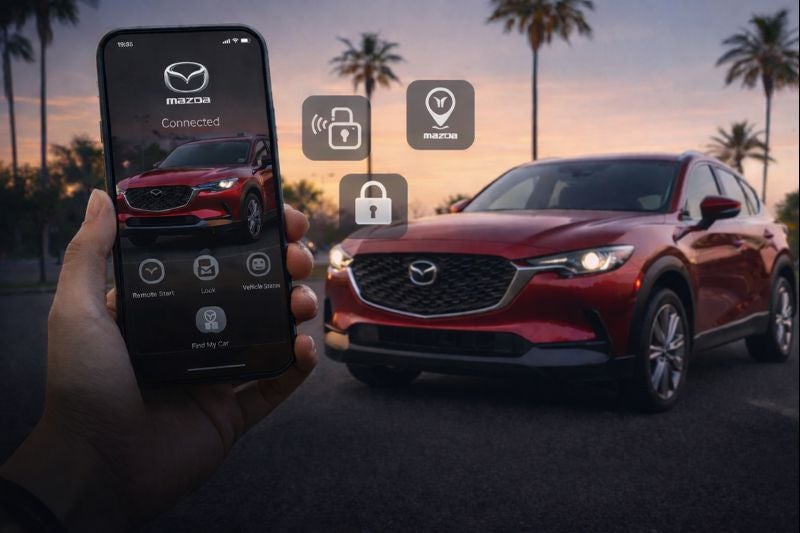
Modern vehicles are no longer defined only by engines and transmissions. For many drivers, the ownership experience now includes how easily a vehicle integrates into daily life through technology. Mazda Connected Services is designed to support that experience by offering practical, intuitive tools that extend vehicle awareness beyond the driver’s seat. Rather than overwhelming drivers with complexity, Mazda focuses on connected features that provide real-world usefulness, security, and peace of mind. What Mazda Connected Services Actually Is Mazda Connected Services is a suite of vehicle connectivity features accessed through a smartphone app. These services allow drivers to interact with their vehicle remotely, monitor its status, and manage certain functions without being physically present. It is important to distinguish between: Infotainment systems, which operate inside the vehicle Connected services, which extend vehicle access beyond the cabin Connected Services operates through built-in vehicle communication hardware, not through the driver’s phone alone. This allows the vehicle to send and receive information independently. Remote Access and Everyday Convenience One of the most commonly researched aspects of Mazda Connected Services is remote access. These features are designed to reduce friction during daily routines rather than add novelty. Common remote capabilities include: Locking and unlocking doors remotely Starting the engine from a distance Checking fuel level and vehicle range Viewing vehicle status alerts For Orange Park drivers dealing with unpredictable weather or busy schedules, remote access adds flexibility without requiring additional hardware or aftermarket systems. Vehicle Monitoring and Status Awareness Connected Services also focuses on awareness rather than control. Drivers can check their vehicle’s condition without physically inspecting it, which is especially useful for households that share vehicles. Monitoring features typically include: Door and window status Fuel level and estimated range Maintenance or warning notifications Vehicle location tracking This type of visibility supports proactive ownership rather than reactive problem solving, allowing drivers to address issues before they become disruptive. Security and Peace of Mind Security is a major concern for drivers researching connected vehicle technology. Mazda Connected Services incorporates location tracking and alert systems designed to support vehicle security without constant monitoring. Security-focused functions may include: Vehicle location visibility Alerts if doors are left unlocked Notifications for unexpected vehicle movement These features are designed to inform rather than alarm, aligning with Mazda’s philosophy of calm, supportive technology. Data Privacy and System Design A common question surrounding connected services involves data handling and privacy. Mazda designs its connected systems to prioritize secure communication and controlled data use. Key principles include: Encrypted data transmission Limited data sharing tied to service functionality User-controlled access through secure authentication Rather than treating data as a product, Mazda uses connectivity to enhance ownership experience and operational awareness. Subscription Structure and Ownership Planning Mazda Connected Services typically includes an introductory access period, after which continued use may require a subscription. Understanding this structure helps drivers evaluate long-term value. Drivers often assess: Whether features match daily habits How often remote access is actually used The value of monitoring and security tools Because Connected Services is optional after the initial period, owners maintain flexibility rather than being locked into long-term commitments. Connected Services Versus Infotainment While often discussed together, Connected Services and infotainment serve different purposes. Infotainment focuses on in-vehicle interaction, while Connected Services focuses on ownership outside the vehicle. Mazda intentionally separates these roles to: Reduce system complexity Maintain reliability Avoid distraction-heavy interfaces This separation helps keep the driving experience focused while still offering modern convenience. How Connected Services Fits Real Life For Orange Park drivers, Mazda Connected Services works best as a background support system. It does not demand constant attention or interaction. Instead, it provides tools that are available when needed and invisible when not. It fits drivers who: Value preparedness over novelty Prefer intuitive systems Want awareness without micromanagement Appreciate technology that supports rather than dominates Final Perspective Mazda Connected Services reflects Mazda’s broader approach to technology: purposeful, restrained, and driver-centered. By focusing on real ownership needs such as awareness, convenience, and security, it enhances daily life without complicating it. For drivers exploring how modern vehicle technology fits into everyday routines, Mazda Connected Services offers a thoughtful, practical solution.

Why Jacksonville Drivers Compare Mazda CX-5 Lease Options at Mazda City of Orange Park

For many Jacksonville drivers, leasing a Mazda CX-5 is not about chasing the lowest monthly number. It is about understanding how payment structure, mileage expectations, and vehicle configuration come together in a way that fits real driving habits. The CX-5 sits at the center of Mazda’s SUV lineup because it balances size, efficiency, and driving confidence, which makes it a frequent subject of lease research rather than impulse decisions. Comparing lease options starts with understanding how the CX-5 behaves as a vehicle over time, not just how it looks on paper. How Mazda CX-5 Lease Payments Are Structured A CX-5 lease is built around depreciation rather than ownership. The payment reflects how much of the vehicle’s value is used during the lease term rather than the full purchase price. Key components that shape CX-5 lease payments include: The negotiated starting price of the vehicle The projected residual value at lease end Lease term length Annual mileage selection Interest rate tier based on credit profile The CX-5 benefits from a reputation for durability and consistent demand, which helps support residual value. This matters because higher residual value means less depreciation is paid during the lease, which directly affects the monthly payment. Why Trim Selection Matters in a Lease Trim level is one of the most important factors Jacksonville shoppers evaluate when comparing CX-5 lease options. Each trim adds equipment that increases the starting price, but not all features retain value equally over a short lease term. From a lease efficiency standpoint: Mid-level trims often provide the strongest balance of features and payment Higher trims raise monthly cost faster due to interior and technology upgrades Powertrain and drivetrain choices influence both price and usability For Florida driving, features related to cabin comfort, visibility, and driver assistance often matter more than purely cosmetic upgrades. Choosing a trim based on daily use rather than maximum equipment helps keep lease payments aligned with real value. Mileage Planning for Jacksonville Driving Patterns Mileage selection is one of the most underestimated lease decisions. Jacksonville drivers often split time between highway commuting, suburban travel, and regional trips, which can push annual mileage higher than expected. Common considerations include: Daily commute distance Weekend and coastal travel Seasonal driving increases Household vehicle sharing Selecting too little mileage may result in end-of-lease overage charges, while selecting too much mileage increases the monthly payment unnecessarily. The CX-5 is commonly used as a primary vehicle, making realistic mileage planning essential. CX-5 Drivetrain and Florida Conditions The Mazda CX-5’s available drivetrain configurations are frequently evaluated during lease research because they affect both driving confidence and cost. For Jacksonville and surrounding areas: Front-wheel drive configurations tend to lease efficiently All-wheel drive adds capability in heavy rain and uneven road conditions The added cost of AWD may be offset by daily confidence rather than resale alone Mazda’s AWD system is designed to proactively manage traction, which enhances stability during sudden weather changes common in Florida. This functional benefit often outweighs the modest lease payment increase for drivers who prioritize control and predictability. Lease Versus Finance for the Mazda CX-5 Jacksonville shoppers often compare leasing and financing side by side before deciding. Leasing appeals to drivers who want predictable monthly costs and flexibility, while financing appeals to those planning longer ownership. Leasing the CX-5 tends to make sense for drivers who: Prefer lower monthly payments Plan to change vehicles every few years Drive within defined mileage ranges Value access to newer safety and technology updates Financing may suit drivers who: Drive higher annual mileage Plan long-term ownership Want to build equity over time The CX-5’s balanced design allows it to work well in either scenario, which is why many shoppers start with lease comparisons before narrowing their path. End-of-Lease Considerations and Flexibility Understanding lease end options is part of responsible comparison. At the end of a CX-5 lease, drivers typically have three choices: Return the vehicle Purchase it at the predetermined residual value Apply any positive equity toward another vehicle Well-maintained CX-5 models with reasonable mileage can retain value better than expected, which may create flexibility at lease end. This is one reason Jacksonville drivers often research lease structure carefully rather than focusing only on the monthly payment. Why CX-5 Lease Research Is So Common The Mazda CX-5 occupies a space where leasing feels practical rather than restrictive. Its size, efficiency, and driving refinement suit daily use without the compromises found in larger SUVs. For Jacksonville drivers navigating commuting, family use, and regional travel, understanding lease structure helps align the vehicle with real life rather than assumptions. Final Perspective Comparing Mazda CX-5 lease options is about clarity, not pressure. When trim selection, mileage planning, and drivetrain choices are aligned with how the vehicle will actually be driven, leasing the CX-5 becomes a structured, predictable way to enjoy a well-balanced SUV. That is why many Jacksonville drivers begin their CX-5 journey by comparing lease options carefully before making a decision.

Contact Us

Fill out this form below and we'll contact you shortly
*Required Fields