

Mazda diagnostic fee questions usually begin when a warning light appears, a strange sound develops, or a driver receives a repair estimate that includes testing and inspection time. Many drivers understand paying for replacement parts or labor after a repair has been approved, though diagnostic pricing creates more confusion because the vehicle has not been repaired yet. The uncertainty usually centers around one question: what exactly is being paid for during diagnostics?
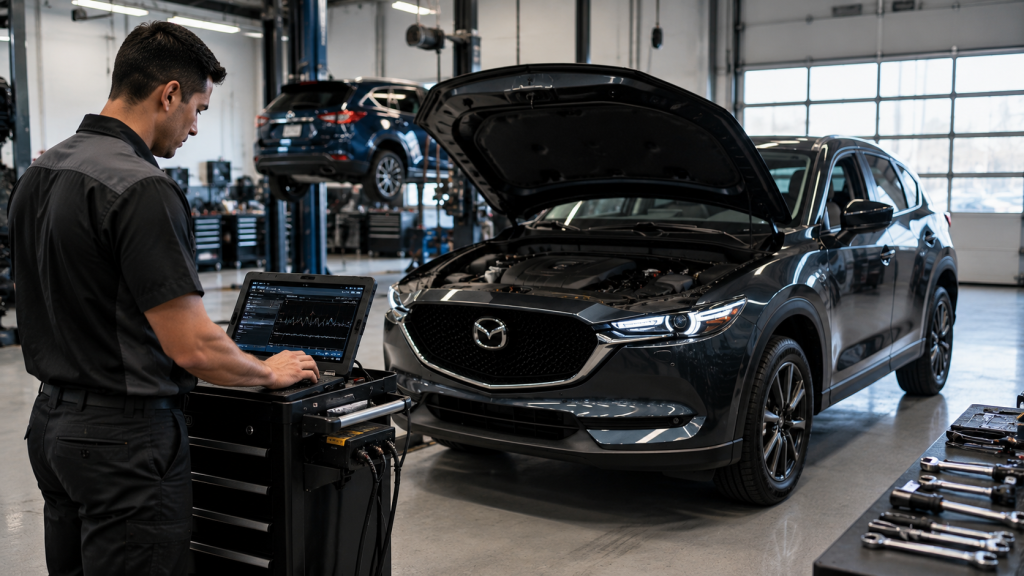
Vehicle diagnostics involve structured testing procedures used to identify root causes before repairs begin. Modern Mazda vehicles rely on integrated electronics, communication modules, sensors, driver assistance technology, and onboard monitoring networks that interact constantly during vehicle operation. Diagnosing concerns inside those systems requires technician expertise, testing equipment, verification procedures, and time spent tracing faults accurately before repairs are approved.
What a Mazda Diagnostic Fee Covers
What is included in a Mazda diagnostic fee? Diagnostic labor covers the time technicians spend identifying the source of a concern before repairs begin. The process involves much more than connecting a scan tool and reading stored fault codes.
A warning light may point toward a broad system category without identifying the exact component responsible for the issue. A check engine light could involve sensor communication faults, fuel delivery irregularities, ignition concerns, vacuum leaks, airflow measurement inconsistencies, or electrical communication interruptions between modules.
Technicians usually begin by:
- scanning stored fault codes
- reviewing freeze frame operating data
- checking sensor communication
- inspecting visible components
- performing electrical signal testing
- duplicating the customer concern during road testing
Mazda diagnostic procedures become more detailed when intermittent concerns appear. A problem that only happens occasionally may require repeated testing cycles, temperature variation testing, driving simulation, or signal monitoring over extended periods before the technician confirms the source accurately.
This structure matters because replacing parts without proper diagnosis can create unnecessary expense while leaving the original issue unresolved. Accurate diagnostics protect against misdiagnosis by narrowing the repair path through verification instead of assumption.
Mazda service pricing reflects the technician time, testing procedures, and inspection structure required to isolate those concerns correctly before repair authorization begins.
Why Electrical and Intermittent Problems Take Longer
Why can diagnosis sometimes take several hours? Electrical and communication related concerns are frequently more time intensive because the issue may not remain active continuously during inspection.
Modern Mazda models use multiple control modules communicating together through onboard data networks. Safety technology, infotainment functions, charging systems, warning lights, sensors, cameras, and engine management systems all exchange information continuously while driving.
A technician investigating intermittent electrical concerns may need to:
- monitor live sensor data
- trace voltage irregularities
- inspect wiring continuity
- verify module communication
- duplicate startup conditions
- perform repeated road testing cycles
An infotainment issue inside a Mazda CX 5 may only occur after extended driving. A blind spot monitoring warning may appear intermittently depending on weather exposure, sensor contamination, or communication interruptions. Battery related concerns may only develop after overnight sitting conditions or temperature fluctuations.
Intermittent problems create frustration because the issue may disappear temporarily before the technician observes it directly. Without duplication and verification, replacing components prematurely may fail to correct the concern completely.
Mazda diagnostic procedures prioritize confirmation before replacement. That approach may increase inspection time in some situations, though it reduces the likelihood of unnecessary repairs or unresolved problems returning shortly afterward.
How Warranty Coverage Interacts With Diagnostics
Are diagnostic fees covered under warranty? Warranty coverage usually depends on what the diagnostic process ultimately confirms.
If the technician verifies that a covered component failed within the terms of the Mazda warranty repair coverage period, diagnostic labor may become part of the warranty repair claim. In those situations, the manufacturer may reimburse the dealership for approved diagnostic procedures connected directly to the covered repair.
The process changes when:
- the issue falls outside warranty coverage
- the concern involves maintenance items
- outside influence caused the failure
- no repairable fault is verified
- aftermarket modifications interfere with diagnosis
This distinction creates confusion because drivers sometimes assume all diagnostic testing automatically becomes warranty covered once the vehicle enters the service department. Coverage depends on the verified repair outcome, warranty status, and whether the concern falls within covered repair categories.
Mazda service transparency becomes important during this stage because advisors should explain:
- what testing is being performed
- whether warranty eligibility is still being verified
- what may influence coverage decisions
- whether additional approvals are required
- how repair authorization proceeds afterward
Structured communication reduces confusion because drivers understand the diagnostic process before labor begins. That clarity matters more during electrical diagnosis or intermittent concerns where repair pathways may still be developing during the inspection phase.
Why Service Estimates Sometimes Change During Diagnostics
Why are estimate updates sometimes necessary? Initial repair estimates are usually based on visible symptoms or preliminary information before deeper testing begins.
Once technicians start disassembly, electrical tracing, pressure testing, or component inspection, additional findings may reshape the repair path. A warning light concern initially appearing sensor related may later reveal wiring damage, charging irregularities, or module communication faults after deeper evaluation.
A Mazda service advisor may revise the estimate after:
- additional component failure is discovered
- electrical tracing reveals secondary issues
- calibration procedures become necessary
- repair access requires additional labor
- supporting components show related wear
Estimate adjustments are not automatically signs of inaccurate inspection. Many repair pathways only become fully visible after testing progresses further into the diagnostic sequence.
Communication matters heavily during these transitions. Drivers usually respond more positively when updates explain:
- what new findings appeared
- why the repair direction changed
- whether the timeline shifted
- what repair stages remain
- how technicians confirmed the updated diagnosis
Mazda’s human centered design philosophy extends naturally into ownership communication as well. Drivers want structured explanations that feel calm, understandable, and respectful instead of rushed or overly technical.
Why Structured Diagnostics Reduce Repeat Repairs
What happens after diagnostics are complete? Once technicians confirm the root cause, repairs move into verification and testing stages before the vehicle returns to the driver.
Repair verification matters because fault codes alone do not confirm the issue has been fully resolved. Technicians may clear codes, repeat road testing procedures, monitor system communication again, and confirm warning lights do not return during operation.
Verification procedures can include:
- road testing
- recalibration procedures
- sensor communication checks
- temperature and pressure verification
- startup cycle testing
- post repair scan evaluations
Structured diagnostics reduce repeat visits because the repair process follows confirmation stages instead of assumption driven part replacement. Drivers may not see these procedures directly, though they shape whether the repair resolves the concern completely the first time.
Mazda vehicles are engineered around connected driving feel, smooth communication between driver and vehicle, and balanced system integration. Diagnostic procedures support those same ownership principles by ensuring repairs are verified carefully before the vehicle returns to the road.
When drivers understand what diagnostic labor includes, why electrical concerns require additional testing, and how warranty coverage interacts with verified repairs, service pricing becomes easier to understand and far less frustrating. Clear communication transforms diagnostics from an uncertain charge into a structured process built around accuracy, verification, and long term vehicle reliability.
Connect with us


