

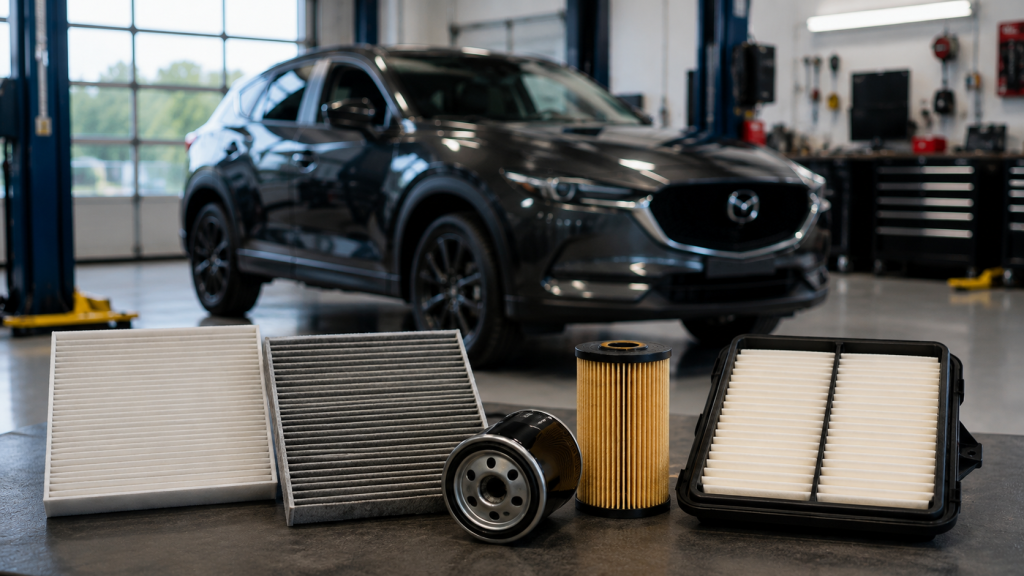
Mazda OEM filters vs aftermarket options becomes an important maintenance question once drivers begin comparing airflow, filtration quality, replacement cost, and long term engine protection. A filter may look simple from the outside, yet it plays a major role in how air, oil, and cabin circulation move through the vehicle. That is why Mazda engineers calibrate filter materials, airflow resistance, and sealing precision around the exact operating characteristics of each model. Whether someone drives a Mazda CX 5 through city traffic or spends long stretches on the highway in a Mazda CX 90, filter quality shapes how smoothly the vehicle breathes, circulates air, and protects internal components over thousands of miles.
Why Mazda OEM Filters Are Engineered Differently
A Mazda OEM filter is built around exact airflow measurements developed during vehicle engineering. That means airflow resistance, filter density, pleat spacing, and sealing pressure are matched to the vehicle’s intake and circulation pathways. Aftermarket options may visually resemble factory parts, though material quality and airflow calibration vary heavily between manufacturers.
Engine air filters influence how air enters the combustion chamber. Modern Mazda engines rely on carefully balanced airflow readings from sensors that monitor oxygen intake and fuel delivery. If airflow restriction changes beyond expected parameters, combustion balance can shift. This may create rougher idle quality, delayed throttle response, or inconsistent airflow readings.
The Mazda CX 50 and Mazda CX 90 both rely on tightly controlled intake management. Air entering the engine passes through multiple monitored stages before combustion begins. Small airflow inconsistencies can create larger operating differences once fuel mapping adjusts around altered intake readings.
Drivers comparing Mazda OEM air filter choices against cheaper aftermarket alternatives should evaluate:
• Filter material density
• Pleat construction consistency
• Seal integrity around housing edges
• Airflow resistance calibration
• Manufacturing consistency between replacement intervals
Lower grade materials sometimes create uneven airflow channels inside the filter surface. When this happens, airflow distribution across the intake pathway becomes less balanced. Mazda engineers calibrate OEM filtration around predictable pressure movement inside the intake assembly, which supports smoother combustion balance over time.
Engine Airflow Stability Shapes How the Vehicle Responds
Engine air filters do more than trap debris. They regulate how evenly air enters the intake pathway before combustion begins. That matters because fuel delivery calculations rely on stable airflow readings. When airflow becomes inconsistent, engine management compensates continuously during acceleration and idle operation.
This becomes easier to notice during stop and go traffic or rapid throttle transitions. A Mazda3 or Mazda CX 5 using a poorly constructed aftermarket filter may still operate normally, though airflow irregularities can slowly influence throttle smoothness and combustion consistency. Drivers sometimes mistake these subtle changes for transmission hesitation or fuel quality variation.
Mazda engineers design OEM intake filters around:
• Air pressure consistency
• Contaminant capture balance
• Sensor airflow calibration
• Stable combustion airflow pathways
• Reduced turbulence entering the intake tract
Aftermarket filters vary widely in filtration structure. Some emphasize lower restriction while sacrificing contaminant capture. Others increase filtration density so heavily that airflow resistance rises faster during normal debris accumulation. Both extremes create airflow differences Mazda did not originally calibrate around.
That becomes more important in turbocharged Mazda models because intake pressure changes influence turbo airflow management more directly. The turbocharged Mazda CX 90 and Mazda CX 70 operate with more tightly controlled intake pressure balancing than naturally aspirated engines.
Mazda Cabin Filter Replacement Influences Interior Airflow
Mazda cabin filter replacement searches continue appearing heavily because drivers notice interior airflow changes long before they see the actual filter. Cabin filters regulate the air circulating through the HVAC assembly before airflow reaches the vents. Dust, pollen, road debris, and moisture particles gradually collect inside the filter material over time.
Once airflow resistance increases, the HVAC blower motor works harder to maintain cabin circulation. Drivers usually notice weaker airflow first during air conditioning operation because colder air becomes more difficult to push through restricted filter material.
A clogged cabin filter may create:
• Slower airflow through dashboard vents
• Increased interior dust circulation
• More strain on HVAC blower operation
• Reduced windshield defrost airflow
• Musty airflow during humid weather
The Mazda CX 5 rear airflow layout places additional importance on interior circulation because rear passenger airflow pathways depend on balanced vent distribution. When cabin airflow weakens, passengers farther from the front vent channels notice the reduction sooner.
Aftermarket cabin filters vary heavily in filtration layering and airflow resistance. Some high density aftermarket materials trap contaminants effectively but reduce airflow earlier during normal accumulation. Mazda OEM cabin filters balance contaminant capture with circulation pressure so airflow remains more stable across the service interval.
Drivers researching Mazda and Apple CarPlay connectivity sometimes mistake weak HVAC airflow for broader climate control problems because airflow strength influences how comfortable the cabin feels during navigation, commuting, and touchscreen interaction.
Oil Filters Protect More Than Oil Cleanliness
Oil filtration discussions stay heavily simplified online, yet oil filters regulate contaminant movement through critical lubrication pathways. Inside the engine, oil continuously circulates through bearings, timing assemblies, camshafts, and turbocharger components. As oil moves through these areas, microscopic debris particles develop naturally from combustion residue and component friction.
The oil filter captures these contaminants before they continue recirculating. Mazda OEM oil filters are engineered around oil pressure flow rates specific to the engine family they support. This includes bypass valve pressure calibration, filter media density, and circulation timing during cold starts.
Cold starts place major stress on oil circulation because thicker oil moves more slowly before reaching operating temperature. If filter restriction rises too quickly, oil pressure changes inside the filter housing may activate the bypass valve sooner than intended. Once bypass operation begins, unfiltered oil circulates through the engine temporarily.
That is why filter construction quality matters beyond basic debris capture.
Mazda OEM oil filters are calibrated around:
• Cold start oil pressure
• Filter media resistance
• Bypass valve activation pressure
• Engine oil circulation timing
• Long term contaminant accumulation patterns
A lower quality aftermarket oil filter may still fit correctly while using thinner filter media or inconsistent internal construction. These differences remain invisible once installed, though long term contaminant circulation patterns inside the engine can gradually shift over higher mileage ownership.
Why Fitment Precision Matters More Than Drivers Expect
One of the least discussed differences between OEM and aftermarket filters involves sealing precision. Filters rely on tight edge sealing to prevent air or oil from bypassing filtration material entirely. Even small inconsistencies around gasket pressure or filter edge dimensions create leakage pathways.
Mazda engineers build OEM filters around exact housing tolerances for models like the Mazda CX 30, Mazda CX 50, and Mazda CX 90. Proper sealing keeps airflow and oil circulation moving through the intended filtration channels instead of around them.
This becomes important because filter bypass leakage is difficult to detect during normal driving. The vehicle may continue operating normally while filtration consistency gradually decreases.
Drivers comparing aftermarket vs OEM filter choices should evaluate more than replacement cost alone. Material quality, airflow stability, sealing precision, and circulation consistency all shape how the vehicle operates over extended maintenance cycles. Mazda engineers calibrate OEM filtration around the complete airflow and lubrication characteristics of each platform, creating a more balanced relationship between filtration protection and smooth operation throughout ownership.
Connect with us


Recent Blog Entries
- Understanding Mazda i Activsense Safety Technology
- Mazda OEM Filters vs Aftermarket Options Explained
- How Mazda Diagnostic Fees Work and Warranty Coverage
- OEM Vs Aftermarket Mazda Brake Components Fitment Warranty And Long Term Value
- 2026 Mazda CX 50 Hybrid Vs CX 30 Which SUV Fits Your Driving Needs