

Mazda drive modes do more than adjust how a car feels. Each mode recalibrates how the vehicle distributes power, shifts gears, and responds to throttle input at a system level. Drivers who understand what changes mechanically with each selection make better decisions about when to switch. Furthermore, they get more from the engineering Mazda built into every model in the lineup.
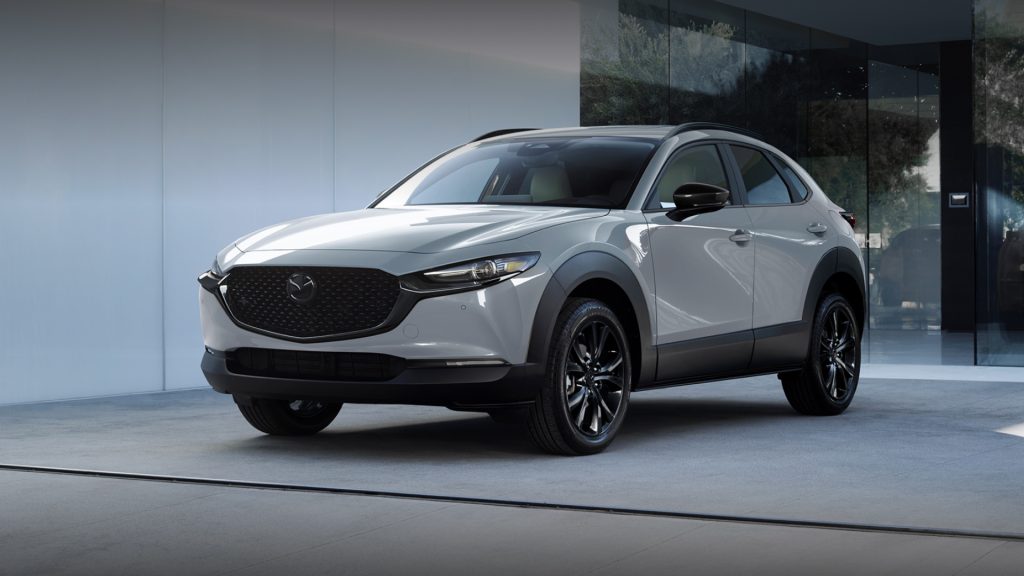
What Mi-Drive Is and How It Works as a System
Mi-Drive stands for Mazda intelligent Drive Select. It is the platform that governs drive mode selection across Mazda’s current lineup, including the CX-5, CX-50, CX-90, and CX-30. Most drivers think of drive modes as single-variable adjustments. Mi-Drive does not work that way.
When a driver selects a mode, Mi-Drive adjusts three vehicle systems at the same time. First, it reprograms the throttle mapping, which changes how the engine responds to pedal input. Second, it adjusts the transmission shift logic, which changes the RPM range the vehicle uses before upshifting. Third, on models equipped with i-Activ AWD, it redistributes torque bias between the front and rear axles to match the selected mode’s traction priorities.
Each of those three changes affects the others. A sharpened throttle map in Sport mode produces more frequent and more aggressive throttle inputs. Those inputs interact directly with the recalibrated shift logic to hold gears longer. The result is a coordinated shift in how the entire drivetrain behaves, not a single dial turned up. Understanding Mi-Drive as a multi-system calibration tool rather than a preference setting changes how usefully a driver can apply each mode.
How Normal Mode Works and When It Serves Drivers Best
Normal mode is not a compromise or a factory default that exists because no one selected anything else. Mazda engineers it as the primary calibration for everyday driving. It represents Mazda’s most carefully tuned balance between throttle sensitivity, transmission efficiency, and fuel economy across a wide range of road conditions.
In Normal mode, the transmission shift mapping prioritizes early upshifts. The Mazda3 and CX-5 with SKYACTIV-G engines shift into higher gears at lower RPMs, keeping the engine in its most fuel-efficient operating range during highway cruising and city traffic. The throttle map is linear, meaning pedal travel translates to engine response proportionally without the amplification Sport mode introduces.
Why Normal Mode Rewards Consistent Driving
For drivers covering mixed commuting and highway miles, Normal mode consistently returns the best fuel economy figures across the lineup. The early shift behavior reduces engine load during acceleration. Beyond that, the linear throttle map prevents the small, unintentional over-throttle inputs that Sport mode amplifies into more aggressive acceleration. Drivers who cover mostly highway miles or mixed city routes will find Normal mode protects fuel economy without reducing responsiveness in everyday situations.
What Does Sport Mode Change and What Does It Not?
Sport mode does not add horsepower. The engine produces the same peak output in every mode. What Sport mode changes is how and when that output becomes available to the driver.
In Sport mode, Mi-Drive reprograms the throttle map to amplify pedal input. A light press of the accelerator produces a stronger engine response than the same press would generate in Normal mode. At the same time, the transmission holds gears to higher RPMs before upshifting. A CX-5 or Mazda3 in Sport mode will stay in a lower gear through a curve or during an overtake where Normal mode would have already shifted up. That behavior gives the driver access to more torque in the moment without requiring a downshift request.
The fuel economy trade-off is direct. Holding higher RPMs and responding more aggressively to throttle inputs increases fuel consumption. The trade-off is smallest at highway speeds where throttle inputs are steady and modest. It is largest in stop-and-go traffic where Sport mode amplifies every small throttle correction into a larger fuel draw.
The following changes occur at the system level when Sport mode is active:
- The throttle map shifts from linear to amplified, meaning a given pedal position produces a larger throttle opening than the same position would in Normal mode, increasing torque delivery at partial throttle.
- The transmission hold RPM threshold rises, keeping the SKYACTIV-G or SKYACTIV-X engine in its peak torque band longer before the next upshift, which improves in-gear acceleration without requiring a manual downshift.
- On i-Activ AWD models, the rear axle receives a slightly higher torque bias, which increases drive feel and stability during cornering by loading the rear tires more consistently through acceleration.
Sport mode rewards purposeful use. Highway on-ramps, mountain roads, and overtaking situations are where its calibration returns value. City commuting in Sport mode increases fuel consumption without producing a meaningful improvement in how the car moves through traffic.
How G-Vectoring Control Works Across All Drive Modes
G-Vectoring Control, or GVC, operates independently of Mi-Drive mode selection. It runs continuously in the background across Normal, Sport, and every other available mode. However, its effect on driving feel becomes most noticeable in Sport mode because of how the two systems interact.
GVC works by making micro-reductions to engine torque at the moment a driver turns the steering wheel. That brief torque reduction shifts a small amount of weight onto the front tires at turn-in. With more load on the front axle, the tires generate more cornering grip at the precise moment the driver needs steering response. As the driver unwinds the wheel at corner exit, GVC restores torque smoothly, which transfers weight back toward the rear and stabilizes the car under acceleration.
In Normal mode, GVC operates on relatively small and gradual throttle inputs. Its torque adjustments are modest and the transitions stay smooth. In Sport mode, the amplified throttle map produces sharper and more frequent torque changes. GVC responds to each of those changes, making its weight transfer adjustments more active throughout a corner. The result is that Sport mode and GVC work together to sharpen steering response and body control simultaneously. Drivers who notice that the CX-5 or Mazda3 feels more planted and responsive in Sport mode during corners are experiencing GVC and Mi-Drive operating in coordination.
Off-Road and Towing Modes: What Changes at the System Level
Off-Road and Towing modes address specific driving scenarios that Normal and Sport modes are not calibrated for. Both are available on select Mi-Drive-equipped models including the CX-50, CX-90, and CX-70.
Off-Road mode raises the traction control intervention threshold. In Normal mode, the traction control system responds quickly to wheel slip and reduces torque to restore grip. That fast intervention works well on paved surfaces. On loose gravel, sand, or snow, a small amount of wheel slip is productive because it allows the tires to dig into the surface. Off-Road mode tells the traction control system to allow more slip before intervening. At the same time, i-Activ AWD shifts torque rearward and distributes it more evenly across all four corners. The throttle map becomes more progressive, reducing the chance of sudden torque spikes that break traction on loose surfaces.
Towing mode addresses a different set of demands. A loaded trailer changes the vehicle’s weight distribution, braking distance, and transmission heat load. Towing mode recalibrates the transmission shift logic to hold lower gears longer, which reduces the frequency of hunting between gears on grades. It also adjusts AWD torque distribution to account for the added rear weight from the trailer hitch load.
The following changes occur when Off-Road or Towing mode is active:
- Off-Road mode raises the traction control slip threshold and shifts AWD torque toward a more even four-corner distribution, allowing productive wheel slip on loose surfaces while maintaining directional stability through the AWD system.
- Towing mode recalibrates transmission shift points to reduce gear hunting on inclines and adjusts AWD torque bias rearward to compensate for trailer tongue weight pressing down on the hitch.
Both modes return the vehicle to its standard calibrations the moment Normal or Sport is selected again. Neither mode modifies any permanent vehicle setting. Drivers with CX-50 or CX-90 models covering gravel roads, boat launches, or mountain grades will find that selecting the correct specialized mode produces measurably more stable and controlled vehicle behavior than leaving the vehicle in Normal mode for those specific scenarios.
Connect with us


