

CX 5 vs CX 50 Hybrid comparisons usually begin with fuel economy, though cargo space, powertrain feel, cabin layout, and daily driving rhythm shape the larger decision. These two Mazda SUVs overlap heavily in size and purpose, which creates confusion for shoppers narrowing their options. Both support all wheel drive confidence, passenger comfort, and Mazda’s connected steering philosophy, yet they approach those goals through different powertrain and packaging strategies.
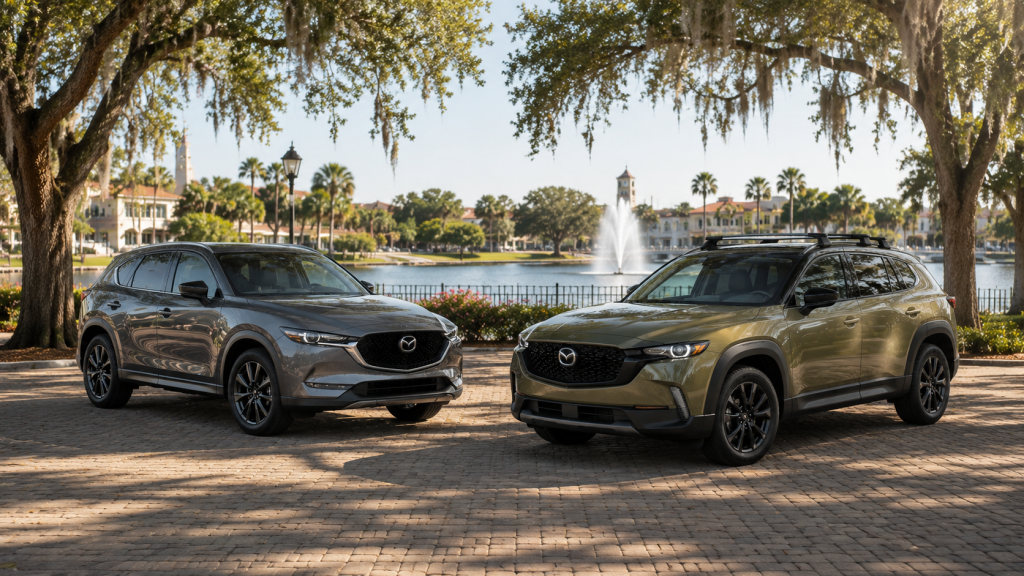
The Mazda CX 5 continues using a traditional gas powered setup focused on smooth throttle response, balanced ride comfort, and familiar acceleration delivery. The Mazda CX 50 Hybrid introduces electric motor assistance and hybrid energy management to reduce fuel use during commuting and lower speed driving. While the dimensions appear close on paper, the ownership feel changes once these SUVs are driven back to back.
Hybrid Efficiency Versus Traditional Gas Power
Is the CX 50 Hybrid more efficient than the CX 5? The CX 50 Hybrid uses a hybrid powertrain that combines a gasoline engine with electric motor support. During slower driving, stoplights, and lower speed traffic movement, the electric motor assists propulsion and reduces how heavily the gasoline engine needs to work.
That changes fuel use patterns most noticeably during:
- stop and go commuting
- suburban traffic movement
- lower speed errands
- repeated acceleration cycles
- city driving with frequent slowing
The hybrid setup continuously shifts energy between regenerative braking, battery support, and gasoline operation. When the driver lifts off the accelerator or brakes, energy is redirected back into the battery system instead of being lost entirely through heat during braking.
The Mazda CX 5 uses a more traditional powertrain structure with direct gasoline engine response. Acceleration feels linear and immediate because throttle response comes directly from engine output instead of transitioning between electric assist and gasoline support.
Some drivers prefer this because:
- acceleration feels more familiar
- engine response remains predictable
- highway merging feels more direct
- throttle modulation stays consistent
- engine sound and speed remain connected
The CX 50 Hybrid delivers stronger efficiency during traffic heavy commuting while the CX 5 maintains a more traditional Mazda driving character. Neither approach is automatically better. The difference depends heavily on where and how the SUV spends most of its time.
Cargo Space and Cabin Layout Feel Different in Use
Which Mazda SUV has more usable cargo space? Cargo measurements alone rarely explain how an SUV feels during loading and passenger use. Rear hatch opening width, floor height, seat folding shape, and passenger layout influence how usable the space feels once luggage, groceries, sports gear, or travel equipment enter the picture.
The Mazda CX 5 focuses heavily on balanced passenger and cargo packaging. Rear passengers sit in a cabin that feels slightly more enclosed and comfort focused while the cargo area maintains strong loading flexibility behind the second row.
The CX 50 Hybrid introduces a wider visual stance and more rugged cargo presentation. The rear cargo opening feels broader visually while the overall body structure emphasizes outdoor travel and active use styling.
Cargo usability differences become noticeable during:
- grocery loading
- luggage stacking
- pet crate placement
- sports equipment storage
- stroller loading
- rear seat folding transitions
The Mazda CX 5 cargo layout feels more traditionally organized while the CX 50 Hybrid leans toward an open and adventure focused presentation. Drivers who prioritize interior comfort and cleaner cabin integration may lean toward the CX 5. Drivers carrying larger outdoor equipment or road trip gear may appreciate the broader visual layout of the hybrid model.
Rear passenger movement matters as well. Family shoppers should evaluate:
- rear door opening size
- rear seat access
- cargo floor height
- child seat loading movement
- rear visibility while parking
These details shape daily ownership much more than specification charts alone.
Steering Feel and All Wheel Drive Character
Which Mazda SUV feels easier to drive every day? Mazda tuning philosophy centers around steering precision, body control, and natural driver connection. Both SUVs reflect that philosophy, though their personalities separate once the road begins changing direction or traffic density increases.
The Mazda CX 5 maintains a slightly lower feeling body posture and a smoother transition between steering inputs. The gas powertrain contributes to a more connected acceleration relationship because throttle response remains mechanically direct.
The CX 50 Hybrid changes the driving rhythm slightly through:
- electric motor torque delivery
- hybrid braking transitions
- different weight distribution
- regenerative braking interaction
- altered acceleration pacing
Electric motor assistance creates quicker low speed torque delivery from stops. During slower traffic movement, the SUV responds smoothly and quietly because the electric motor supplements early acceleration before the gasoline engine increases workload.
Mazda all wheel drive tuning also shapes how these SUVs feel through corners and changing road surfaces. Both vehicles monitor wheel slip, steering angle, throttle position, and traction demands continuously. Torque distribution shifts proactively instead of waiting for substantial wheel slip to develop first.
Drivers comparing the two should evaluate:
- steering weight
- braking smoothness
- parking visibility
- highway stability
- acceleration feel from stoplights
- body movement during lane changes
The CX 5 preserves a more traditional connected driving feel while the CX 50 Hybrid introduces smoother low speed efficiency oriented movement.
Commuting, Road Trips, and Family Fit
Which SUV fits commuting and road trips better? The answer depends heavily on mileage patterns, passenger routines, and cargo expectations.
The Mazda CX 50 Hybrid fits strongly into:
- heavy commuting schedules
- urban traffic movement
- fuel conscious driving
- longer stop and go routes
- lower speed suburban travel
Drivers spending large amounts of time in traffic may notice fuel savings more substantially because hybrid systems gain the most advantage during repeated slowing and acceleration.
The Mazda CX 5 remains strong for:
- balanced family driving
- highway travel
- traditional gas SUV familiarity
- smoother throttle response
- comfort focused commuting
Highway focused drivers may notice the efficiency gap narrows somewhat once speeds remain more constant for longer periods. Hybrid systems create their largest efficiency advantages during lower speed traffic patterns where regenerative braking and electric assist remain active more frequently.
Family shoppers should also evaluate:
- rear passenger comfort
- cargo organization
- highway seat comfort
- visibility during parking
- infotainment layout
- Apple CarPlay integration visibility
Mazda structures interior technology carefully across both SUVs so navigation, climate controls, and media interaction remain visually clean and easier to manage during driving.
Which Mazda SUV Fits Your Priorities Better
What should shoppers evaluate before choosing between the two? The strongest comparison point is not simply hybrid versus gas power. The larger question involves how the SUV will spend most of its life.
Drivers prioritizing commuting efficiency, stop and go traffic reduction, and lower speed fuel savings may lean naturally toward the Mazda CX 50 Hybrid. The electrified powertrain changes how the SUV responds during traffic while supporting stronger fuel efficiency during urban movement.
Drivers prioritizing smoother traditional acceleration feel, comfort focused driving rhythm, and familiar gasoline response may prefer the Mazda CX 5. The vehicle maintains Mazda’s connected steering feel while balancing passenger comfort and cargo flexibility in a cleaner and more familiar package.
Both SUVs continue reflecting Mazda’s human centered engineering philosophy through:
- balanced steering calibration
- intuitive cabin layouts
- driver centered visibility
- controlled body movement
- measured technology integration
The CX 50 Hybrid expands Mazda’s electrified SUV direction while the CX 5 continues delivering one of the most recognizable driving personalities in the compact SUV segment. The better fit comes from understanding how your commute, cargo needs, passenger routines, and driving priorities intersect with the strengths each SUV delivers daily.
Connect with us


