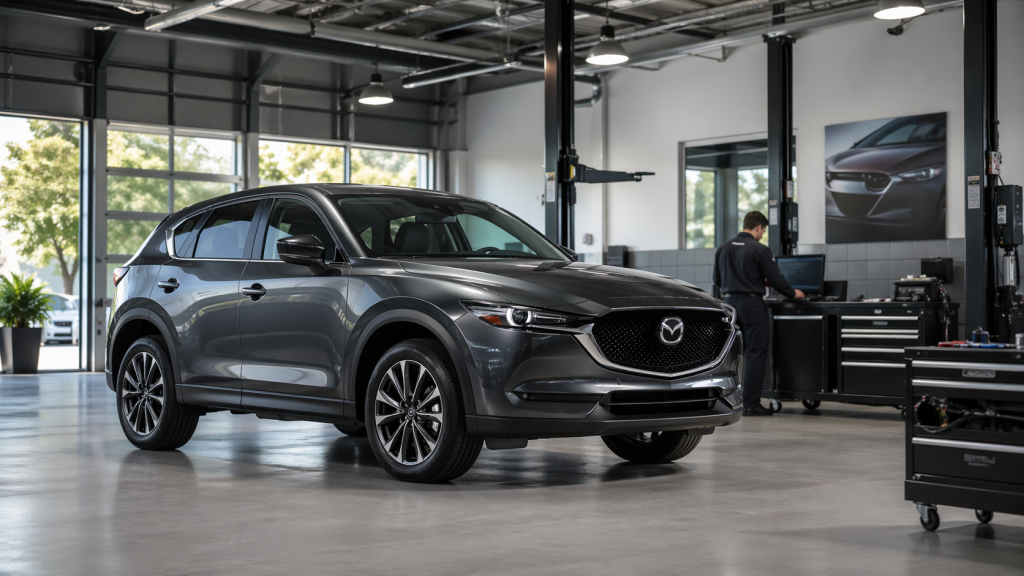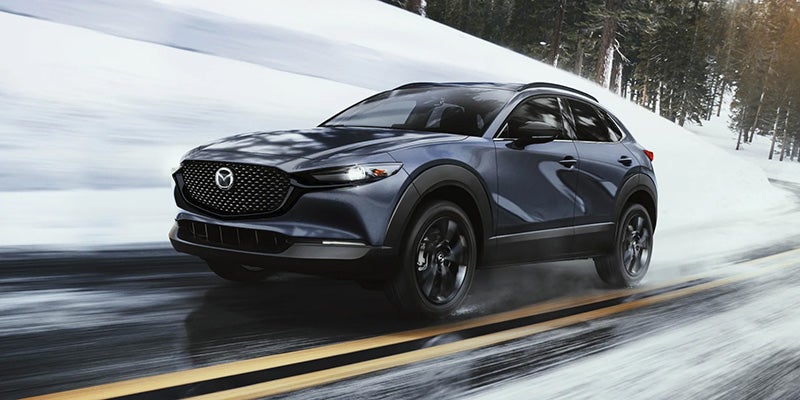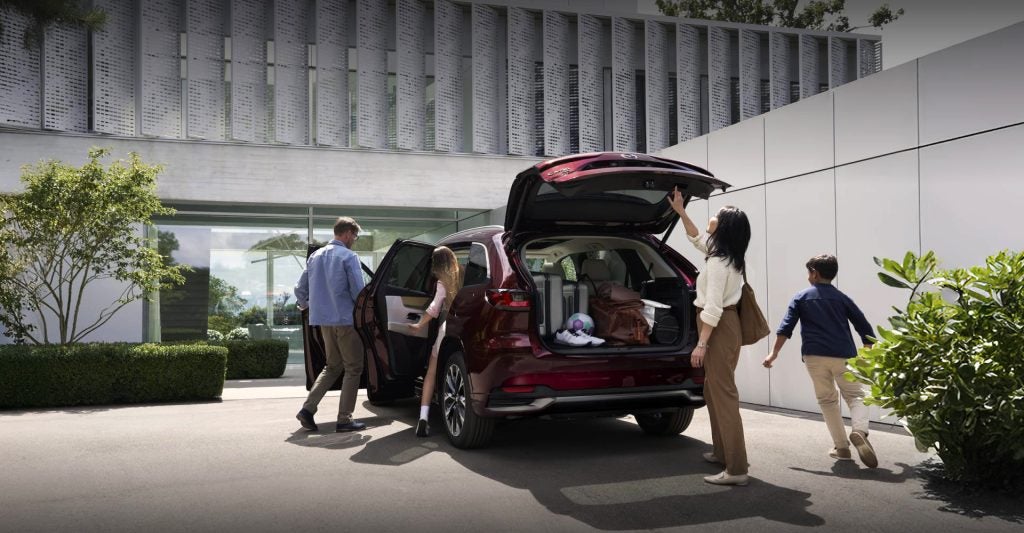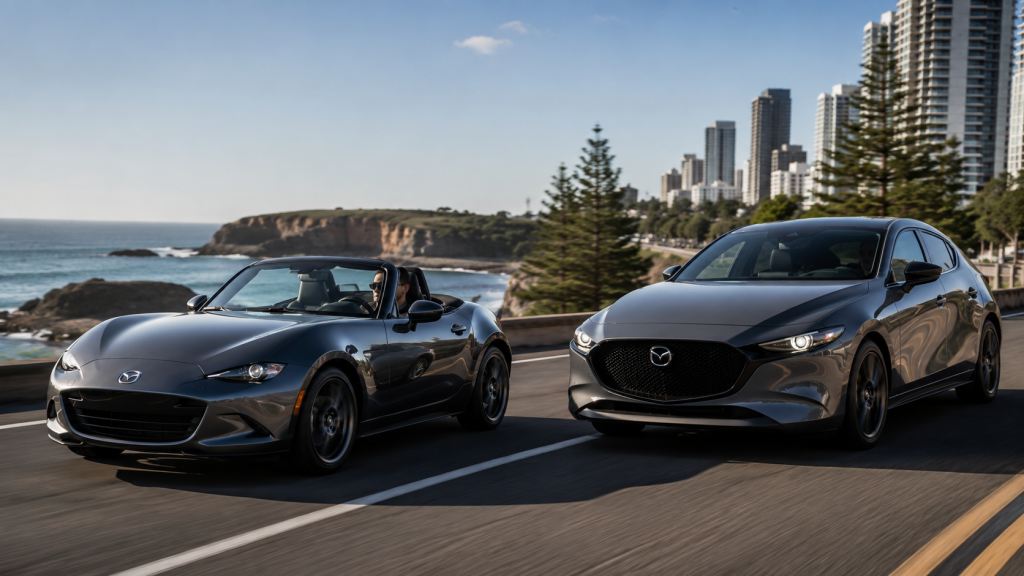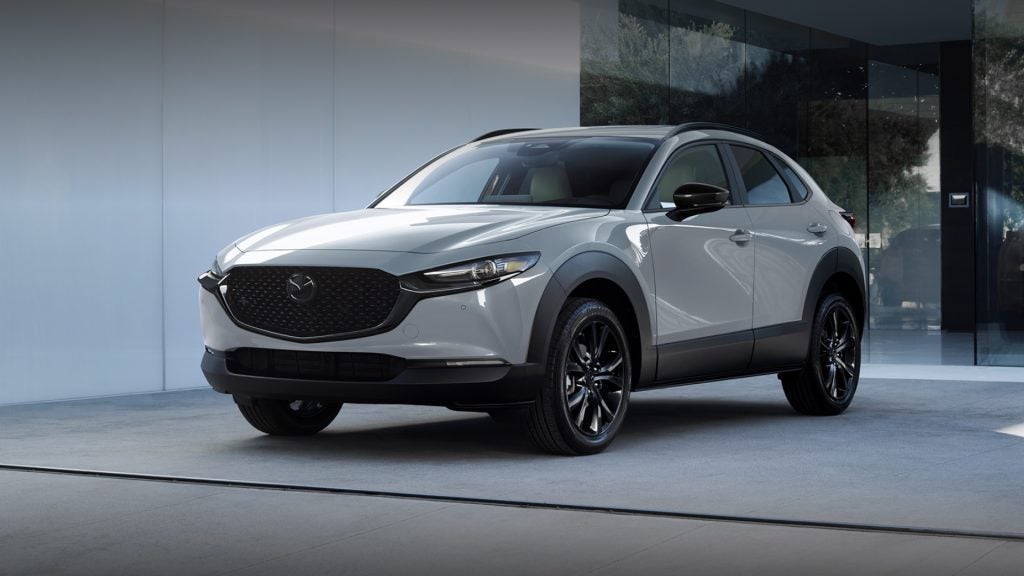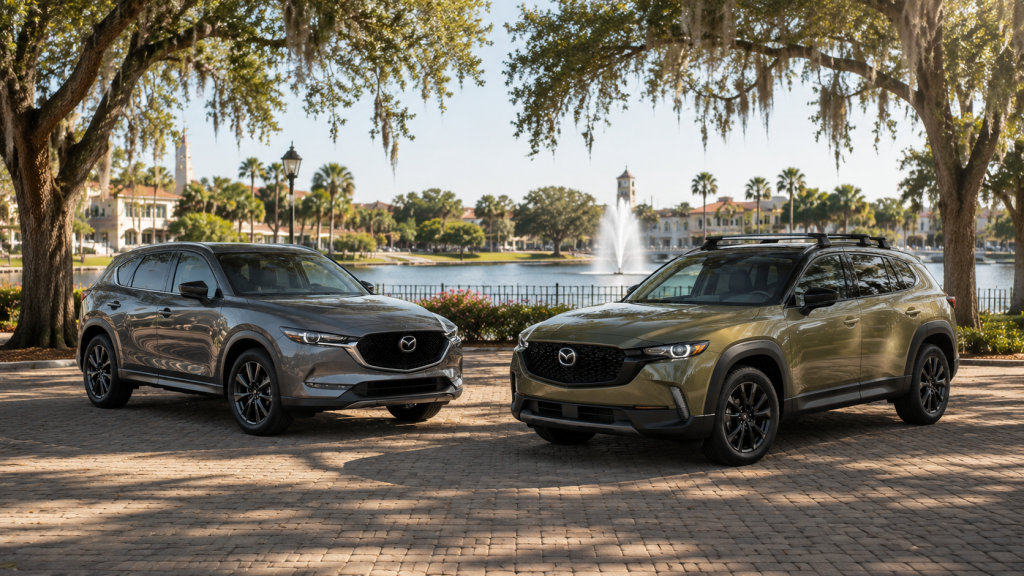
If you are cross-shopping the Mazda CX-5 vs Toyota RAV4, you are comparing two popular compact SUVs. Both serve Jacksonville drivers well, from daily commutes on I-295 to weekend trips toward the coast. However, they take different paths to get there. This guide walks through space, driving feel, fuel economy, technology, and AWD. As a result, you can match the right SUV to your daily routine around Orange Park and beyond. Passenger and Cargo Space The RAV4 holds an edge in outright cargo volume. It offers more room behind the rear seats than the CX-5. Therefore, families hauling gear for beach trips to Ponte Vedra may lean toward that extra capacity. The same goes for a weekend Costco run. Even so, the CX-5 closed the gap for 2026. Mazda stretched the CX-5's wheelbase by several inches. That change added noticeably more rear legroom, kneeroom, and headroom than the outgoing model offered. As a result, the space comparison is closer than it used to be. The RAV4 still wins on raw cargo numbers, though the gap has narrowed. The differences that matter most for daily use break down like this. The RAV4 offers more maximum cargo volume behind the folded rear seats, which favors larger hauls like furniture or camping gear. The 2026 CX-5's longer wheelbase adds noticeably more rear legroom and kneeroom than the previous generation offered. Rear seat access improved on the CX-5 as well, which matters for parents loading car seats or older passengers climbing in and out at a Jacksonville soccer field. Mazda CX-5 Toyota RAV4 Cargo Space (Behind Rear Seats) 33.7 cu ft 37.8 cu ft Max Cargo Space (Seats Folded) 66.5 cu ft 70.4 cu ft Rear Legroom 39.9 in 37.8 in Towing Capacity 1,500 lbs 1,750 lbs How Each SUV Feels to Drive Day to Day The CX-5 earns its reputation right here. Its steering stays tighter, and body roll stays better controlled. Its six-speed automatic shifts with a crispness that the RAV4's continuously variable transmission cannot fully match. On paper, the RAV4 wins the horsepower and efficiency numbers. Even so, drivers who care about how the SUV feels on I-295 on-ramps tend to prefer the CX-5's connected, driver-focused character. Winding roads toward Middleburg tell the same story, where the CX-5's tighter steering response stays noticeable through every curve. The RAV4 is far from dull, and its 2026 hybrid system delivers smooth, confident power around town. Still, the CX-5 holds the edge for anyone who enjoys the act of driving itself. Fuel Economy and the Hybrid Question This is the RAV4's strongest category, and the gap is real. Every 2026 RAV4 comes standard as a hybrid. That means combined fuel economy sits well above what the CX-5's gas engine returns. Over a full year of Jacksonville commuting, that difference adds up in real fuel savings. However, the CX-5 counters with a lower starting price and standard AWD at no additional cost, two advantages that stand out immediately on a window sticker. Given that, the total value gap narrows even though the CX-5 trails at the pump. A CX-5 hybrid is confirmed for the future, though it will not arrive until the 2027 model year. Given that timeline, shoppers who want a Mazda hybrid today will need to wait. Those focused on driving feel and upfront savings may still find the current CX-5 lineup worth the tradeoff. Technology Worth Using Every Day Both SUVs bring strong technology to the table, though they approach it differently. The CX-5 now offers Mazda's largest center display yet. A completely redesigned interior for 2026 puts that touchscreen front and center. The RAV4 also upgraded its technology, adding a larger available touchscreen and a standard built-in dashcam across every trim. Additionally, wireless Apple CarPlay and Android Auto come standard on both SUVs. As a result, daily phone connectivity feels similar behind the wheel of either one. The bigger difference shows up in interior character. The CX-5 leans toward a driver-focused layout with tactile controls, giving physical dials and buttons to key functions instead of burying them in menus. By contrast, the RAV4 prioritizes straightforward controls that work well without asking much of the driver. Here is how the two lineups compare on the features drivers use most. The CX-5 offers Mazda's largest center display yet, standard on higher trims within its redesigned 2026 interior. The RAV4 includes a standard built-in dashcam on every trim, along with a larger available touchscreen for 2026. Both SUVs include wireless Apple CarPlay and Android Auto as standard equipment, so daily phone connectivity feels similar in either vehicle. Standard AWD and What It Is Worth Every CX-5 trim includes i-Activ AWD at no extra cost. The RAV4, by contrast, starts with front-wheel drive and charges extra for all-wheel drive. For Jacksonville's sudden summer downpours, that standard AWD matters more than it might on drier roads. Once you add the RAV4's AWD cost into the comparison, the price gap between the two SUVs narrows further. That shift favors the CX-5. The RAV4 does produce more horsepower in its hybrid form, so drivers prioritizing outright power may still lean toward Toyota's lineup. Still, for shoppers who want confident traction built into every trim without an upcharge, the CX-5 makes a strong case worth serious consideration. The AWD comparison comes down to a few clear points. Every CX-5 trim includes i-Activ AWD at no additional cost, while RAV4 AWD requires an upgrade from the base front-wheel-drive configuration. Once the RAV4's AWD upcharge is added to its price, the total cost gap between the two SUVs narrows in the CX-5's favor. The RAV4's hybrid powertrain still delivers more horsepower overall, which matters most to drivers who prioritize outright power over standard traction. Mazda CX-5 Toyota RAV4 Base MSRP $29,990 $31,900 Standard Drivetrain i-Activ AWD Front-Wheel Drive AWD-Equipped Price $29,990 $33,300 Combined Horsepower 187 hp 226–236 hp Seeing the CX-5 in Jacksonville Mazda City of Orange Park carries current inventory of the new Mazda CX-5 across multiple trims. That includes both naturally aspirated and available turbocharged configurations. Test driving the CX-5 alongside a RAV4 on the same familiar roads remains the clearest way to feel the differences covered here. Handling, cabin character, and daily comfort all come through on a back-to-back drive. Our team can walk through current CX-5 trims and financing options. We can also show how standard AWD stacks up against RAV4 pricing once Toyota's AWD upcharge is factored in. Whichever direction fits your driving style better, both SUVs represent strong choices for Jacksonville, Orange Park, and the surrounding area. Stopping by for a side-by-side look usually makes the decision clearer than reading specs alone ever could.
Mazda Hybrid and Plug-In Hybrid Models Compared
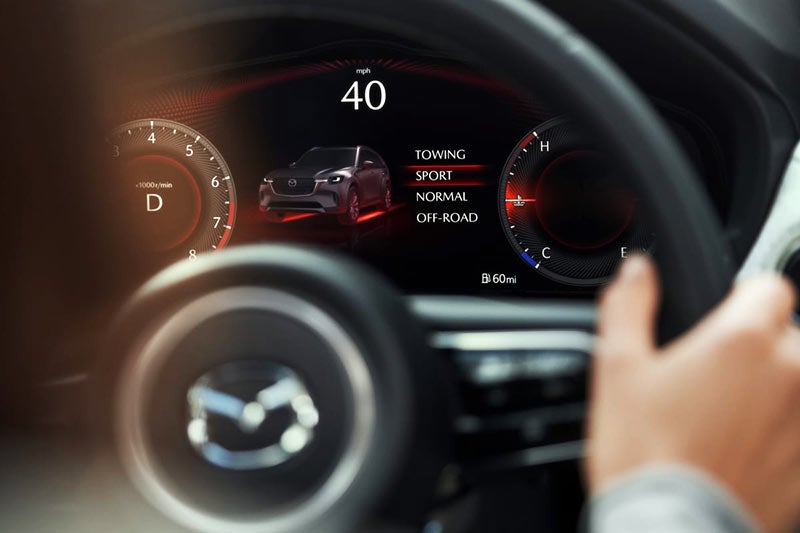
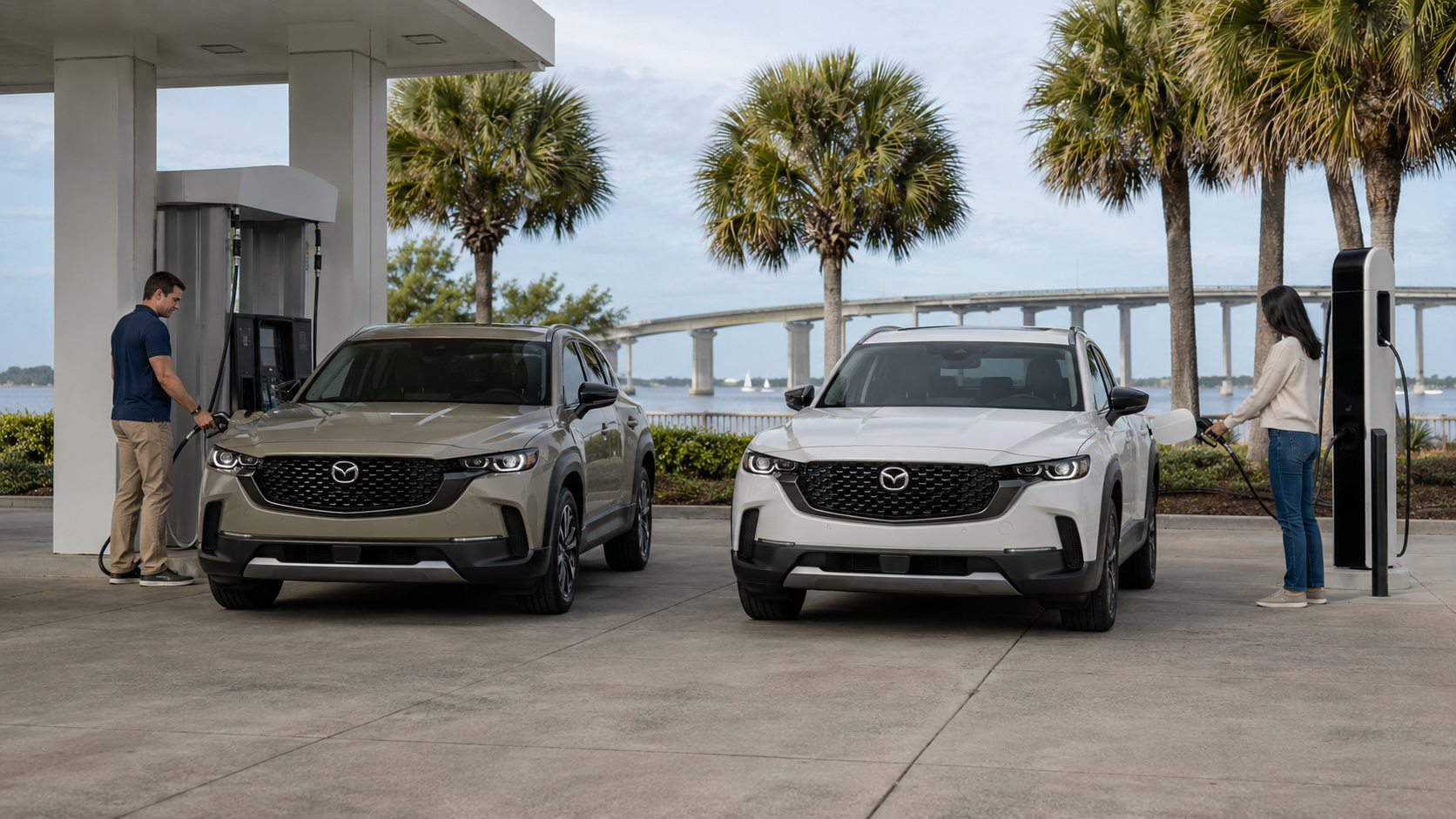
Choosing between Mazda's electrified SUVs comes down to one core question. Do you need to plug in, or does a standard hybrid already fit your routine? The CX-50 Hybrid, CX-70 PHEV, and CX-90 PHEV each take a different approach to efficiency. The right one depends on your daily driving distance, passenger needs, and cargo load. This guide walks through the differences without repeating a full technical breakdown of how hybrid drivetrains work in general. As a result, Jacksonville drivers can match the right electrified Mazda to their routine. Hybrid vs Plug-In Hybrid, Briefly A standard hybrid like the CX-50 Hybrid combines a gas engine with electric motors. Those motors assist automatically, and the vehicle never needs to be plugged in. A plug-in hybrid, on the other hand, like the CX-70 PHEV or CX-90 PHEV, adds a larger battery instead. That battery charges from an outlet and allows genuine electric-only driving before the gas engine takes over. This distinction shapes everything else in this comparison. Consequently, every section below builds on this basic split between plugging in and not. Plugging In or Staying with a Standard Hybrid This question comes down to your daily commute more than any single spec on a window sticker. The CX-50 Hybrid delivers strong combined fuel economy without ever needing a charging cable. Therefore, it suits drivers who want efficiency without changing their routine. The CX-70 PHEV and CX-90 PHEV offer roughly 26 miles of electric-only range on a full charge. For many Jacksonville commutes, that range covers a full round trip on electricity alone. However, that gain only shows up if you plug in on a regular basis. Drivers without consistent access to a home charger may find the CX-50 Hybrid's no-plug simplicity a better fit for daily life. Those who can charge overnight and drive mostly local routes may get real value from the PHEV models instead, since a full charge before bed means starting most mornings on electric power alone. In either case, Mazda's approach to hybrid efficiency stays consistent across the lineup, regardless of which model you choose. Matching the Model to Passenger and Cargo Needs Seating capacity draws a clear line between these three models. The CX-50 Hybrid and CX-70 PHEV both seat five. The CX-90 PHEV, by contrast, adds a third row for up to seven passengers. Cargo space follows a similar pattern as well, since more seating capacity usually means less room dedicated purely to gear. The two-row models offer more room behind the rear seats than the three-row CX-90 PHEV does once all seating is in use. That tradeoff between seating and cargo runs through every trim in the lineup. Here is how the three compare on space. The CX-50 Hybrid offers compact SUV proportions with strong efficiency, suited to daily errands and smaller households. The CX-70 PHEV keeps the same two-row layout with added cargo room, appealing to couples or small families who want extra space without a third row. The CX-90 PHEV adds three-row seating for up to seven, making it the clear choice for larger families or anyone who regularly carries extra passengers. Highway and City Driving Feel All three models keep Mazda's connected driving character. Even so, power output varies from model to model. Consequently, the choice between them usually comes down to how much extra punch you want on tap. Furthermore, that power gap shows up most clearly on the highway, not so much around town. The CX-50 Hybrid delivers smooth, confident acceleration for daily errands and highway merges alike. The CX-70 PHEV and CX-90 PHEV share a hybrid system producing over 320 horsepower combined. As a result, both models feel noticeably quicker than the CX-50 Hybrid. On I-95 or I-295, that extra power translates into easier passing and confident merging. Around town, all three feel composed. Still, the PHEV models carry more weight from their larger batteries. Even so, Mazda's chassis tuning keeps that weight from feeling heavy-handed in daily driving, even at parking-lot speeds. Towing a Trailer or Boat Towing capacity separates these models sharply. The CX-50 Hybrid is built with light-duty needs in mind and is not the choice for serious towing. The CX-70 PHEV and CX-90 PHEV, by contrast, can tow up to 3,500 pounds. That figure covers a small trailer, personal watercraft, or a modest boat, giving both PHEV models real utility beyond daily commuting. For Jacksonville drivers who split time between daily commuting and weekend trips to the water, this towing number frequently becomes the deciding factor. Given that, the choice between the CX-50 Hybrid and the larger PHEV models usually starts right here. Seeing the Lineup in Jacksonville Mazda City of Orange Park carries current inventory of the CX-50 Hybrid, CX-70 PHEV, and CX-90 PHEV. As a result, you get the chance to compare all three side by side before making a decision. Test driving each model back to back remains the clearest way to feel the differences covered here. Power, space, and daily character all come through most clearly behind the wheel. Our team can walk through current trims and financing options. We can also show how each model's efficiency and towing figures line up with your specific routine. Whichever electrified Mazda fits your life best, all three deliver the driving character Mazda is known for. Each one simply wraps that character around a different approach to efficiency.