

Mazda i Activsense features are built to support awareness during the small driving moments that happen every day, from highway merging to crowded parking lots. The technology inside these driver assistance features is not meant to overpower the person behind the wheel or create constant interruptions. Mazda approaches safety through support and connection, shaping technology around natural movement and driver awareness instead of aggressive intervention. That philosophy reflects Mazda’s human centered design approach, where technology exists to work with the driver in a calm and intuitive way.
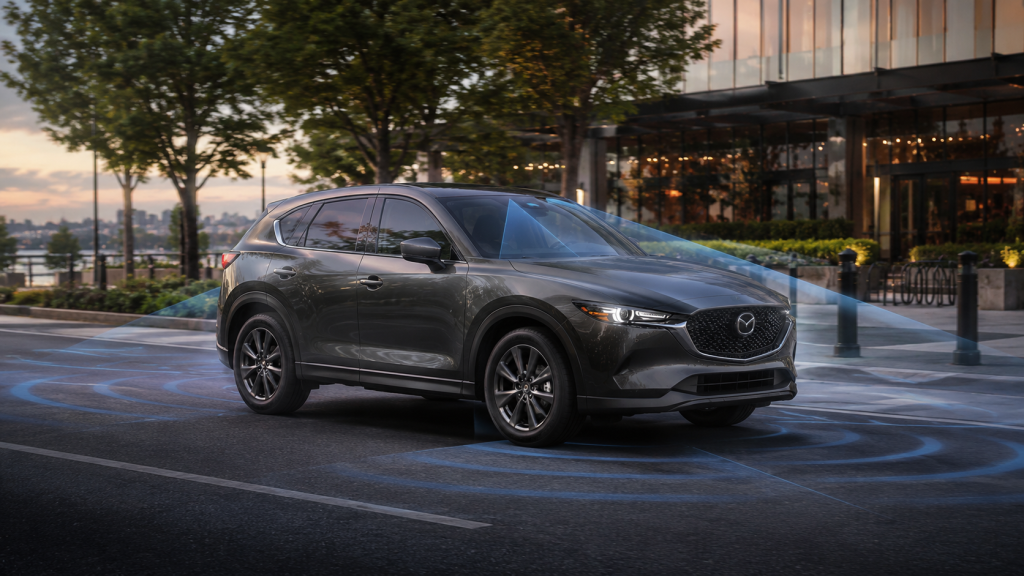
Modern Mazda vehicles such as the Mazda CX 5 and Mazda CX 90 use cameras, radar sensors, steering inputs, and braking communication to monitor traffic movement around the vehicle continuously. While these features sound highly technical on paper, most drivers notice them through subtle moments. A warning light appears beside the mirror during a lane change. The steering wheel gently responds near a lane edge. The vehicle adjusts following distance during traffic flow. These interactions are intentionally smooth so the technology feels supportive instead of distracting.
How Mazda i Activsense Uses Cameras and Radar Together
What does Mazda i Activsense do? Mazda i Activsense is a collection of driver awareness features that monitor surrounding traffic, lane positioning, vehicle spacing, and potential collision risks through coordinated sensor communication.
Different sensors perform different jobs. Cameras mounted near the windshield monitor lane markings, road positioning, and object recognition. Radar sensors monitor traffic speed and surrounding vehicle movement. The vehicle’s onboard processing system combines these inputs continuously while driving.
A Mazda CX 90 traveling through highway traffic may use:
- Forward radar to measure following distance
- Cameras to monitor lane positioning
- Steering sensors to evaluate driver inputs
- Brake system communication to prepare intervention timing
- Speed monitoring to calculate traffic pacing
These features work together instead of operating independently. When adaptive cruise control adjusts following distance, the vehicle is simultaneously evaluating lane positioning, traffic speed changes, and steering inputs. Mazda calibrates these interactions carefully so the vehicle responds naturally without abrupt reactions.
That smoother calibration changes how the technology feels during commuting. Some driver assistance systems from other manufacturers interrupt the drive aggressively through loud warnings or sudden corrections. Mazda focuses on gradual awareness support that blends into normal driving rhythm more naturally.
Blind Spot Monitoring and Rear Traffic Awareness During City Driving
How does blind spot monitoring work? Blind spot monitoring uses radar sensors positioned near the rear corners of the vehicle to detect traffic moving beside or approaching the Mazda from neighboring lanes.
When another vehicle enters the monitored zone, an indicator appears near the side mirror. If the driver activates a turn signal while traffic remains inside the monitored area, the system increases the alert through visual and audible warnings.
The Mazda CX 5 rear visibility layout already provides strong outward visibility through thoughtful design proportions and window placement. Blind spot monitoring adds another layer of awareness by detecting movement outside direct sightlines during lane changes and merging situations.
Rear cross traffic alert expands this awareness further while backing out of parking spaces. Parking lots create difficult visibility angles because larger vehicles, shopping carts, landscaping barriers, and traffic movement block clear sightlines behind the vehicle.
Rear traffic monitoring helps detect:
- Crossing vehicle movement
- Approaching traffic from side aisles
- Movement hidden behind larger vehicles
- Traffic approaching outside mirror visibility
- Motion during low speed reversing
Radar sensors scan side to side movement behind the vehicle while reversing. If approaching traffic enters the monitored zone, the system alerts the driver before the crossing vehicle becomes fully visible through the rear camera or mirrors.
These alerts matter most during crowded parking situations where traffic movement changes rapidly and visibility disappears quickly between parked vehicles.
Adaptive Cruise Control Changes Highway Driving Rhythm
How does adaptive cruise control react to traffic? Adaptive cruise control monitors the distance between the Mazda and vehicles ahead while automatically adjusting speed to maintain selected spacing.
Traditional cruise control maintains fixed speed regardless of surrounding traffic. Adaptive cruise control adds traffic awareness by calculating distance and closing speed continuously through forward radar monitoring.
A Mazda CX 90 driving through highway congestion evaluates:
- Vehicle speed ahead
- Closing distance rate
- Traffic slowdown patterns
- Lane movement changes
- Acceleration pacing
When traffic slows, the system reduces throttle input gradually and may apply braking pressure smoothly to preserve spacing. Once traffic begins moving again, acceleration returns progressively toward the selected cruising speed.
Mazda calibrates acceleration and braking transitions carefully because abrupt speed changes create discomfort and tension during longer highway drives. The goal is not automation for its own sake. The goal is maintaining a smoother driving rhythm that reduces constant throttle and brake adjustments during traffic flow.
This becomes noticeable during:
- Stop and go traffic
- Long highway commutes
- Multi lane traffic pacing
- Gradual traffic slowdowns
- Highway construction merging
The technology still expects driver engagement. Steering input, awareness, and surrounding traffic evaluation remain centered around the driver. Mazda positions these features as assistance tools supporting awareness instead of replacing driver involvement entirely.
Lane Departure Systems Support Steering Awareness
Does Mazda steering assist take over driving? Lane departure systems support steering awareness through gentle correction assistance when the vehicle begins drifting unintentionally outside lane markings.
Forward cameras monitor lane lines continuously while evaluating steering inputs and vehicle positioning. If the system detects lane departure without turn signal activation, alerts begin gradually.
Mazda lane support may include:
- Steering wheel vibration
- Visual dashboard notifications
- Audible lane alerts
- Gentle steering correction pressure
- Lane centering support during highway travel
The steering correction itself remains intentionally restrained. Mazda avoids heavy handed intervention because overly aggressive correction can feel unnatural or startling during normal driving.
That calmer approach reflects Mazda’s broader driving philosophy. Mazda vehicles are engineered around driver connection and natural steering feel, so assistance technology is tuned to preserve that relationship instead of overpowering it.
Lane departure support becomes most useful during moments of reduced attention, highway fatigue, nighttime driving, or long distance commuting where subtle drifting can happen gradually without immediate awareness.
Why Mazda Safety Technology Feels Supportive Instead of Intrusive
Why do Mazda safety features feel calmer to use? Mazda calibrates driver assistance technology around human movement patterns and natural driving rhythm instead of constant intervention.
The company’s Jinba Ittai philosophy centers around the connection between driver and vehicle. That philosophy shapes how steering support activates, how alerts are timed, how braking intervention begins, and how the vehicle communicates with the driver overall.
Mazda safety systems explained through technical specifications alone miss the larger point. The technology is intended to feel quiet, balanced, and intuitive during normal driving moments.
That philosophy shapes:
- Alert timing
- Steering correction intensity
- Braking smoothness
- Traffic pacing response
- Visual warning placement
- Driver awareness interaction
Mazda and Apple CarPlay integration reflects a similar approach. Technology inside the cabin is structured around clarity and intuitive interaction instead of overwhelming menus or excessive visual distraction.
The result is a driving atmosphere where safety technology stays present without becoming the center of attention. Drivers still feel connected to the road, aware of surrounding movement, and engaged with the vehicle naturally.
Mazda safety technology supports awareness through subtle communication, thoughtful calibration, and calm interaction. Whether driving a Mazda CX 5 through crowded city traffic or traveling long highway stretches inside a Mazda CX 90, these features are designed to support the moments where awareness matters most while preserving the feeling that driving still belongs to the person behind the wheel.
Connect with us


